
Proactive measures to address El Nino-induced water shortages
The El Nino–Southern Oscillation (ENSO) phenomenon has shifted into an El Ninophase of strong to very strong intensity, causing the rainy season to end early and rainfall and river flows to decline sharply. These conditions are putting many areas of Tuyen Quang Province at risk of severe drought and water shortages for domestic use and production.
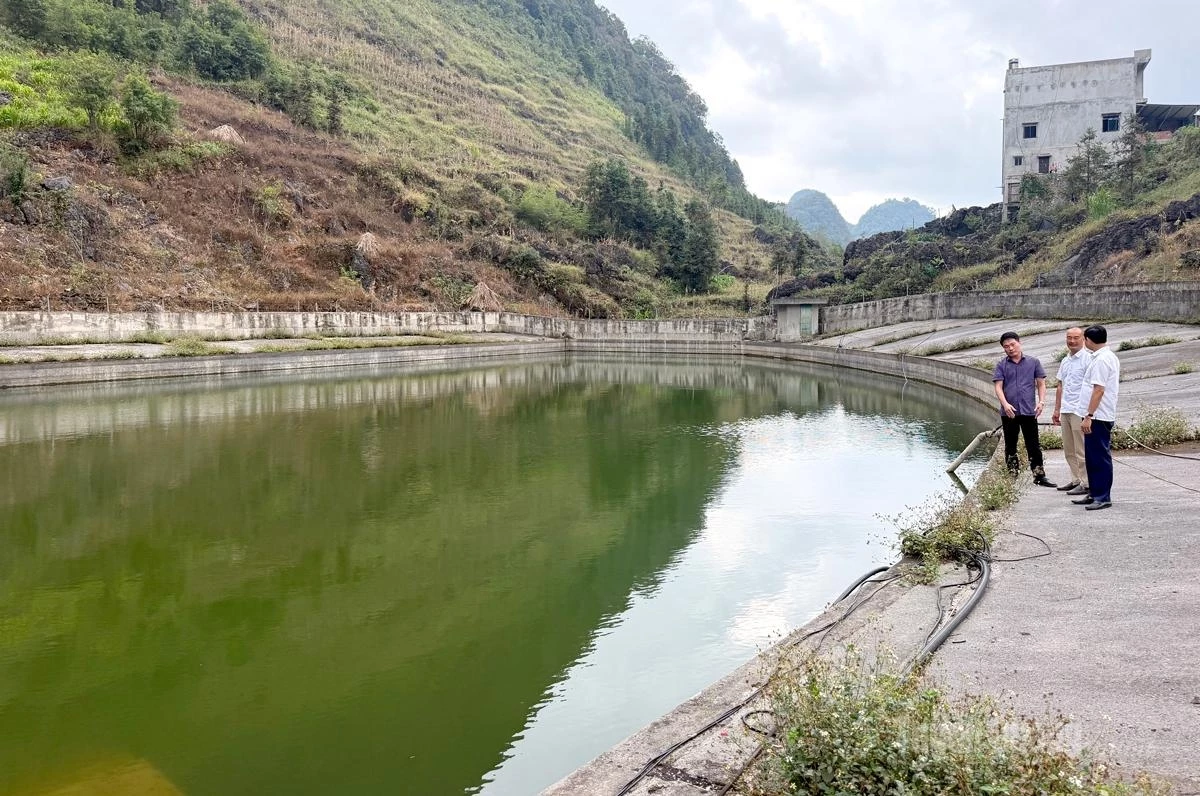 |
| Leaders of the Department of Agriculture and Environment inspect suspended reservoirs in Sung Mang Commune. |
According to the provincial Hydrometeorological Station, the province experienced four spells of hot to extremely hot weather from August to mid-October 2026. In August, rainfall in several areas was 69–162 mm below the long-term average. The situation worsened in September, when rainfall was generally 40–557 mm below the average for the same period. Average temperatures in August were 0.6–1.2°C above the long-term average in several areas, while Bac Me recorded an increase of up to 2.9°C.
Water shortages are directly affecting residents’ daily lives, production and infrastructure operations. In Meo Vac, Dong Van, Sung Mang and Lung Phin communes, many households have to travel long distances to collect water for domestic use. More than 300 boarding students at Sung Trai Lower Secondary School in Lung Phin Commune are facing severe shortages, forcing the school to spend tens of millions of Vietnamese dong each month on purchased water for meals and basic daily needs.
Water levels in reservoirs have also fallen significantly. The water level at Tuyen Quang Hydropower Reservoir stands at just 18.69 metres, affecting power generation plans. Meanwhile, more than 1,000 small-scale irrigation reservoirs across the province have stored only around 70% of their designed capacity, putting pressure on winter crop production and preparations for the 2027 spring crop.
Forecasts indicate that from now until April 2027, average temperatures will remain 1–2°C above the long-term average, while rainfall is expected to be 43–74 mm below normal, with some areas facing deficits exceeding 130 mm. In response, the province is shifting from reactive measures to proactive water-resource risk management, focusing on storage infrastructure and water conservation.
According to the Department of Agriculture and Environment, the province aims to build nearly 400 reservoirs and is working with the Vietnam Academy for Water Resources to study the construction of large-capacity storage tanks to supply highland communities. Two reservoirs, To Du 3 and Sa Pa in Meo Vac Commune, with a combined capacity of more than 6,000 cubic metres, are expected to become operational by the end of 2026.
Alongside infrastructure investment, the province is encouraging farmers to adopt drought-resistant crops and water-saving irrigation technologies, including automated systems using soil-moisture sensors and solar power. These coordinated, long-term measures are expected to strengthen water security, mitigate the impacts of El Nino and support sustainable socio-economic development.
Doan Thu


READER COMMENTS