
DNA analysis brings new hope for identifying fallen soldiers
Thousands of unidentified soldiers' remains and DNA samples collected from their relatives are being analyzed by scientists at the DNA Identification Center under the Institute of Biotechnology, the Vietnam Academy of Science and Technology (VAST), in an effort to identify fallen soldiers and reunite them with their families after decades of uncertainty.
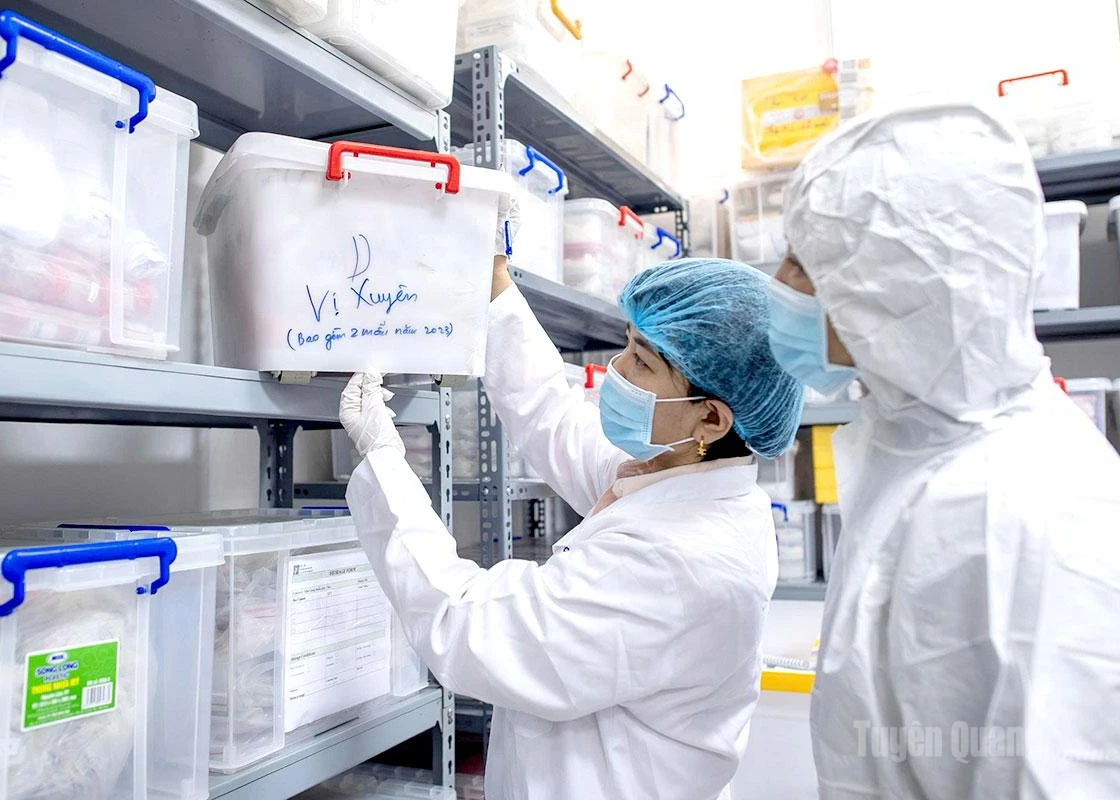 |
| Remains recovered from the Vi Xuyen National Martyrs' Cemetery are preserved at the DNA Identification Center, Institute of Biotechnology, Vietnam Academy of Science and Technology. |
At the center, every stage of the identification process is conducted under strict quality control to ensure maximum accuracy. Each set of remains is assigned a unique identification code and processed separately to eliminate the risk of DNA contamination. Because many of the remains have been buried for decades, their genetic material has often deteriorated significantly, requiring advanced techniques such as DNA extraction, next-generation sequencing and bioinformatics analysis to recover genetic markers for comparison.
According to laboratory technician Le Thi Dung, even the smallest error or cross-contamination between samples could compromise the results. Some severely degraded samples require repeated optimization before sufficient genetic data can be obtained for analysis.
As part of the nationwide "500-Day Campaign" to accelerate the search, recovery and identification of fallen soldiers' remains, the center has been assigned to analyze more than 6,600 samples and is currently preserving over 10,000 samples collected from cemeteries across the country, including those from Tuyen Quang Province. Once sequencing is completed, the DNA profiles are automatically compared with the National DNA Database of martyrs' relatives, which now contains more than 3,800 biological samples collected in Tuyen Quang.
Professor Chu Hoang Ha, Vice President of the Vietnam Academy of Science and Technology, said the accuracy of DNA identification depends on three key factors: the quality of the remaining genetic material, the completeness of relatives' DNA data and rigorous quality control throughout the analytical process. The integration of next-generation sequencing technology with the DNA database has already delivered encouraging results, significantly improving the identification of previously unknown martyrs.
Beyond scientific data, every DNA profile represents the enduring hope of thousands of families still searching for their loved ones. Each successful identification brings them one step closer to knowing where the fallen rest and, ultimately, to bringing them home under their rightful names.
Thanh Thuy


READER COMMENTS