
Unlocking endogenous strength from culturally vibrant residential communities
The movement to build “Cultural Families” and “Cultural Villages and Residential Groups” in Tuyen Quang Province is gaining momentum and delivering substantive results. It has helped strengthen community solidarity, improve people's living standards, promote sustainable poverty reduction, and foster new-style rural areas and civilised urban communities.
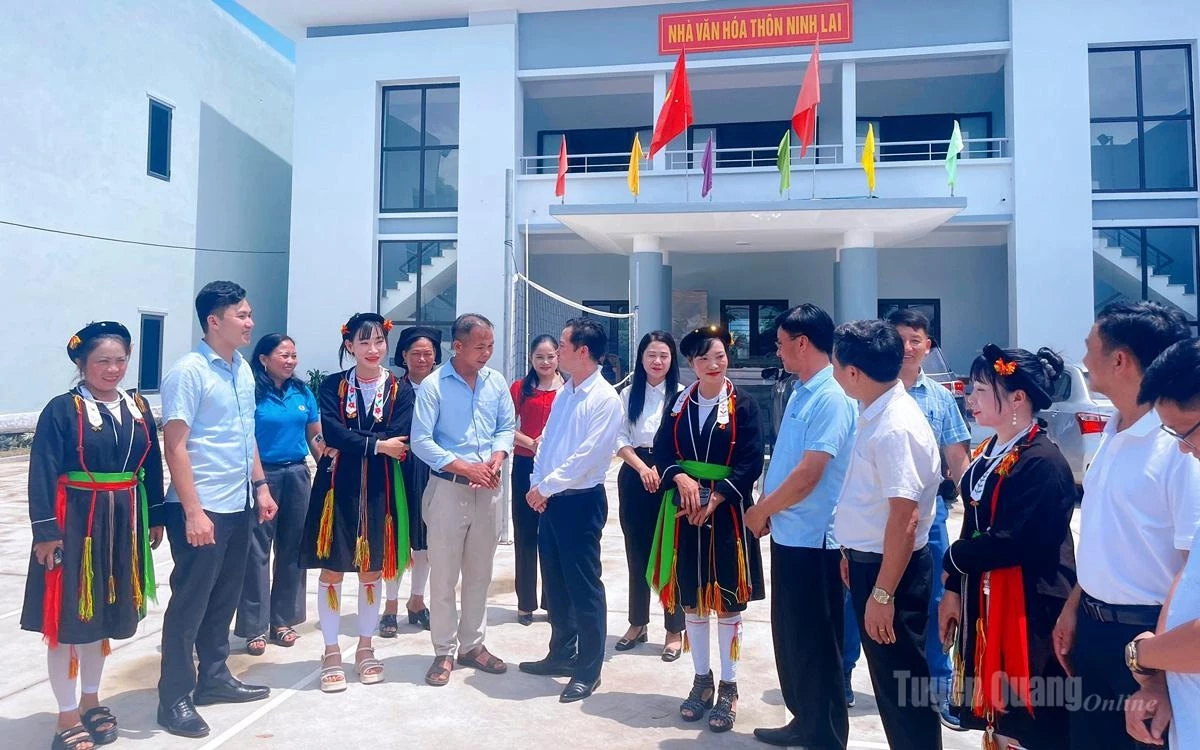 |
| Promoting the cultural lifestyle of the San Diu ethnic group in Ninh Lai Village, Son Thuy Commune. |
From National Great Unity Day celebrations to cultural and artistic activities at the grassroots level, community solidarity is being widely fostered across the province. Behind these efforts is the pivotal role played by Party cell secretaries, village heads, respected community members and Vietnam Fatherland Front Working Committees in mobilising residents to adopt a civilised lifestyle, develop their livelihoods and preserve traditional cultural values.
In Quyen Village, Xuan Giang Commune, Hoang Van Giam, the village head, has taken the lead by establishing a model combining rice cultivation with common carp farming on more than 1,000 square metres of his family's farmland. The model's effectiveness has encouraged other households to follow suit, improve their gardens and make better use of agricultural land. In Thac Tang Village, Cao Bo Commune, Chang Van Canh, a respected member of the Dao community, works closely with Party members and elderly residents to mediate local disputes, encourage mutual support in economic development, eliminate outdated customs and maintain environmental hygiene.
Many residential communities have also recorded positive results in building cultural life. In 2026, more than 85% of households in Sung Mang Village, Sung Mang Commune, were recognised as “Cultural Families”, while the figure in Ban Bung Village, Na Hang Commune, reached 91.44%. Community cultural exchanges and performances have also been maintained, helping preserve and promote the cultural identities of ethnic groups.
Notably, following the merger of Tuyen Quang and Ha Giang provinces, grassroots cultural development has been pursued under a unified framework tailored to the characteristics of different areas. Decision No. 45/2026/QD-UBND, dated May 27, 2026, establishes a 100-point assessment system with three regional categories. To qualify as a “Cultural Village or Residential Group”, communities must score at least 85 points in Region I, 82 points in Region II and 80 points in Region III.
In Tan Lap Village, Tan Trao Commune, integrating cultural standards with community-based tourism development has brought tangible benefits. Residents have actively renovated traditional stilt houses, improved their surroundings and maintained Then singing and Tinh lute clubs. As a result, average per capita income has exceeded VND52 million per year, the village has eliminated poverty, and more than 96% of households have consistently achieved “Cultural Family” status annually.
These achievements demonstrate that when residents become active participants in building and benefiting from cultural values, the movement can bring about meaningful changes in community life while serving as an endogenous driving force for sustainable local socio-economic development.
Le Duy


READER COMMENTS