
A new rhythm of life in Pinh village
More than 40 years after the fierce fighting during the defense of Vietnam’s northern border, Pinh Village in Thanh Son Hamlet, Thanh Thuy Commune, is gradually coming back to life. Once an important forward rear base that received and treated thousands of wounded soldiers, Pinh Village is now taking on a new look, with rice fields, maize fields and community-based tourism activities steadily developing.
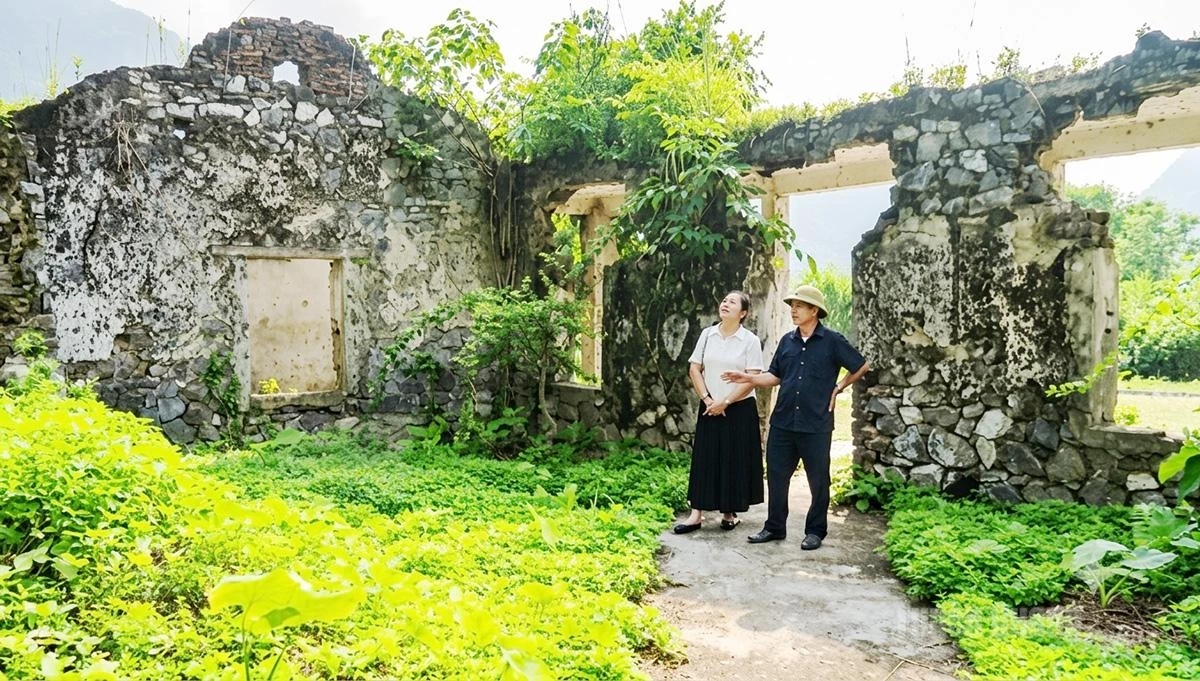 |
| Visitors learn about the history of Pinh Village. |
According to veterans who fought on the Vi Xuyen battlefield, troops were stationed in Pinh Village from 1979. In the spring of 1984, as fighting intensified, local people evacuated and gave up the entire village for military units to use as command posts, logistics warehouses and field surgical stations. Wounded soldiers from High Points 1509, 772, 468 and Nam Ngat were brought here for first aid before being transferred to other facilities.
In 1988, the Binh Tri Thien buildings were built more solidly to serve as meeting places and facilities for treating wounded soldiers. Pinh Village also came under repeated artillery fire, destroying many traditional stilt houses. After the guns fell silent, local people returned and gradually rebuilt their lives on land that had suffered tremendous losses.
Today, Pinh Village is home to a Memorial House for Heroic Martyrs, where veterans return to revisit memories and pay tribute to their fallen comrades.
After merging with Lung Dooc Hamlet and part of Coc Nghe Hamlet, Thanh Son Hamlet now has 153 households and 736 residents from five ethnic groups. Average annual per capita income has reached around VND35 million. Twelve households in the hamlet provide accommodation and food services for visitors, while some others have developed breeding models for reproductive bong fish, muntjac and indigenous black pigs.
In 2012, Thanh Son was selected to develop a community-based cultural tourism village model in association with the New Rural Development program. The local Tay people continue to preserve their traditional stilt houses, Then singing, Tinh lute performances and traditional dishes. Thousands of visitors come to the area every year, particularly in July, when many veterans return to revisit the former battlefield.
Combining the local cultural space with historical wartime sites opens a new direction for tourism development in Pinh Village, while helping preserve memories of the war and create sustainable livelihoods for local people in the border area.
Bien Luan


READER COMMENTS