
Meeting resource demands for comprehensive education
As implementation of the 2018 General Education Curriculum continues, the mandate to foster well-rounded character and competencies in students has driven an unprecedented demand for teaching staff. The shortage is particularly acute among personnel qualified to deliver experiential activities, career guidance, skills education, and school psychological support.
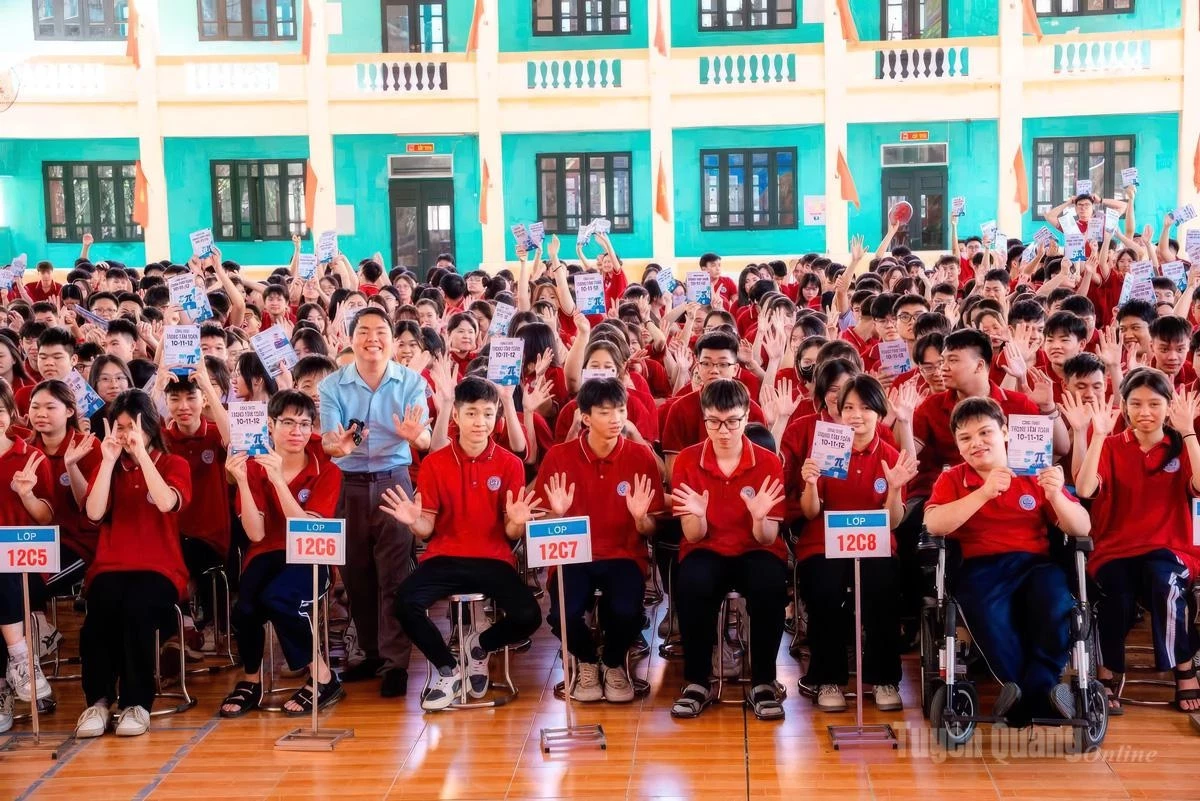 |
| Students at Tan Trao High School enthusiastically participate in the "Self-Positioning" program. |
Through experiential and career-oriented activities, students engage in real-world situations, sharpen practical skills, discover their potential and interests, and progressively shape their career awareness. At many schools, however, these activities are still primarily handled by subject teachers and homeroom teachers taking on extra duties. Without dedicated staff or proper task distribution, these initiatives risk being reduced to superficial group meetings or movement-based awareness campaigns.
Meanwhile, the challenges facing students are growing increasingly complex - ranging from academic pressure, peer conflicts, and school violence to the impacts of social media and adolescent psychological changes. This reality underscores the urgent need for regular, structured counseling, support, and life skills education.
For the 2026–2027 academic year, the province operates 578 educational institutions, comprising over 17,000 class groups and serving more than 500,000 students from preschool through high school. While school consolidation has streamlined administration, it has expanded individual campus sizes and created multi-branch schools across vast areas. Across the province, there remains a shortfall of approximately 3,693 teachers: 1,416 at the junior high level, 1,133 in preschools, and 683 in primary schools.
At Tien Nguyen Primary and Secondary Ethnic Boarding School, which serves over 600 students, including more than 500 boarders, the faculty is short 1 Computer Science teacher, 2 English teachers, and 3 general subject teachers. Similarly, Dong Yen Junior High School caters to 1,431 students across 36 classes but faces a shortage of 18 teachers, creating severe strain on staff allocation across subjects, grade levels, and teaching sites.
At the high school level, experiential and career guidance activities are mandatory, accounting for 105 periods over 35 academic weeks. Delivering them effectively demands cross-disciplinary collaboration and strategic staffing.
To address these shortages, the Department of Education and Training has recommended developing tailored mechanisms for recruiting, deploying, and training teachers in deficit subjects. Temporary measures, such as staff transfers, secondments, and inter-school teaching arrangements, are also being deployed to balance human resources. Concurrently, local authorities are prioritizing investments in facilities, teaching aids, IT infrastructure, and digital transformation, with special emphasis on ethnic minority and mountainous regions.
Ensuring adequate and synchronized educational resources will enable schools to execute experiential and career guidance programs effectively, fulfilling the overarching goal of comprehensive student development.
Ha Hoa


READER COMMENTS