
Thorough preparations for the 2026-2027 academic year
The opening ceremony for the 2026-2027 academic year will be held simultaneously nationwide on September 5, 2026. Preparations for the new school year, including facilities, teaching equipment, and human resources such as administrators and teachers, are being actively carried out by the education and training sector, relevant departments and agencies, organizations, and localities.
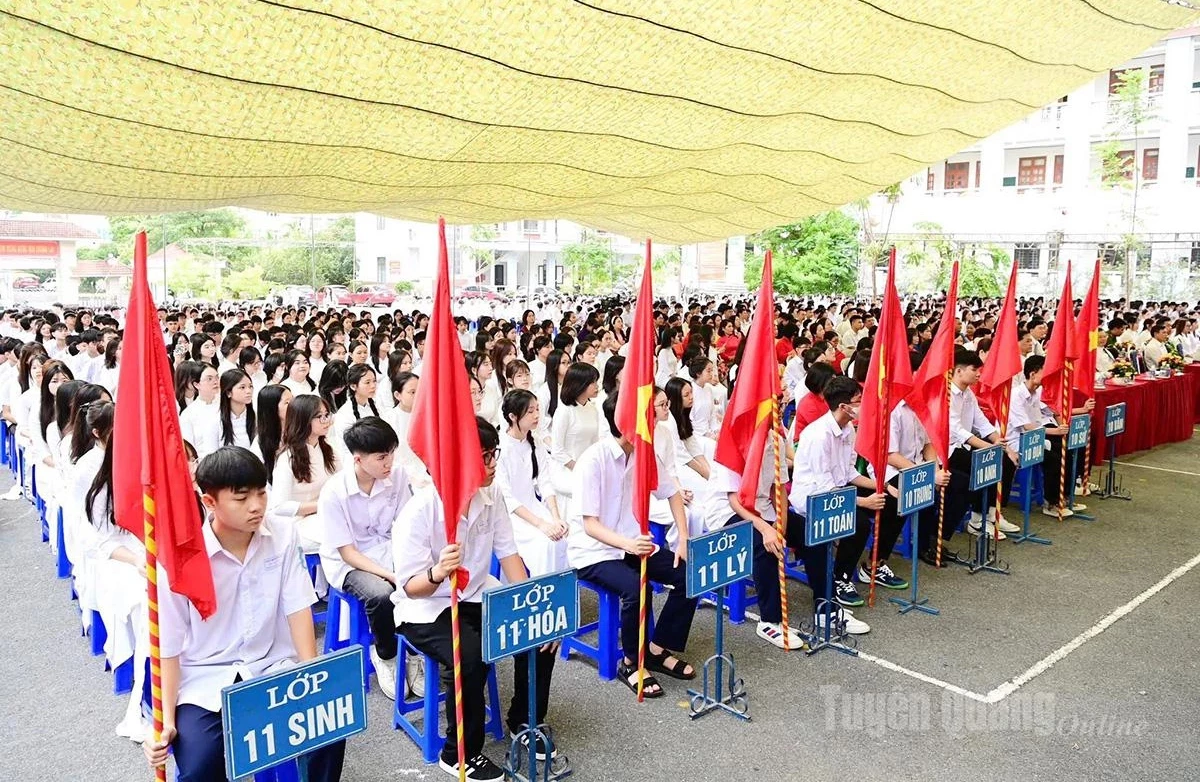 |
According to guidance from the Ministry of Education and Training, opening ceremonies for the new academic year nationwide will be organized in a solemn, safe, economical, and practical manner, with students placed at the center, so that the first day of school can truly become a festival for students.
Closely following Resolution No. 71-NQ/TW of the Politburo and the directions of General Secretary and President To Lam regarding the education sector, localities are urgently working to remove institutional and policy bottlenecks, accelerate investment in educational infrastructure, improve teaching and learning quality, and promote innovation in higher education, gradually translating major policies into practice and making comprehensive preparations for the new academic year.
Among the important policies already introduced are regulations on providing free textbooks for general education students; waiving tuition fees and fees for textbooks used in national defense and security education at higher education and vocational education institutions; and continuing to complete regulations to support the development of education amid the implementation of new laws.
Alongside policy improvements, the education sector is also implementing a range of coordinated solutions to address localized teacher shortages and surpluses; reorganize the network of preschool, general education, and continuing education institutions; comprehensively assess teachers, education managers, and educational support personnel; review standards for facilities and teaching equipment; and modernize the vocational and higher education systems.
In Tuyen Quang Province, under the overall plan to reorganize the network of public preschool, general education, and continuing education institutions in line with the two-tier local government model, the province has reduced the number of educational institutions by 485, from 1,063 to 578, representing a 45.6% reduction and exceeding the target assigned by the Ministry of Education and Training by 15.6 percentage points.
For the six multi-level boarding schools in the communes of Minh Tan, Pa Vay Su, Pho Bang, Son Vi, Thanh Thuy, and Xin Man, whose first-phase construction has commenced, work is being accelerated to ensure they are completed and put into operation as scheduled. The Department of Education and Training has approved the enrollment results for the six schools, with a total of 6,944 students enrolled for the 2026-2027 academic year out of a designed capacity of 7,015, equivalent to approximately 99%. It has also issued guidelines on boarding school management and coordination plans to ensure operational conditions, while implementing plans to arrange teaching staff and ensure the necessary conditions for the schools to begin operations.
The 2026-2027 academic year brings many new requirements, particularly as the province has reorganized its network of schools and classes and is implementing a model of multi-level boarding schools in border communes. Therefore, departments, agencies, local authorities, and educational institutions need to take the initiative and urgently complete the remaining tasks to ensure that the new academic year is conducted safely, orderly, and effectively. At the same time, greater attention should be paid to improving educational quality and building a team of capable, dedicated, and responsible administrators and teachers who can meet the requirements of educational reform in the new period.
Phuong Dong


READER COMMENTS