
Tuyen Quang accelerates school network restructuring
Following the Central Government’s directive on streamlining the administrative system under the two-tier local government model, Tuyen Quang Province is accelerating the restructuring of its public preschool, general and continuing education network to improve governance efficiency and enhance education quality.
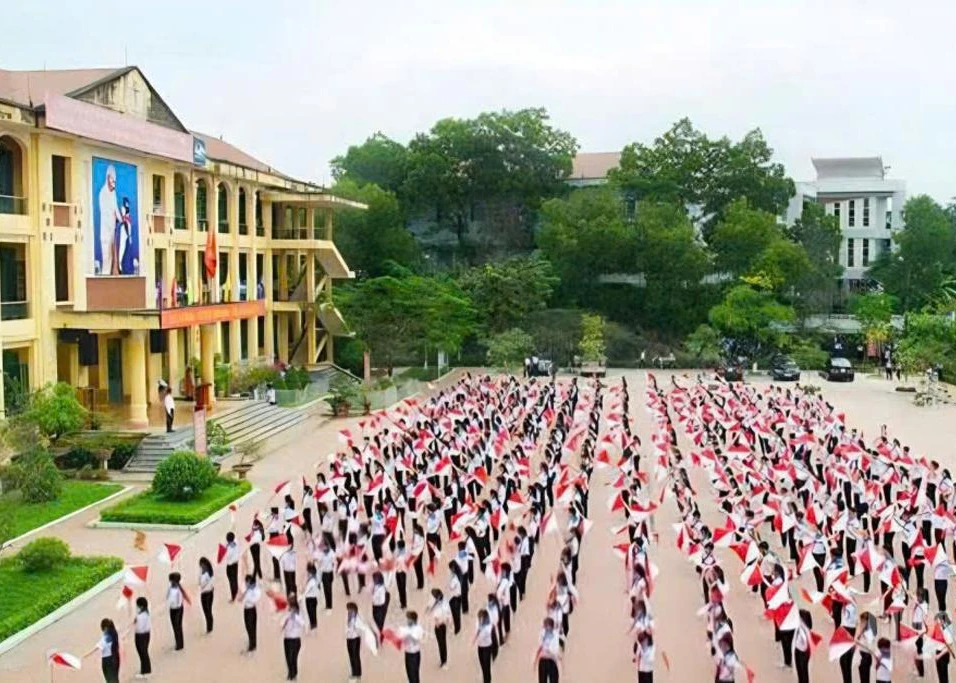 |
| Students take part in a mid-morning physical exercise session at Le Quy Don Secondary School, Minh Xuan Ward. |
As a mountainous province with rugged terrain, scattered communities and numerous satellite campuses, Tuyen Quang has long faced challenges in organizing its school system. The restructuring is expected to optimize resources, address teacher shortages and improve the quality of teaching and learning. At the same time, authorities are carefully considering issues such as travel distances for students, school infrastructure and the deployment of teachers and school administrators.
The province has emphasized that the process must be carried out prudently, placing students’ interests at the center rather than applying a one-size-fits-all approach. Local authorities have conducted comprehensive assessments of geographical conditions, transportation networks and school facilities while strengthening public communication to build consensus among residents.
On July 31, 2026, the provincial People’s Committee issued Plan No. 158/PA-UBND on the comprehensive restructuring of the public education network. As a result, the number of public educational institutions has been reduced from 1,063 to 578, representing a 45.6% decrease and surpassing the province’s target. The number of preschools has fallen by 50.6%, primary schools by 66.7%, lower secondary schools by 70%, while continuing education and vocational education centers have been reduced by 66.7%.
A key feature of the reform is the introduction of large-scale single-level schools and multi-level school models, operating with one main campus and satellite campuses under a unified administrative, financial and management structure. The model is expected to maintain access to education for students while streamlining administration and making more efficient use of teaching staff.
Alongside the restructuring, the provincial education sector is expediting the reassignment of school leaders and teachers to ensure the newly organized system operates smoothly and is fully prepared for the 2026–2027 academic year, with the ultimate goal of improving the quality of education across the province.
Huy Hoang


READER COMMENTS