
EU’s new strategy on the Arctic
The European Commission (EC) is preparing to announce a new Arctic strategy, marking the European Union’s push to strengthen its presence in a region of strategic importance to the Old Continent’s economy, security, and energy.
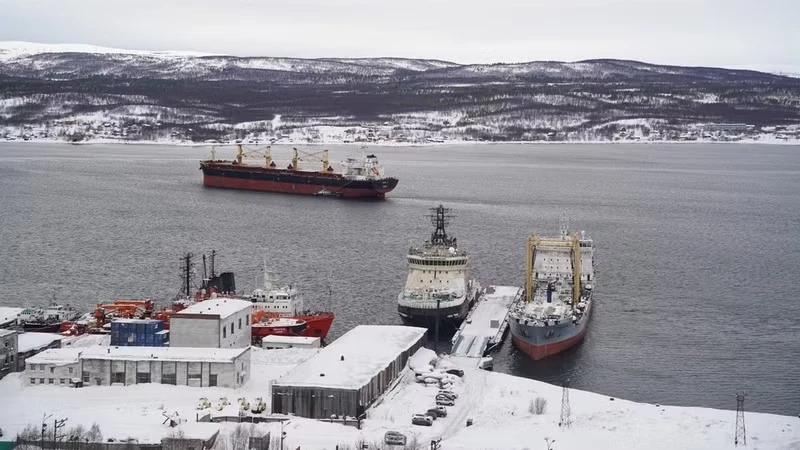 |
| Illustrative photo: A corner of Kola Bay in the Barents Sea. (Source: VNA) |
With vast potential and abundant resources, the Arctic is climbing Europe’s agenda.
This is not the first time the EU has shown interest in the Arctic, but the cold region has never attracted as much attention from the 27-member bloc as it does now. In addition to planning a new Arctic strategy this October, the EU recently held an Arctic summit in Finland, attended by leaders of many member states.
In the joint statement issued after the summit, countries called on the EU to increase investment and adopt a more proactive approach in the Arctic. These steps clearly demonstrate the Arctic’s growing importance in the Old Continent’s development strategy.
Several factors drive this heightened interest. First, broader international shifts and the Arctic’s evolving role have led to shifts in the EU’s approach to the region. Previously, the Arctic mainly evoked images of a remote, cold, and relatively isolated area, with little direct impact on European politics, security, and the economy. The Arctic attracted the EU’s attention mainly because of issues related to environmental protection, scientific research, sustainable development, and climate change response. However, global warming and the rapid melting of ice have fundamentally altered the landscape.
According to experts, melting ice poses serious challenges to the environment and the global fight against climate change, but it has also unintentionally expanded access to the Arctic’s abundant resources. The Arctic holds vast potential in oil, gas and, especially, strategic minerals, which play a core role in many key areas of the economy, such as semiconductors, electric vehicles, renewable energy, and defence.
Recently, the “hunger” for strategic minerals to fuel the energy transition and technological development has triggered a race to control resources in this “reserve storehouse.” The EU is no exception.
Melting ice in the Arctic has also opened up new maritime routes. Amid volatility in the Strait of Hormuz, which has increased risks to global supply chains, establishing new shipping routes has become an urgent long-term requirement for Europe.
Although navigable for only a few months each year due to harsh weather and high costs - and mainly suitable for relatively small vessels - the Arctic sea route is drawing increasing attention as it can significantly shorten shipping times between Asia and Europe compared with the traditional route through the Suez Canal.
From a security perspective, the accession of EU member states such as Finland and Sweden to the North Atlantic Treaty Organisation (NATO) has tied the Arctic more closely to the common defence capabilities of both NATO and the EU. European Council President Antonio Costa said the European Union needs to adjust its Arctic approach to suit the new context. In addition, the EU also has certain advantages in implementing policy in the Arctic. Accordingly, several EU member states, such as Finland, Denmark, and Sweden, have direct links to this cold yet resource-rich region.
Recent moves show a shift in the EU’s Arctic policy, from a framework primarily focused on climate and environmental issues to a comprehensive strategy covering security, the economy, maritime affairs, and infrastructure. However, analysts say practical implementation will not be easy, as it requires major financial and resource investments and, above all, consensus among member states on updating and implementing a common Arctic strategy.
NDO


READER COMMENTS