
US-Canada relations at a critical crossroads
Following the last-minute collapse of tariff talks between the US and Canada, the two sides have repeatedly announced retaliatory measures against each other. Tensions are escalating, but their deep economic ties and shared interests are expected to serve as an “anchor”, helping the bilateral relationship weather the storm.
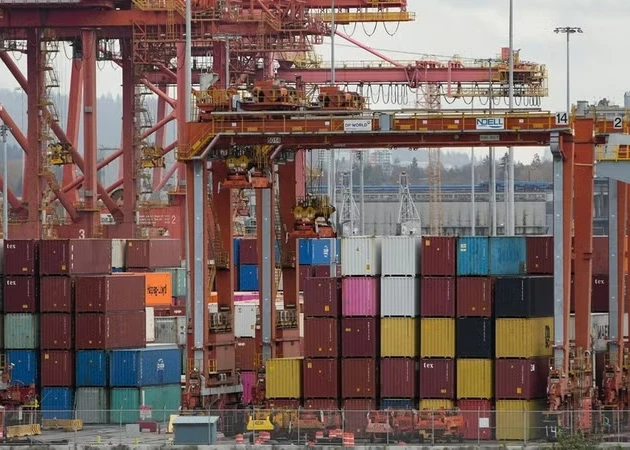 |
| Cargo port in Vancouver, British Columbia, Canada. (Photo: Xinhua/VNA) |
After days of negotiations ended without the expected outcome, US-Canada relations almost immediately entered a cycle of escalating tensions, marked by a series of tit-for-tat measures.
In the latest development, US President Donald Trump warned that Washington would raise tariffs to 50% on all cars, trucks, auto parts and steel imported from Canada, effective January 1, 2027. Ottawa, meanwhile, announced tariffs ranging from 15% to 50% on more than 700 US products from September 8, in retaliation for the 50% tariffs Washington had imposed on Canadian goods worth around 20 billion USD. Experts fear the retaliatory measures could trigger a trade war and deepen the rift between the two neighbouring countries.
The current tensions could have far-reaching consequences for both economies and North American trade as a whole. For the US, the trade dispute with Canada comes as the country faces multiple pressures, including persistent inflation, rising public debt and higher fuel prices. Experts warn that retaliatory tariffs could drive up the cost of goods, add to inflationary pressures, discourage business investment and weaken economic activity.
Republican Senator Susan Collins said the new tariffs would increase household costs, as most businesses would have little choice but to pass the additional tariff burden on to consumers through higher prices.
For Ottawa, the outlook is no more promising. The immediate concern is not only the risk of rising prices. At present, only about 5% of Canada’s annual exports to the US are affected.
In the short term, this does not represent a major blow to Canada’s economy. In the longer term, however, trade tensions with its largest export market could weigh on export prospects, forcing manufacturers to reconsider their business plans. The Canadian Chamber of Commerce has warned businesses to prepare for the turbulence as the tariff “storm” approaches.
Despite Washington and Ottawa repeatedly adopting tough rhetoric and positions, analysts believe both sides have strong reasons to return to the negotiating table and seek a compromise. The US and Canada have built one of the world’s strongest trading relationships. Although recent tariff disputes have deepened divisions between the North American neighbours, the economic ties forged over decades are not easily undone.
Canada is currently the US’s largest trading partner and supplies much of its natural gas and electricity, as well as about 60% of its crude oil imports. In 2025, bilateral trade in goods and services totalled nearly 880 billion USD. The US remains Canada’s most important export market, accounting for nearly 72% of its goods exports.
Canadian Prime Minister Mark Carney has repeatedly said that relations with the neighbouring country have fundamentally changed and that Ottawa needs to diversify its export markets to reduce its dependence on Washington. However, finding alternatives to the world’s largest export market on Canada’s doorstep, with deeply integrated supply chains, is not a problem that can be solved overnight.
US-Canada relations are at a critical crossroads: either negotiate to ease tensions or continue retaliating against each other. Each choice could lead the two countries down radically different paths. Given the deep interdependence between their economies, an outright trade war would only inflict damage that could be difficult to repair. Therefore, despite the challenges, negotiations remain the best option for the two North American neighbours.
NDO


READER COMMENTS