
Discovering Ho Thau’s golden terraced fields
At the foot of majestic Chieu Lau Thi Peak, Ho Thau Commune is dressed in the brilliant golden hues of sunshine and ripe rice in autumn. Beyond its spectacular terraced fields, the locality is also home to rich cultural heritage and distinctive ethnic traditions, creating favorable conditions for community-based tourism development.
In the local language, Ho Thau means “headwaters”, referring to the source of small streams in the upper basins of the Chay and Bac rivers. The commune is home to more than 8,700 people from five ethnic groups – Dao, Nung, Mong, Tay and Kinh – with the Dao accounting for more than 61% of the population.
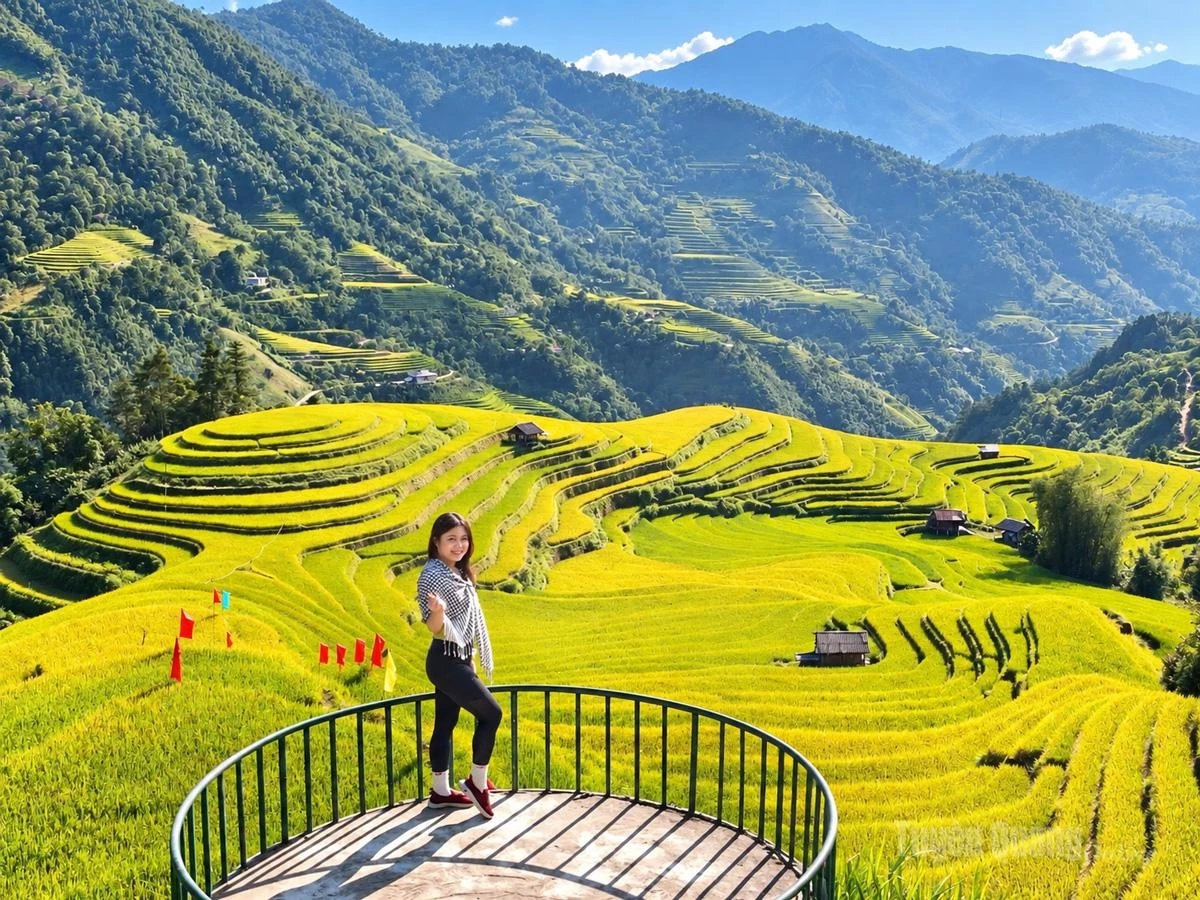 |
| Tourists capture beautiful moments amid the golden rice season on the Nam Khoa “Tray of Sticky Rice” Hill. |
At an average elevation of about 900 meters above sea level, most of Ho Thau’s farmland lies along steep mountain slopes. Over generations, local residents have adapted to the terrain by leveling the land, building embankments and channeling water from mountain streams into individual plots. Over time, the small fields have formed layer upon layer, creating a spectacular agricultural landscape amid the mountains.
The commune now has more than 800 hectares of terraced rice fields. The terraced fields in Nam Khoa, Hung An and Tan Phong villages have been recognized as a national scenic landscape. In particular, the “Tray of Sticky Rice” Hill in Nam Khoa Village has long been a renowned attraction, drawing large numbers of tourists and photographers. Viewed from above, the circular rice terraces are arranged in even tiers, resembling a tray of sticky rice set amid the mountains.
Alongside its scenic value, Ho Thau has developed a rice-fish farming model that provides additional income for local residents. Native carp are raised naturally in the rice fields and harvested when the rice is ripe. The commune produces more than 10 tons of field-raised carp per crop, generating an economic value of over VND 1.2 billion.
Ho Thau is also rich in intangible cultural heritage, with traditional festivals, rituals and folk performances preserved by local ethnic communities. Notable examples include the Ban Vuong Festival, Quýa héng Festival, Cap Sac ceremony, the sweet and expressive Pao Dung folk singing of the Dao people, and the sacred Forest Worshiping ceremony of the Nung people. Several of these cultural practices have been included in the National Intangible Cultural Heritage List.
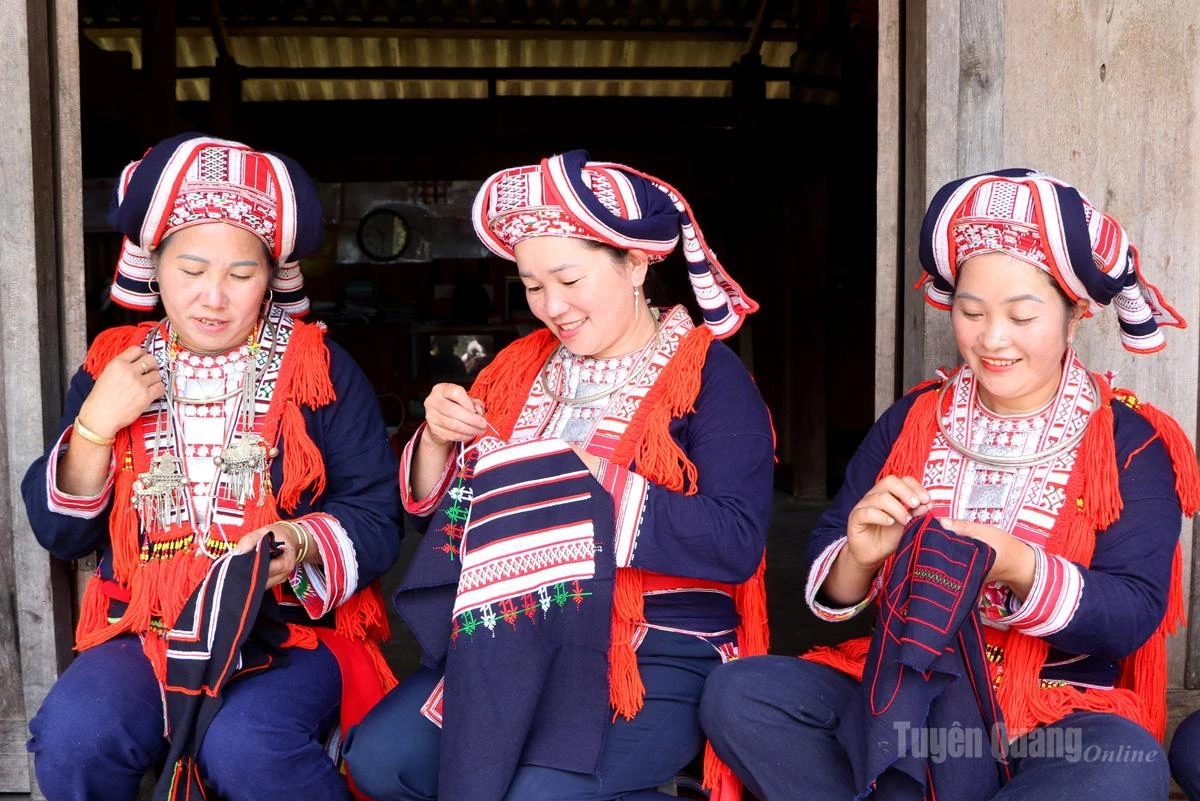 |
| Dao women in Ho Thau preserve their traditional brocade embroidery. |
Building on its natural and cultural assets, Ho Thau has been promoting community-based tourism. In recent years, local households have renovated traditional wooden houses and invested in homestay facilities and tourism services. The commune welcomed more than 10,000 visitors in the first eight months of this year.
To further promote its heritage and boost local socio-economic development, Ho Thau is preparing to host the 2026 Ho Thau Cultural and Tourism Week under the theme “Ho Thau – Heritage Golden Season, Aspiration to Reach Far,” scheduled for September 18–21.
The event will feature a range of cultural and tourism activities, including a competition on harvesting and processing ancient Shan Tuyet tea, a tea appreciation space, a challenging race to conquer Chieu Lau Thi Peak, a terraced-field carp-catching contest, a colorful highland market featuring traditional brocade, and tours exploring the Nam Khoa and Tan Phong scenic areas and the pristine Son Thanh and Tan Thanh waterfalls.
Thanh Thuy


READER COMMENTS