
The Giay people’s traditional embroidered shoemaking craft in Ma Le
From simple bamboo sheaths to carefully embroidered flowers, women of the Giay ethnic group in Ma Le Village, Lung Cu Commune, continue to preserve their traditional fabric shoemaking craft. More than everyday footwear, each pair embodies customs, spiritual beliefs and cultural values passed down through generations.
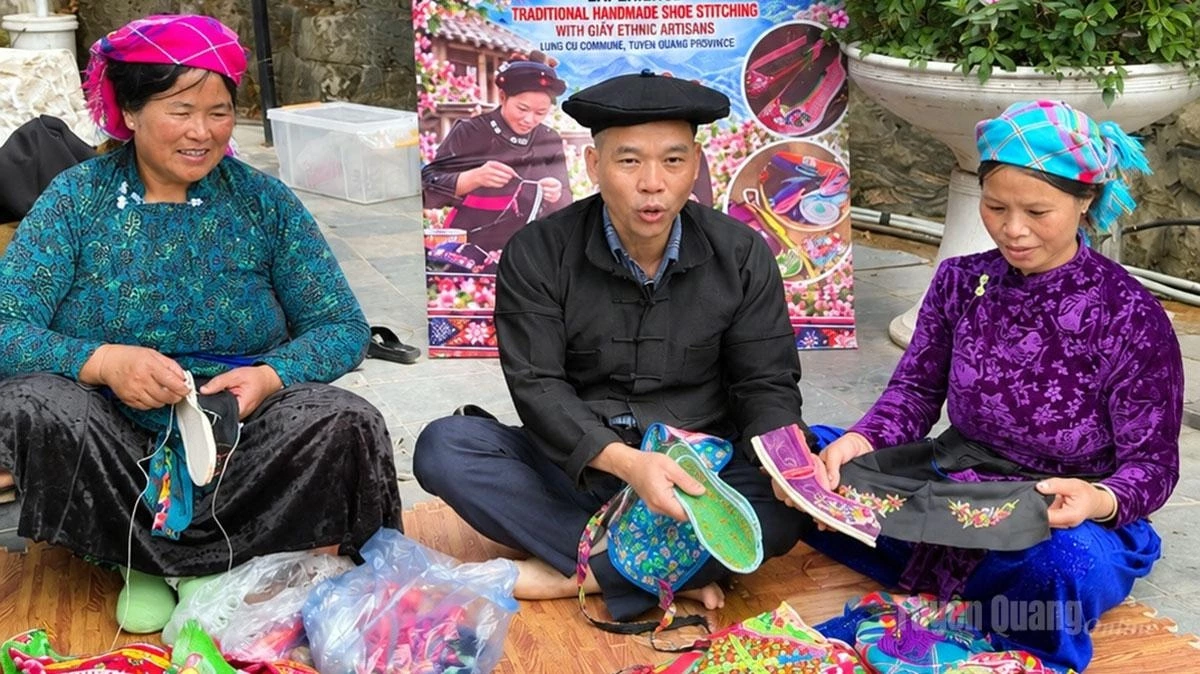 |
| The traditional shoemaking craft of the Giay people has become a unique tourism product in Lung Cu. |
Ma Le is home to 55 Giay households that have largely preserved their language, traditional costumes and customs. Among these cultural traditions, handmade embroidered fabric shoes hold a special place. Almost every Giay woman in the village knows how to make them. Producing one pair takes two to three days and involves several meticulous stages, including making the soles from bamboo sheaths, preparing cornflour paste, shaping the uppers and embroidering colourful patterns. Motifs of peach blossoms, lotus flowers, roses and stylised birds and animals decorate the fabric, creating durable shoes with distinctive designs. Each finished pair sells for around VND 800,000.
For the Giay people, these shoes are also associated with important milestones in life. At weddings, a bride wears a new pair and gives shoes to her relatives on her husband's side as a gesture of respect and gratitude. When an elderly person passes away, family members prepare new shoes, believing that the deceased will wear them on their journey to reunite with their ancestors.
However, the traditional craft is at risk of fading as mass-produced footwear becomes increasingly popular. Most skilled artisans are elderly, while younger generations show less interest in learning the trade. In response, local authorities have organised vocational training and encouraged the establishment of a 15-member shoemaking group led by Lo Thi Luyen. Members make shoes during their spare time, fulfil orders and teach younger family members the craft.
With support from the village head in promoting the products, Lung Cu Commune has also introduced hands-on embroidery experiences for visitors at the foot of the national flagpole. These activities are creating opportunities to reach new markets, generate additional income and promote local cultural values.
To ensure the craft's long-term preservation, the commune hopes to receive further support in funding, practical solutions and training activities, helping sustain this traditional handicraft in modern life.
Giang Lam


READER COMMENTS