
The Red Dao’s traditional bride-welcoming ritual
A foot-washing ritual performed for brides before they cross the threshold into their husband’s home is a traditional wedding custom still preserved by the Red Dao people in Bo Ngoang Village, Minh Quang Commune. Though simple in form, the ritual reflects the care and hospitality of the groom’s family toward the new family member and conveys their wishes for a harmonious and peaceful married life.
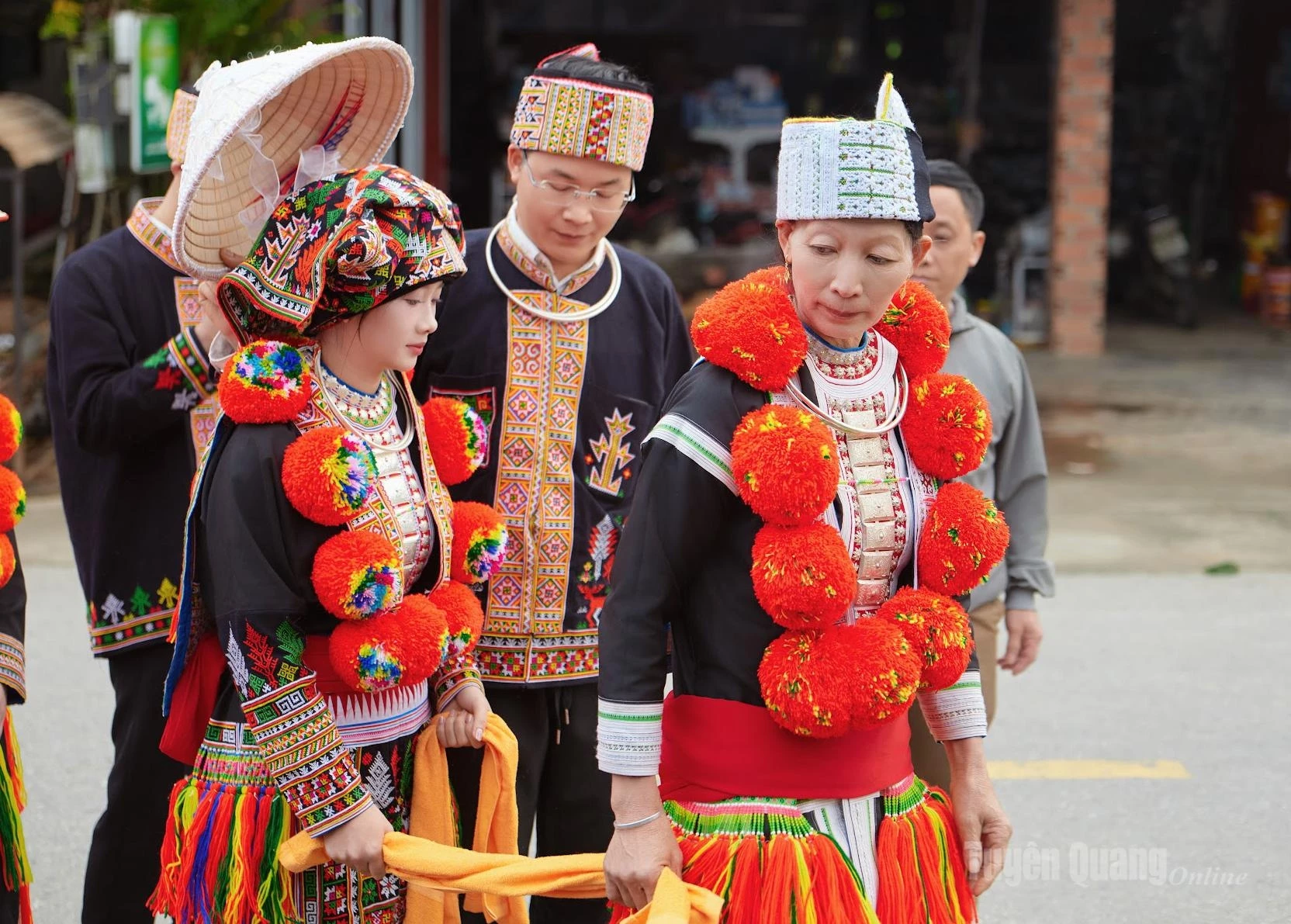 |
| Bride Ngoc Dung follows the groom’s family to Bo Ngoang Village in the traditional wedding attire of the Red Dao people. |
After the early-morning bridal procession, bride Ngoc Dung, dressed in traditional Red Dao wedding attire, followed the groom’s family to Bo Ngoang Village to begin a new life with her husband, Tai Han. Upon arriving at the groom’s home, she did not immediately enter the house to perform the ritual of paying respects to the ancestors. Instead, a basin of warm water had been prepared at the doorstep for the foot-washing ritual.
The person performing the ritual is usually a young boy or girl younger than the bride. The child gently washes the bride’s feet before she enters the house. According to local Red Dao people, the custom originated in the past, when roads were difficult and brides often had to walk long distances to reach their husbands’ homes. Washing their feet was initially a practical act, but over time it became a distinctive feature of the wedding ceremony, expressing the groom’s family’s care and warm welcome for the new daughter-in-law.
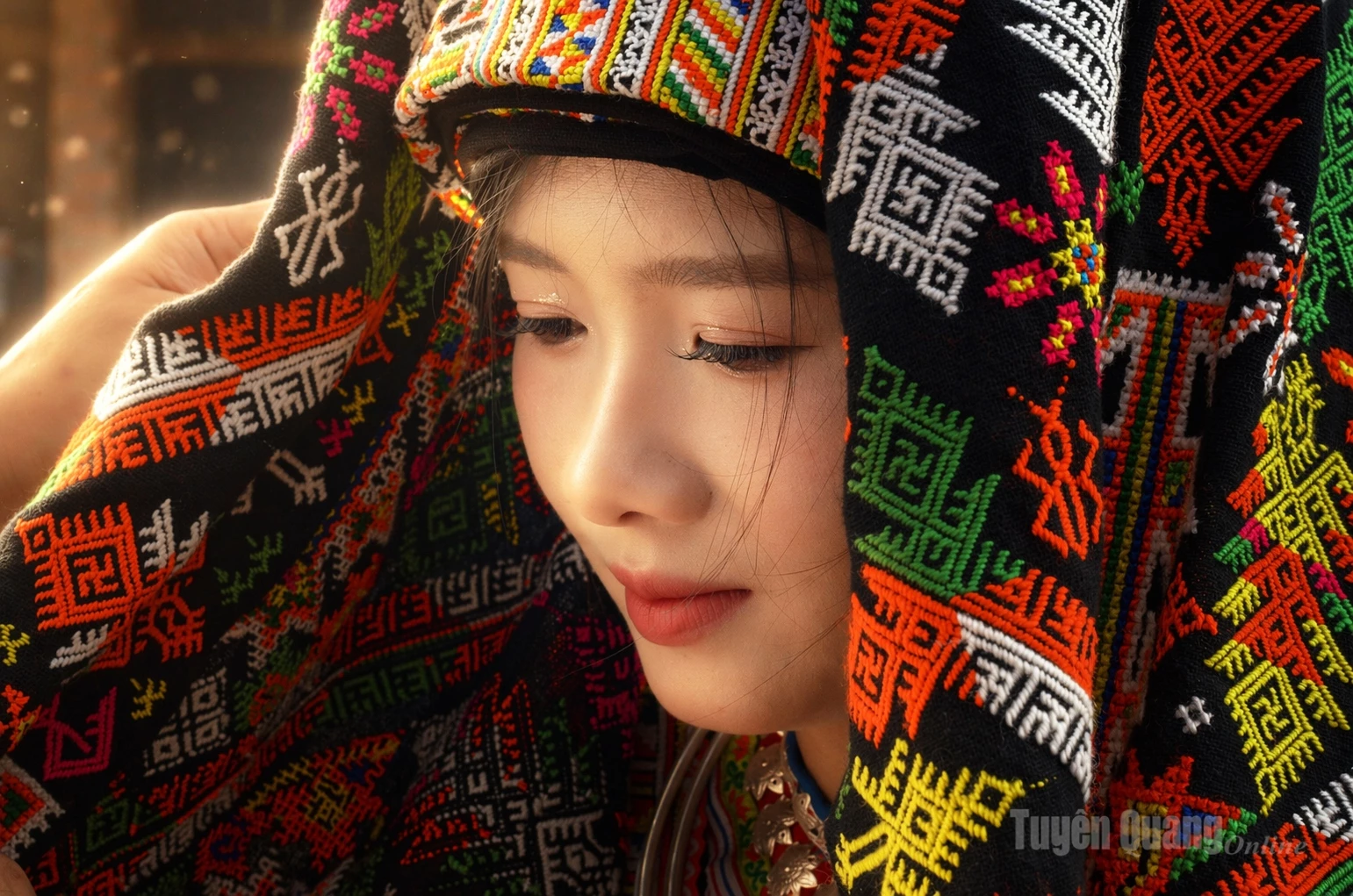 |
| Bride Ngoc Dung shyly poses beneath an intricately embroidered, brightly colored headscarf. |
Phung Thi Tam, Tai Han’s mother, said that for the Red Dao, welcoming a woman into the family as a daughter-in-law is an important family event. Therefore, on the wedding day, the groom’s family shows special care and affection for the bride from the very first rituals upon her arrival. The small basin of water placed at the doorstep is not merely part of a traditional ritual, but also conveys the family’s wishes for the bride to enjoy a peaceful and happy life and for the new family to remain harmonious.
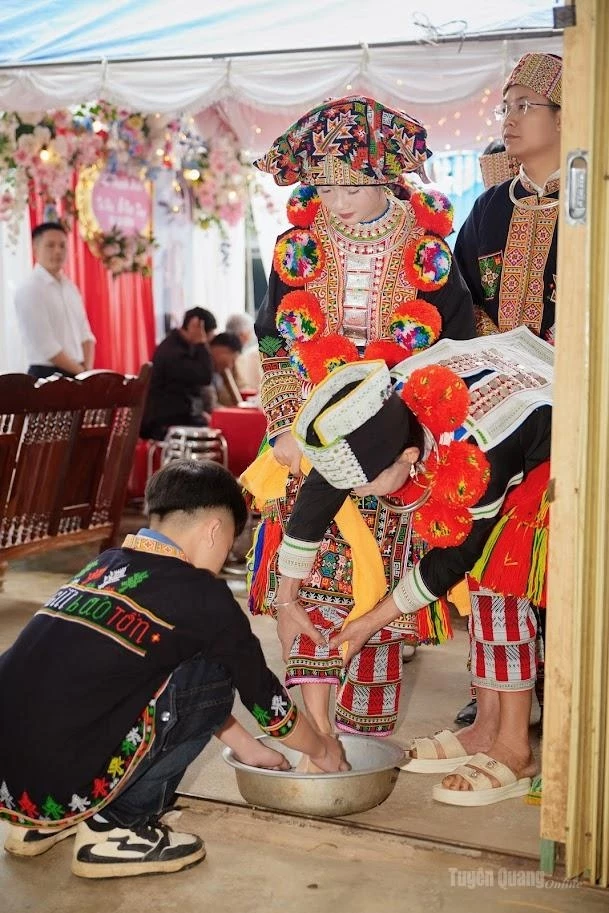 |
| A Red Dao bride takes part in the traditional foot-washing ritual. |
For the Red Dao, wedding rituals not only mark the union of a young couple but also strengthen ties between their two families and lineages. Each ritual carries good wishes for the newlyweds and hopes for a lasting and happy home.
Today, as traditional lifestyles increasingly interact with modern life, many wedding customs among ethnic communities have evolved to suit changing circumstances. However, in Bo Ngoang Village, the Red Dao people continue to preserve traditional rituals, contributing to the safeguarding of their distinctive cultural identity.
Canh Truc


READER COMMENTS