
Then singing club in Tan Trao
The sound of Then singing and the gentle notes of the Tinh lute can be heard from early morning along the concrete road leading to Ao Rum hamlet, Tan Lap village, Tan Trao Commune. The traditional melodies come from a free Then singing and Tinh lute class run by Trieu Thi Lam Hanh, who has devoted herself to preserving and passing on the traditional art to younger generations.
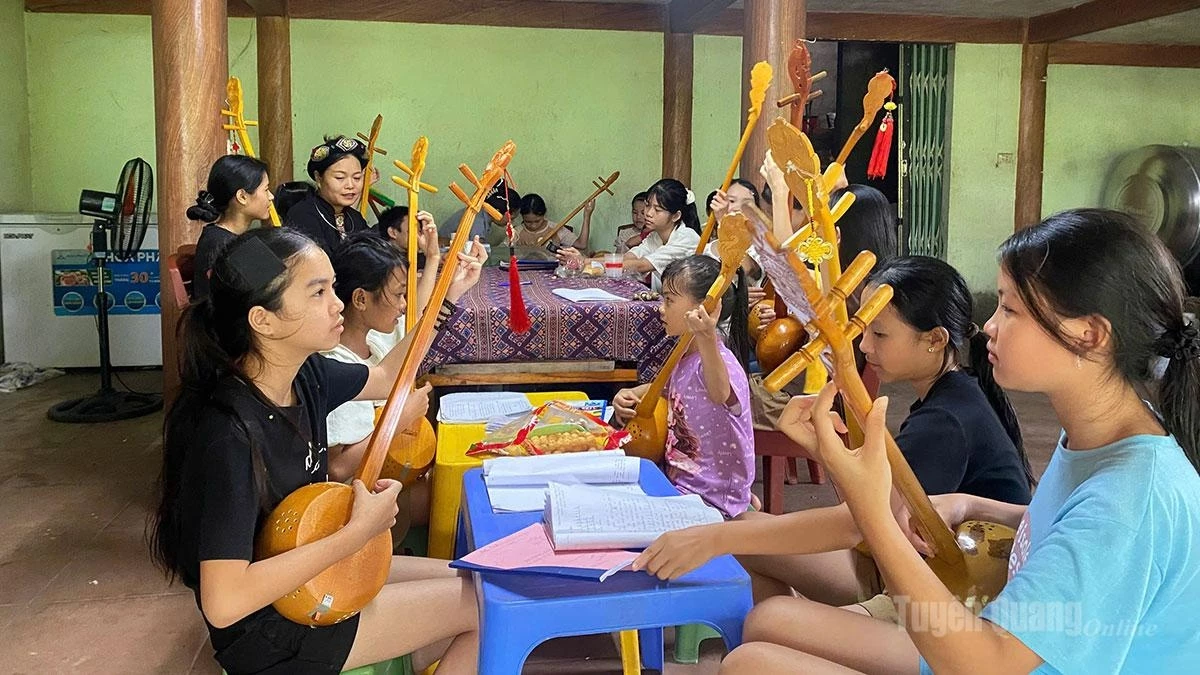 |
| Trieu Thi Lam Hanh teaches children to sing Then. |
The class is held at Hanh’s traditional stilt house, where around 23 children from Grade 2 to Grade 8 gather during the summer. While some are just beginning to learn the Tinh lute, others have been attending the class for months and are now able to sing Then and play the instrument with confidence.
Although she is a Dao woman from Minh Thanh Commune, Hanh has developed a deep attachment to the Then singing and Tinh lute traditions of the Tay people. Her love for Then began when she was 15, after she first heard its distinctive melodies on television. Later, through cultural and artistic exchanges, she learned to sing Then and play the Tinh lute and joined local performances for cultural events and tourists.
In 2020, driven by concerns over the preservation of Then singing, Hanh advised the local authorities to establish the Tan Trao Commune Then Singing and Tinh Lute Club. From its initial members, the club has grown and now maintains around 30 members, becoming a core force in cultural performances and community-based tourism activities in Tan Trao.
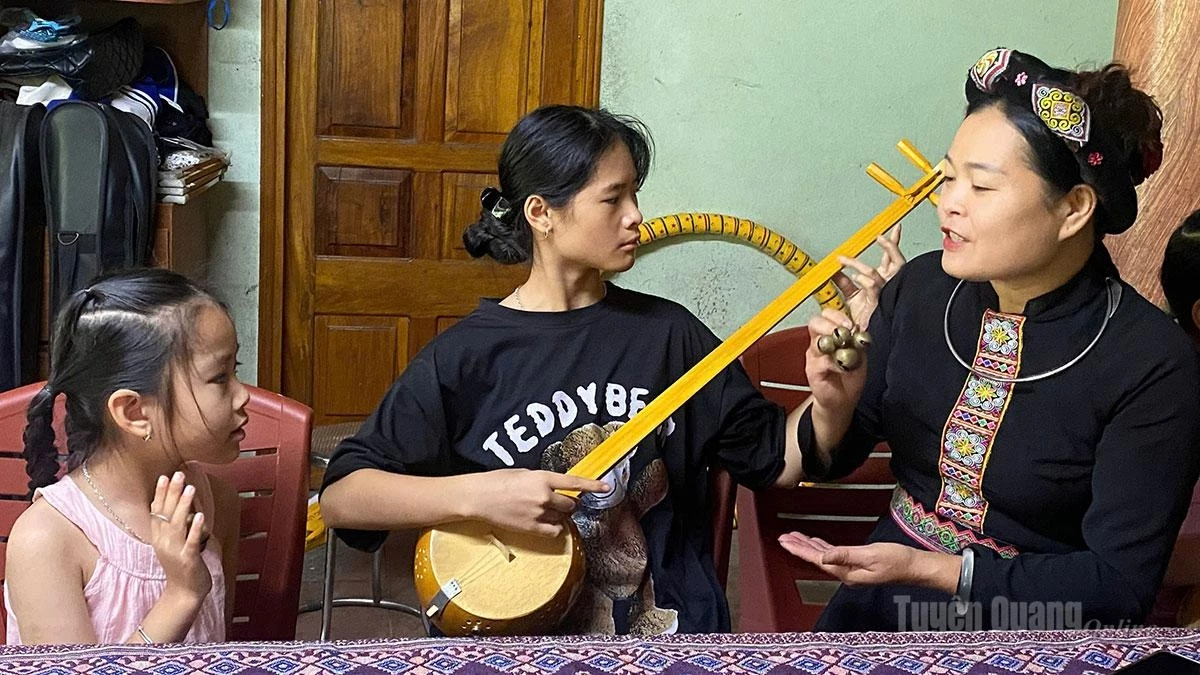 |
| A Then singing and Tinh lute class taught by Trieu Thi Lam Hanh. |
Since 2025, Hanh has opened free Then singing and Tinh lute classes at her home every summer when students are on holiday. She has organized three classes so far. During the school year, local schools also invite her to introduce Then singing and the Tinh lute as part of local cultural education.
For Hanh, teaching Then is not simply about passing on singing and instrumental skills. More importantly, she wants to nurture in children a love and appreciation for the cultural heritage of their homeland.
Many students who were initially unfamiliar with the instrument and hesitant to sing have gradually gained confidence. Some now hope to perform at cultural festivals and tourism events, helping promote the traditional culture of their community to a wider audience.
Duong Minh Tuan, Deputy Secretary of the Tan Trao Commune Party Committee and Chairman of the Commune People's Committee, said Hanh has made significant contributions to preserving and passing on Tay ethnic cultural heritage to younger generations.
From a small class in a traditional stilt house, young fingers are learning to follow the rhythm of the Tinh lute, while young voices carry the melodies of Then into the future. Through Hanh’s dedication, a precious cultural tradition continues to be preserved, passed down and revitalized, contributing to the cultural identity and community-based tourism development of Tan Trao.
Thuy Chau


READER COMMENTS