
Developing the digital economy in Lam Binh
Under the canopy of ancient forests in Lam Binh Commune, farmers once accustomed to hillside cultivation are now becoming digital content creators, operating YouTube and TikTok channels that attract hundreds of thousands to millions of followers. The digital economy is being oriented and encouraged as a viable livelihood, providing stable and relatively high incomes for local people.
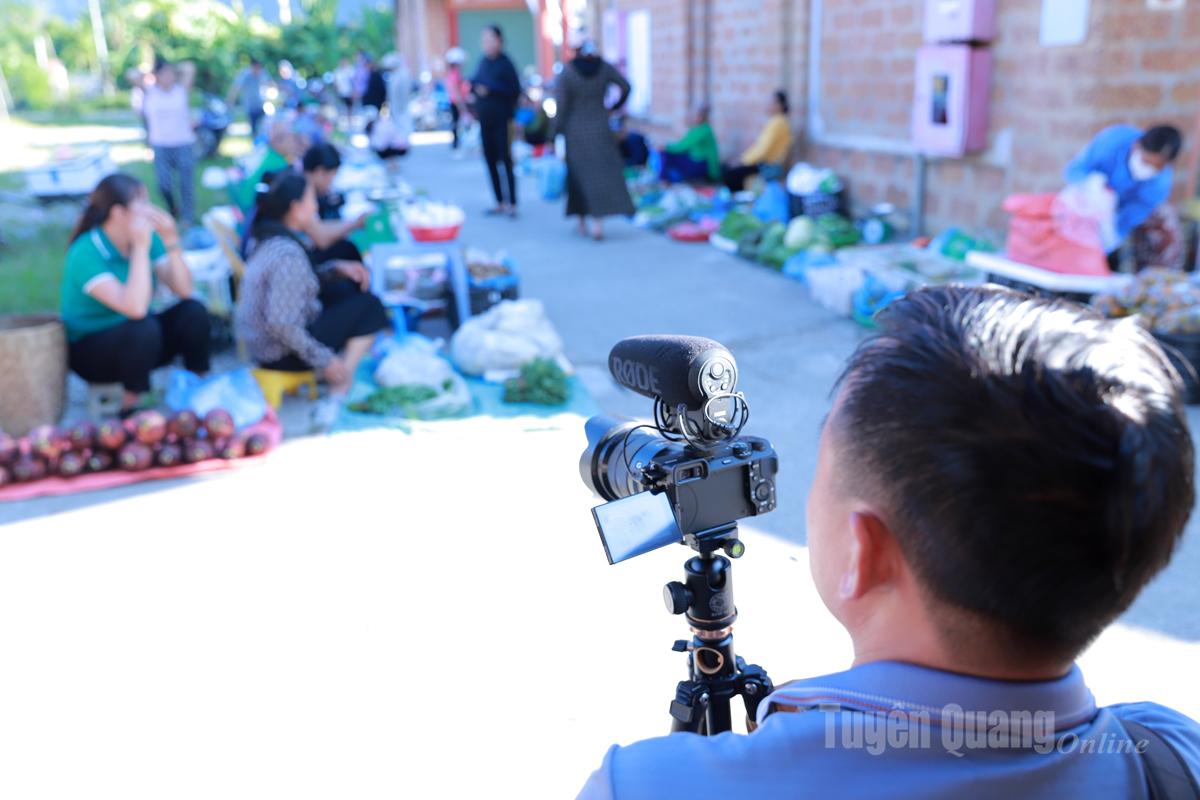 |
| YouTube channels in Lam Binh produce content reflecting daily life and the cultural identity of local people. |
The digital economy began to emerge in Lam Binh in 2018–2019 and expanded rapidly during the Covid-19 pandemic, when many young workers returned to their hometowns and turned to content creation on YouTube. Since 2021, this field has been regarded as a “hot” occupation, generating monthly incomes ranging from tens to hundreds of millions of dong for many households. Several “YouTuber villages” have taken shape in hamlets such as Khau Cau, Phieng Mo and Lung Gieng.
Khau Cau hamlet is the most prominent example. At its peak, nearly half of the hamlet’s households considered YouTube a primary source of income, contributing to visible improvements in living standards. Earnings from digital platforms enabled many families to build new houses, purchase personal vehicles and invest in essential household appliances. However, as content production developed spontaneously, with overlapping themes and a lack of long-term strategies, viewer interest declined, leaving only about 15 households currently maintaining active channels.
Across Lam Binh Commune (after the administrative merger), there were once more than 300 YouTube and TikTok channels. Today, only around 65 remain active, a reduction of nearly 70 percent. This natural filtering reflects market rules and highlights the growing demand for professionalism, originality and compliance with legal regulations in digital content creation.
The majority of content focuses on everyday life, food preparation, farming activities and local culture. In response to some channels failing to fully reflect the area’s development or posting repetitive material, local authorities are strengthening management while continuing to encourage digital economic growth. Efforts are also underway to establish digital content creator groups and associations to provide mutual support, guide appropriate content orientation and promote positive cultural values.
At the same time, Lam Binh is promoting the “Digital Literacy for All” movement to improve residents’ information technology skills, particularly among ethnic minority communities. Content creators are encouraged to livestream and produce videos promoting local landscapes, cultural identity and specialty products, thereby stimulating tourism, supporting product consumption and attracting investment.
According to 2025 statistics, the digital economy generated approximately VND 50 billion in revenue, contributing more than VND 1.2 billion to the commune’s budget and accounting for over 30 percent of total local revenue. Moving from spontaneous growth toward a more structured and sustainable model, the digital economy is emerging as a new driving force for income growth and image promotion in Lam Binh during the digital transformation era.
Duy Tuan

READER COMMENTS