09:48, 22/03/2026
Through generations closely connected to the mountains and forests, the Pa Then people in Tuyen Quang have preserved a rich and unique cultural heritage - an invaluable spiritual legacy within Vietnam’s diverse ethnic community.
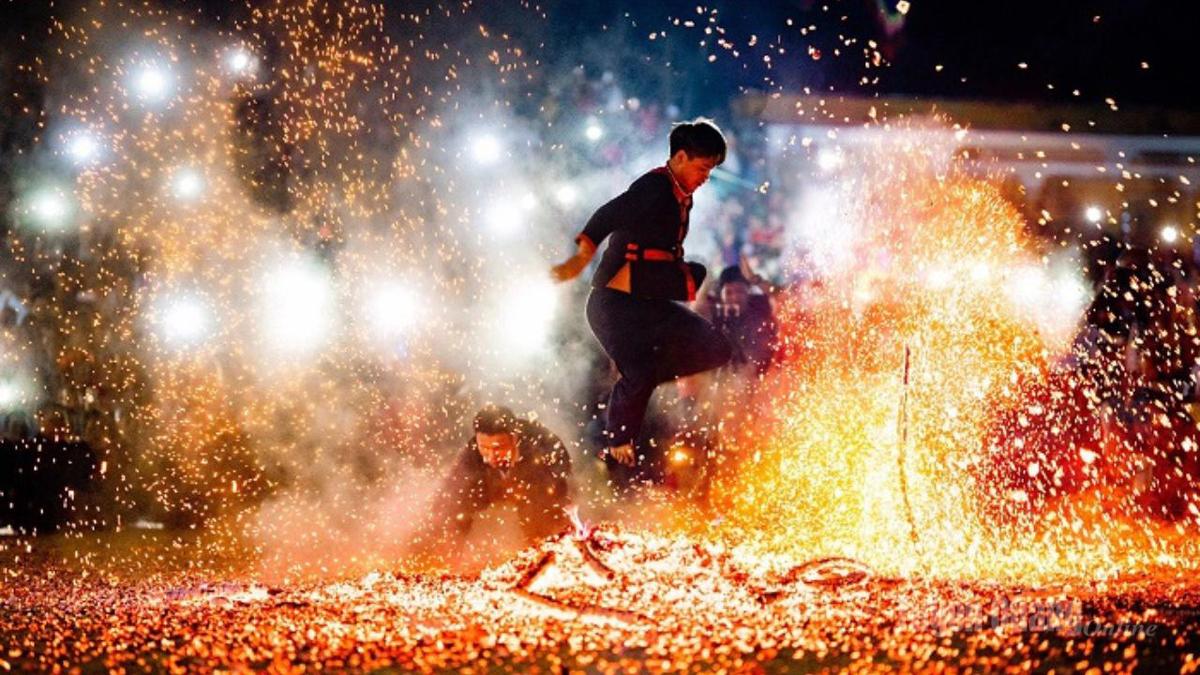 |
| Among the folk cultural treasures of the Pa Then, the Fire Dancing Festival stands out as one of the most distinctive and sacred rituals. The ceremony is typically held from the tenth lunar month to the first lunar month of the following year, after the harvest season, as a way to give thanks to deities and pray for peace and prosperity in the new year. |
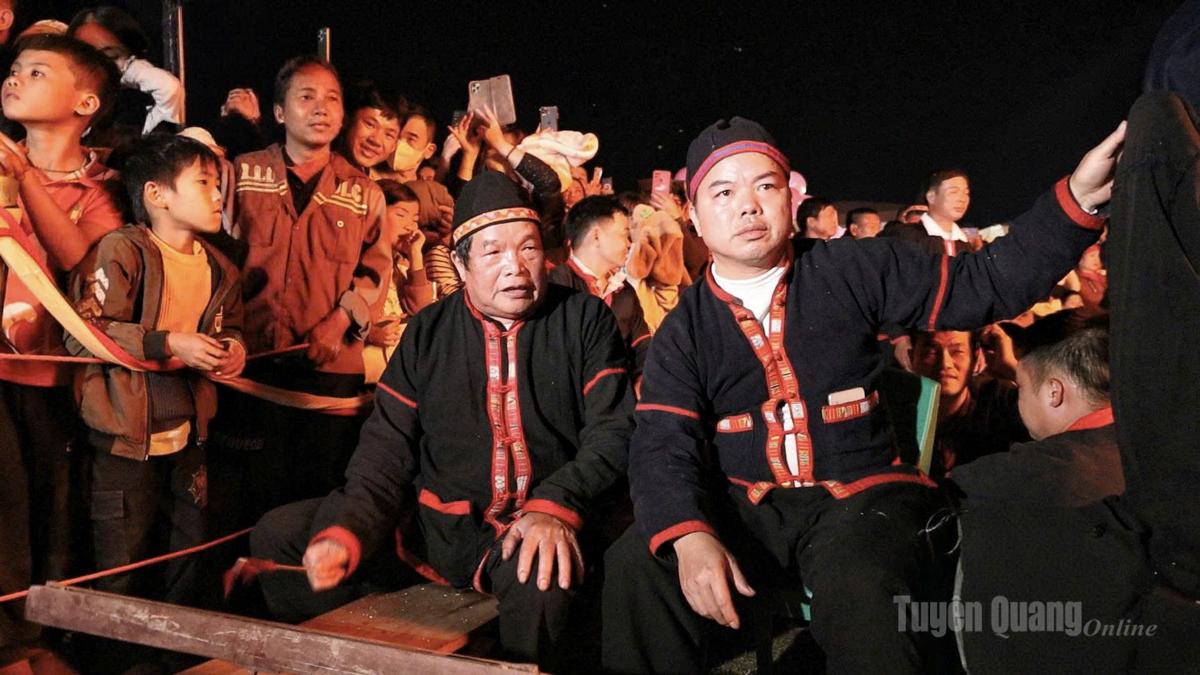 |
| The Pa Then believe that the Fire God is the supreme deity, bringing warmth and abundance, warding off evil spirits, and protecting the village. In a sacred setting, the shaman and his apprentices perform rituals to invite the deity to possess them. At that moment, the young men begin to tremble, their heads shaking continuously, before jumping barefoot into glowing embers without feeling any pain. “It is as if an invisible force protects them, allowing them to merge with the sacred flames.” |
 |
| The Pa Then people mainly reside in mountainous communes in Tuyen Quang Province. They are among the 16 ethnic groups in Vietnam with populations of fewer than 10,000 people, classified as communities with specific socio-economic conditions that require attention for preservation and development. |
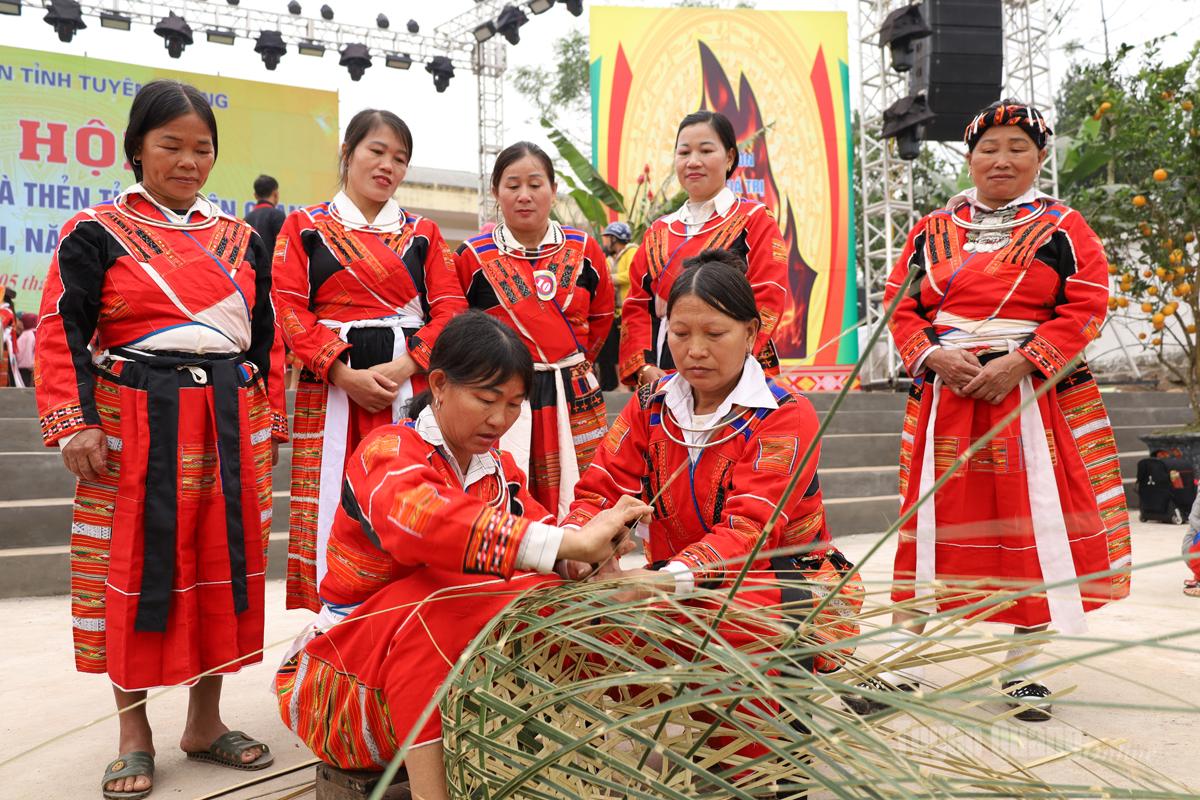 |
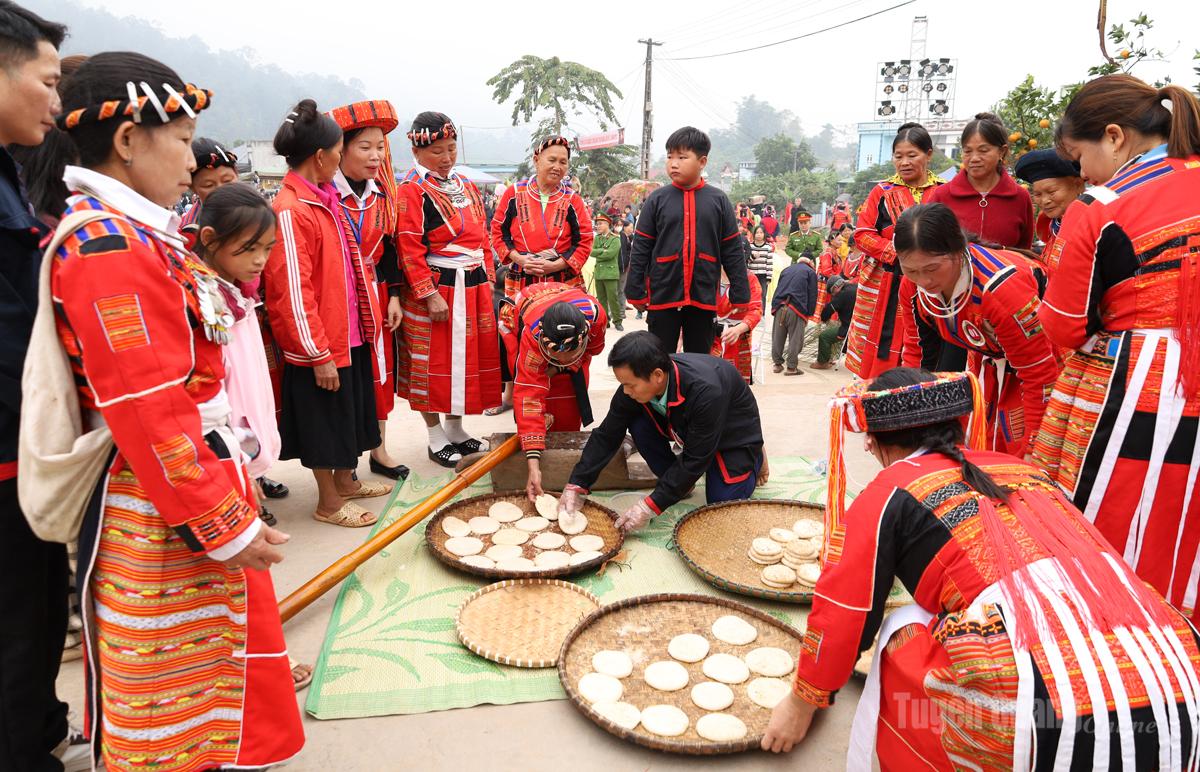
| Pa Then culture is vividly expressed through language, customs, festivals, folk arts, housing architecture, and traditional handicrafts. |
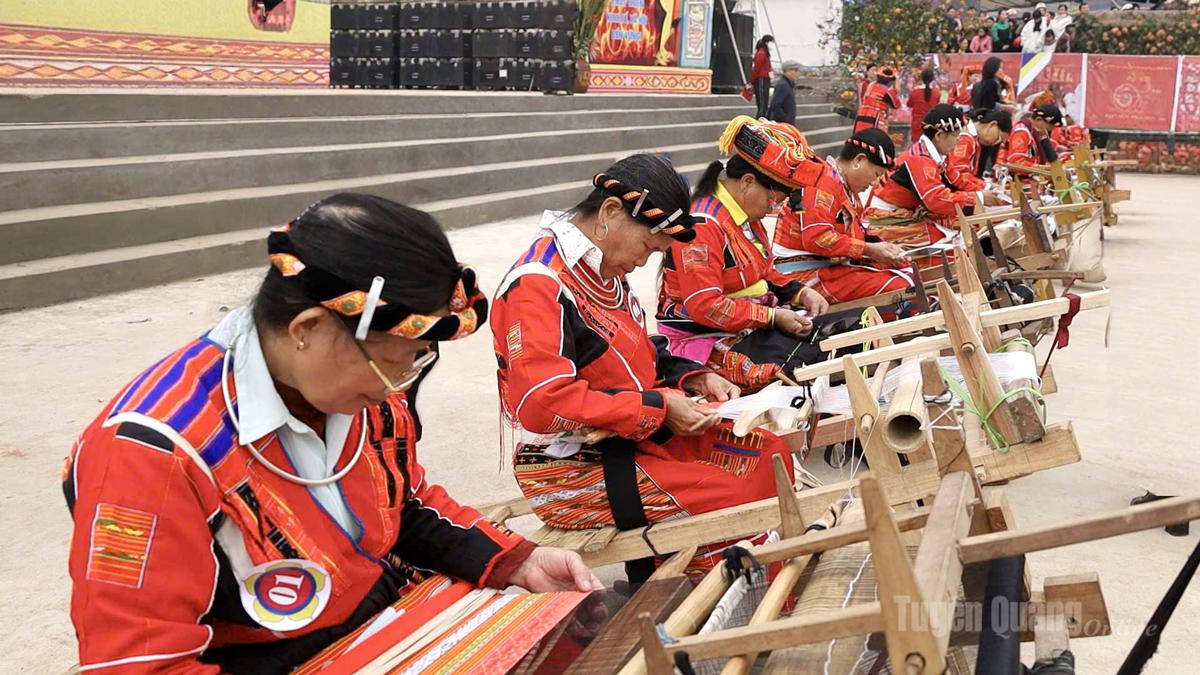 |
| Under the strong impact of modern life, some distinctive cultural values are at risk of fading. Recognizing this, local authorities have implemented practical measures such as restoring traditional festivals, reviving handicrafts, preserving language and traditional attire, and passing down intangible cultural heritage to younger generations. |
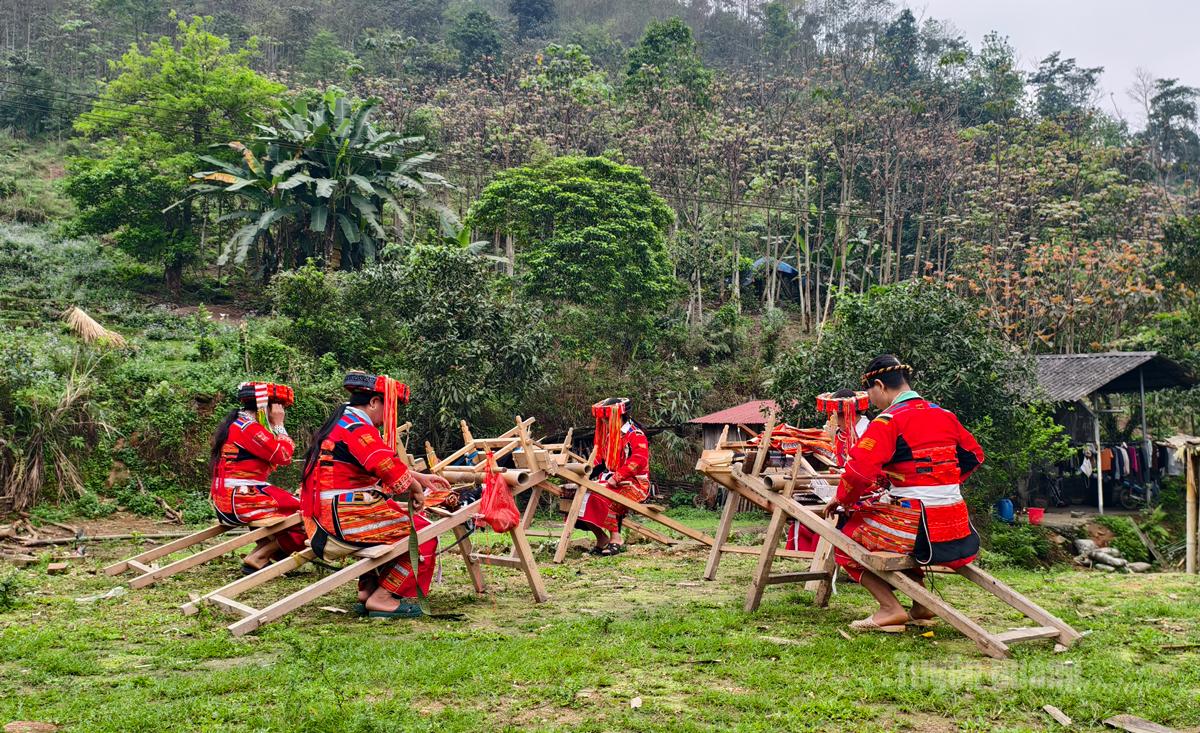 |
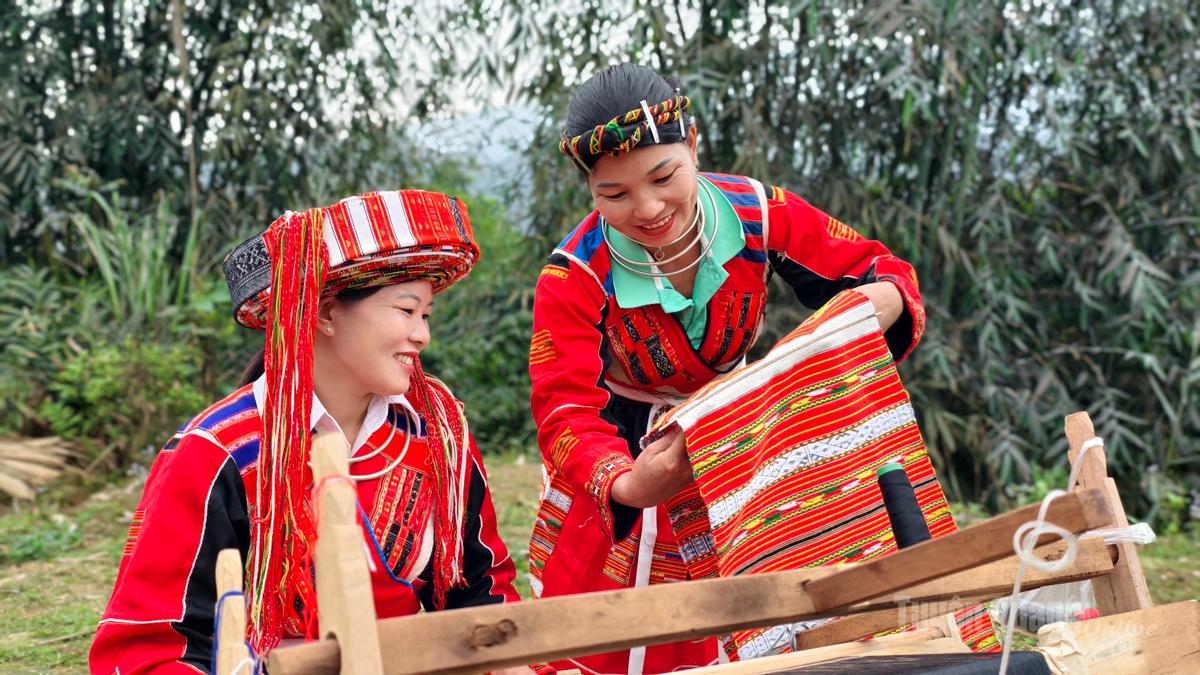
| For the Pa Then, weaving skills are also a measure of character and a criterion to evaluate a woman’s diligence and dexterity - the ideal qualities of a wife in the community. As such, traditional clothing becomes a “cultural language,” reflecting the soul and great ethnic pride of the people. |
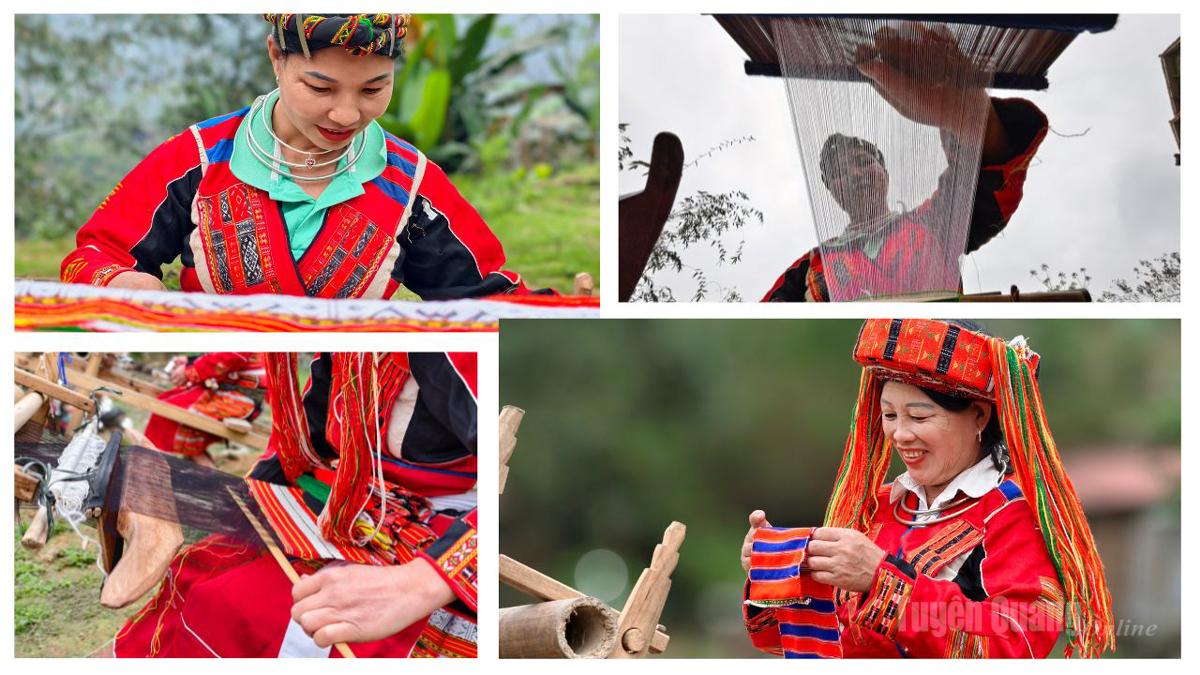 |
| The traditional costume, consisting of skirts, blouses, multi-layered headscarves, belts, and silver jewelry, not only enhances the vibrant and proud beauty of Pa Then women but also clearly embodies the cultural essence of the ethnic group. |
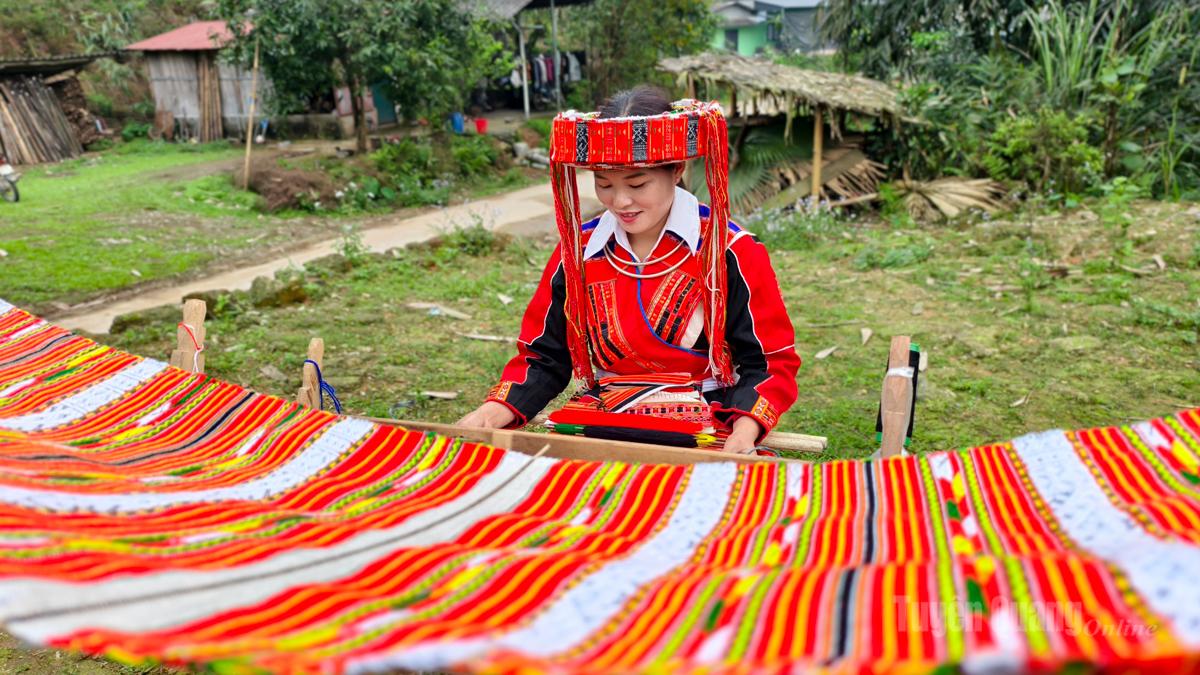 |
| Lieu Thi Sinh, head of an embroidery and brocade weaving group in Minh Thuong village, Tan Quang commune, shared: “From a young age, girls are taught weaving and embroidery so they can later prepare their own wedding garments.” Each year, Pa Then women typically make one to two sets of clothing for festivals, Lunar New Year, or important occasions. A complete outfit usually takes about three months to finish - from weaving fabric, dyeing, and hand-sewing to embroidering intricate patterns. |
 |
| Preserving Pa Then culture is not only about maintaining rituals or costumes, but also about safeguarding an entire system of spiritual values, lifestyle, and community identity. |
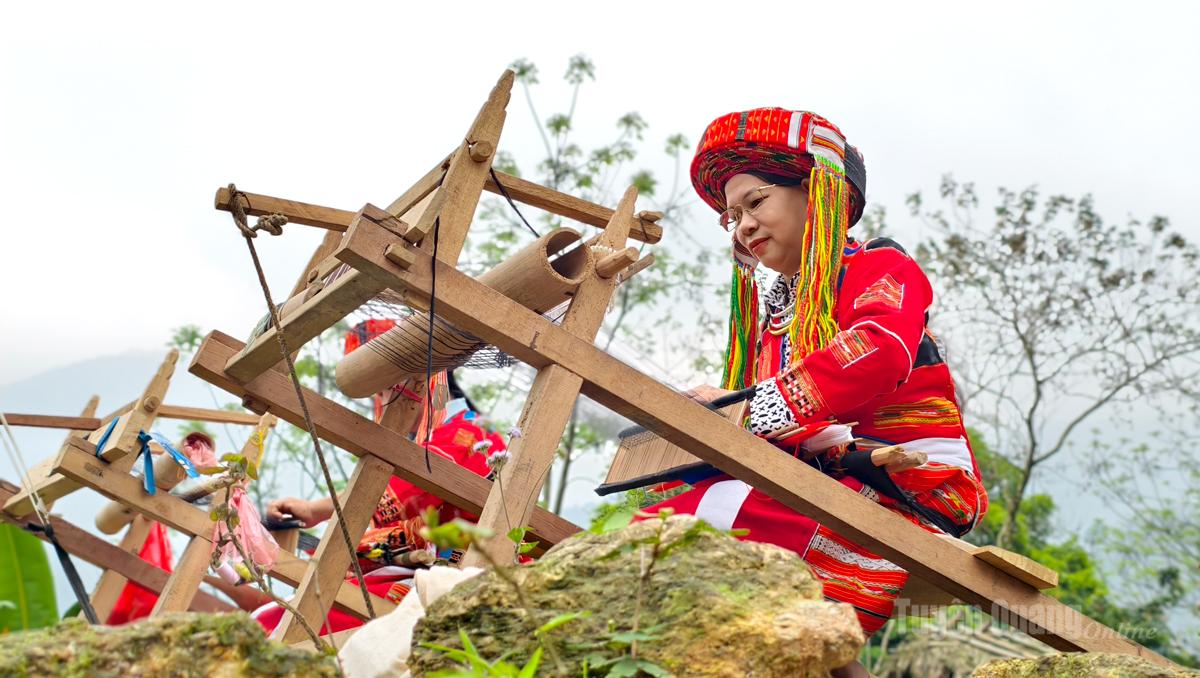 |
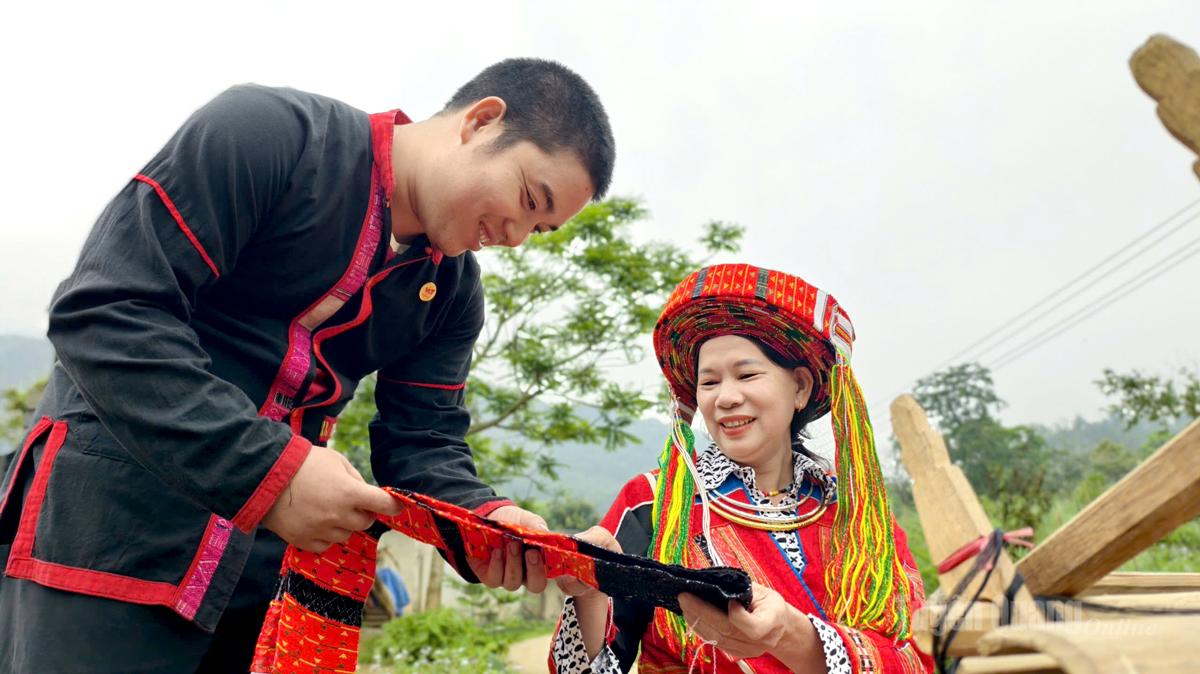
| Members of the group have proactively and creatively incorporated written motifs and various patterns into their embroidery to produce brocade souvenirs, helping generate additional income for local women. |
 |
| Pa Then culture stands as a vivid testament to the harmonious blending of ethnic communities, as well as the balance between tradition and modernity. |
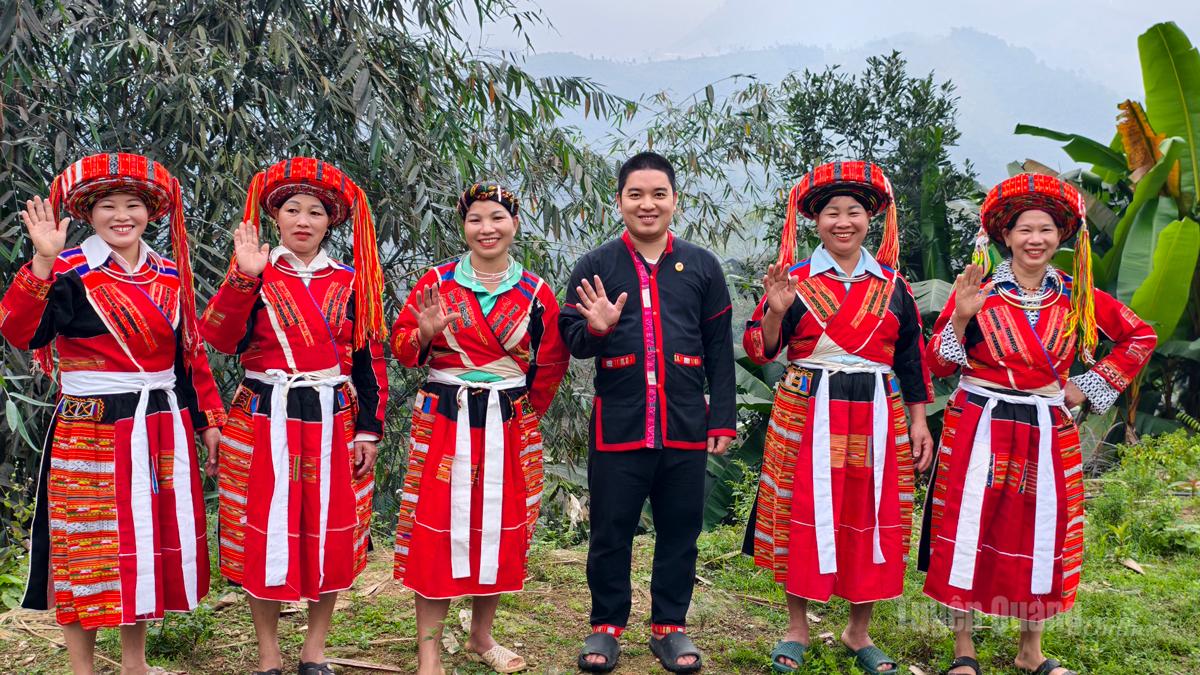 |
| When cultural values are promoted in the right direction, they become a powerful internal resource, creating sustainable livelihoods and driving tourism as well as socio-economic development. This is also the path for Pa Then culture to remain vibrant in contemporary life and to spread sustainably into the future. |
Luu Khiem



READER COMMENTS