
Highland terraces shine in the water-pouring season
The arrival of early seasonal rains has ushered in the annual “water-pouring season” across the terraced rice fields of northern Vietnam’s highland regions, including Hong Thai, Thong Nguyen, Ho Thau, Khuon Lung, Hoang Su Phi and Xin Man. As water cascades down mountain slopes and fills hundreds of stepped paddies, the terraces shimmer like giant mirrors reflecting clouds and sky, creating a spectacular landscape that attracts visitors from across the country and abroad.
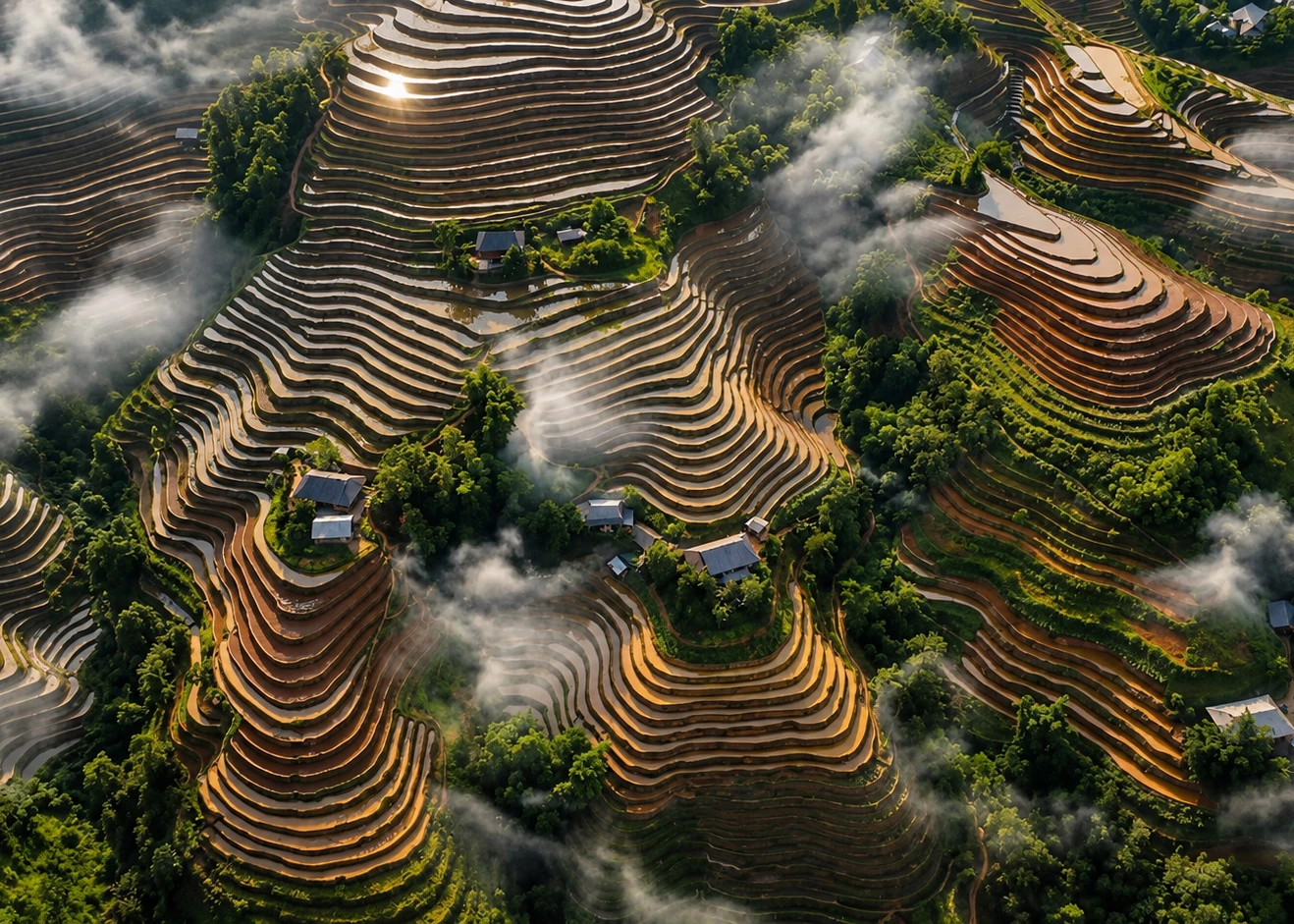 |
| Despite the steep terrain, the diligence and ingenuity of Tuyen Quang’s ethnic communities have transformed mountainsides into magnificent terraced rice fields. |
The terraced fields stand as a remarkable testament to generations of indigenous farming knowledge. Using simple tools and a deep understanding of mountainous terrain, ethnic minority communities have transformed steep hillsides into productive agricultural land. Their expertise in land selection, terrace construction and water management has enabled sustainable rice cultivation in some of the country’s most challenging environments. Carefully designed irrigation channels carry water from mountain streams to every field, ensuring crop production while minimizing soil erosion.
In recent years, however, climate change has posed growing challenges for local farmers. Seasonal rains have become increasingly unpredictable, while prolonged dry periods and shrinking water sources threaten agricultural productivity. Extreme weather events, including flash floods and landslides, can also cause significant damage to terrace systems that require years of maintenance and restoration. As a result, the water-pouring season has become a critical race against time to secure water and maintain planting schedules.
Beyond their agricultural function, the terraced fields now generate multiple economic benefits. Local communities have expanded the cultivation of high-quality indigenous rice varieties, many of which have earned recognition under Vietnam’s One Commune One Product (OCOP) program. Integrated rice-fish farming models are also gaining popularity, increasing productivity while promoting environmentally sustainable practices.
The terraces are equally significant as a cultural heritage landscape. For ethnic groups such as the Dao, Tay, Nung and La Chi, rice cultivation is closely linked to traditional beliefs, rituals and festivals that celebrate agricultural cycles, community solidarity and respect for nature.
The combination of breathtaking scenery and rich cultural traditions has transformed the terraced fields into a key driver of eco-cultural tourism. Community-based tourism, homestays and experiential farming activities are creating new livelihoods and generating stable incomes for local people. More than a symbol of a new agricultural season, the water-filled terraces have become a foundation for sustainable rural development in Vietnam’s northern highlands.
Bien Luan


READER COMMENTS