
Proactive forest protection during peak heatwave
Prolonged extreme heat, with temperatures ranging from 36–38°C and sharply declining humidity, is pushing many forests into Level IV and V fire alerts - the highest and most dangerous levels. In Tuyên Quang Province, hundreds of communes and wards have reached maximum warning thresholds, forcing local authorities and forest rangers to implement urgent forest fire prevention and control measures.
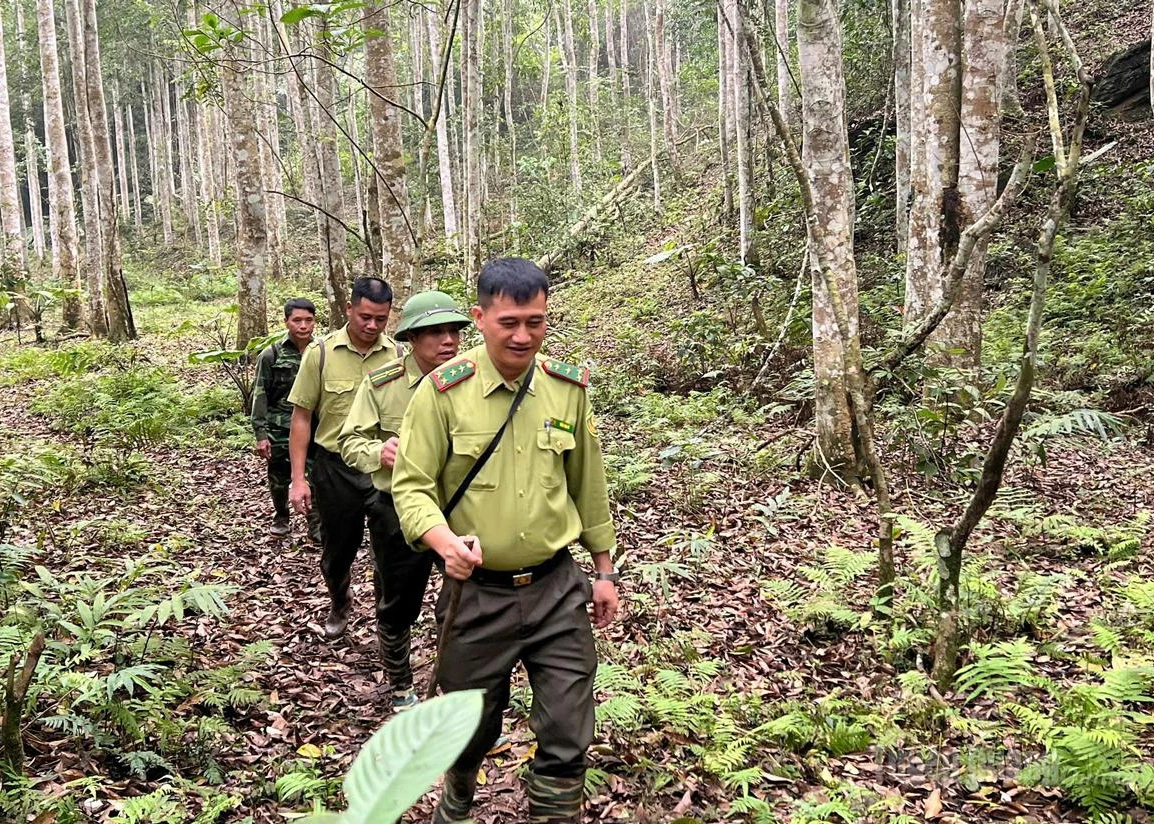 |
| Forest rangers in Region V patrol and monitor forest fire risks. |
Amid increasingly severe weather conditions, localities such as Bình An Commune and other mountainous areas have adopted a “wartime” footing in forest protection. Rapid response teams are conducting round-the-clock patrols, strictly controlling access to forest areas, and banning all use of fire near high-risk zones. However, forest fire prevention efforts face significant challenges due to limited manpower, with each ranger responsible for managing more than 3,000 hectares of forest in rugged and hard-to-access terrain.
In reality, most forest fires in recent years have stemmed from human negligence. Common mistakes include burning vegetation during peak heat hours, failing to establish proper firebreaks, or conducting controlled burns without notifying local authorities. These actions have caused fires to spiral out of control. The consequences extend beyond environmental damage, including loss of human life, as seen in fatal incidents involving firefighting personnel in 2024–2025.
To improve fire prevention effectiveness, the forestry sector has deployed technologies such as satellite-based early fire warning systems and drones to monitor hard-to-reach areas. However, according to authorities, while technology can help detect fires early, the decisive factor remains public awareness.
Experts emphasize that residents living near forests must take greater responsibility, strictly comply with fire safety regulations, and proactively prevent risks through even the smallest actions. Close coordination among authorities, functional forces, and local communities is considered the key solution to protecting forests, especially as climate change continues to increase the risk of wildfires.
Doan Thu


READER COMMENTS