
Chili cultivation in Son Thuy delivers strong economic gains
Son Thuy commune has successfully transformed from traditional rice and maize farming to commercial chili cultivation, creating a breakthrough in agricultural restructuring and significantly improving local incomes.
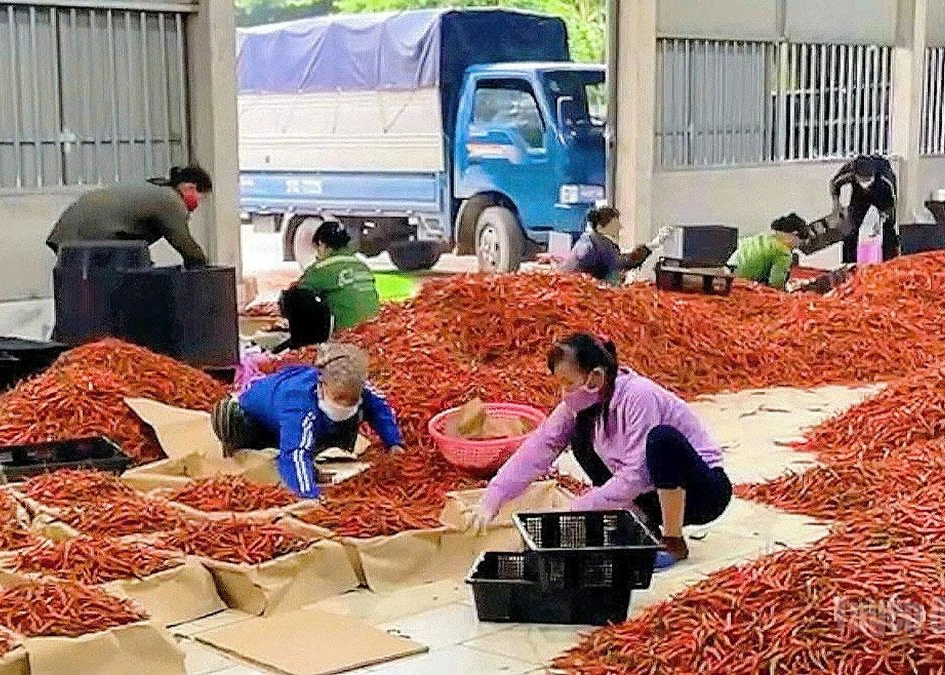 |
| Minh Thang Cooperative purchases chilies after harvest, ensuring stable market access for farmers. |
The chili cultivation model in Hop Hoa hamlet began in the early 2000s, led by Le Dai Thang, the hamlet’s Party cell secretary and head. At a time when traditional crops yielded low returns, he took the initiative to introduce chili as a new cash crop, aiming for large-scale commodity production.
Despite initial challenges in techniques and market access, Thang persistently sought experience from other regions and independently found buyers. The economic efficiency of chili quickly became evident, with each sao (360 m²) generating up to VND 30 million, encouraging more farmers to adopt the model.
From just a handful of early adopters, the model has expanded significantly. Today, 60 out of 90 households in Hop Hoa hamlet grow chilies, covering approximately 3.5 hectares. Average yields exceed 28 tons per hectare, with prices around VND 60,000 per kilogram. As a result, nearly 70% of households have achieved stable and relatively high incomes, and poverty has been eliminated in the hamlet.
Production has also shifted toward larger-scale, market-oriented farming. Minh Thang Cooperative, led by Tran Van Thang, plays a key role in linking production and consumption. The cooperative supplies F1 seeds, provides technical guidance, and purchases output, helping stabilize farmers’ incomes.
The linked production area has now expanded to around 100 hectares. Son Thuy chilies are sold domestically and exported to markets such as China, South Korea, and Thailand. In peak seasons, prices can reach VND 100,000–120,000 per kilogram, allowing many households to earn hundreds of millions of dong per crop.
Beyond income gains, the model also creates jobs for dozens of local workers, with average monthly earnings of about VND 9 million during harvest periods. Local authorities identify chili as a key crop in agricultural restructuring and plan to further expand cultivation, strengthen value chains, and build a brand for Son Thuy chilies.
The success of chili farming in Son Thuy highlights the impact of crop transformation and production linkages, contributing to rural economic development and improved living standards.
Mai Dung


READER COMMENTS