
La Chi weaving craft on the path to national heritage recognition
Amid the mist-covered mountains of Ban May and Xuan Giang communes in Tuyen Quang Province, the traditional weaving craft of the La Chi people continues to be quietly preserved. From the skilled hands of La Chi women, white cotton fibers are spun into indigo-dyed fabric, forming traditional garments deeply intertwined with the community’s cultural and spiritual life.
Currently, the Tuyen Quang Department of Culture, Sports and Tourism is compiling and finalizing a dossier on the “Weaving Craft of the La Chi People” for submission to the Ministry of Culture, Sports and Tourism, seeking its inclusion in the National List of Intangible Cultural Heritage. This move is seen as a significant step toward safeguarding and promoting a traditional handicraft rich in historical, cultural, and indigenous knowledge values.
 |
| Generations of La Chi women are being taught by artisans to embroider patterns on traditional costumes. |
According to oral tradition, La Chi weaving dates back to their ancestor Hoang Van Thung, who taught his descendants how to grow cotton and weave fabric to survive the harsh winters of the highlands. Over time, weaving evolved beyond meeting daily needs to become a measure of diligence and skill among La Chi women.
One distinctive feature of La Chi weaving is the preservation of a fully integrated process, encompassing all stages from cotton cultivation and spinning to weaving, indigo dyeing, and garment making. Finished fabric is dyed multiple times with natural indigo to achieve a deep, lasting color, symbolizing the close bond between humans and nature. The decorative patterns - mainly geometric motifs, borders, and symmetrical dots - reflect the group’s aesthetic sensibilities and worldview.
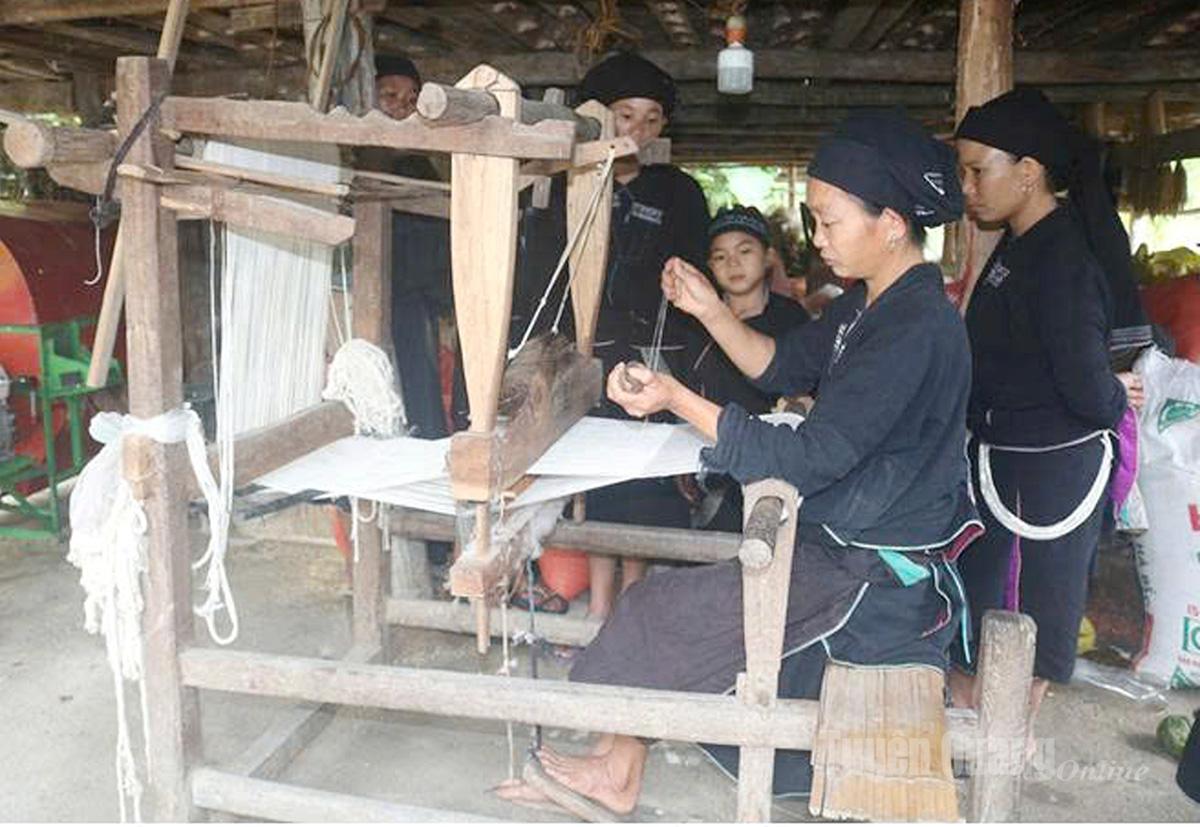 |
| A La Chi artisan guides younger generations in setting up the loom and threading yarn, passing on weaving skills through hands-on instruction. |
In the context of rapid modernization and the widespread availability of ready-made clothing, the La Chi weaving craft faces numerous challenges. Nevertheless, in Ban May and Xuan Giang communes, many artisans remain steadfast in preserving the craft and actively passing it on to younger generations.
In recent years, alongside the development of community-based tourism, La Chi woven products have become popular souvenirs among visitors. Items such as scarves, bags, and indigo-dyed clothing not only generate additional income for local people but also help convey the story of a community committed to preserving its cultural heritage amid modern change.
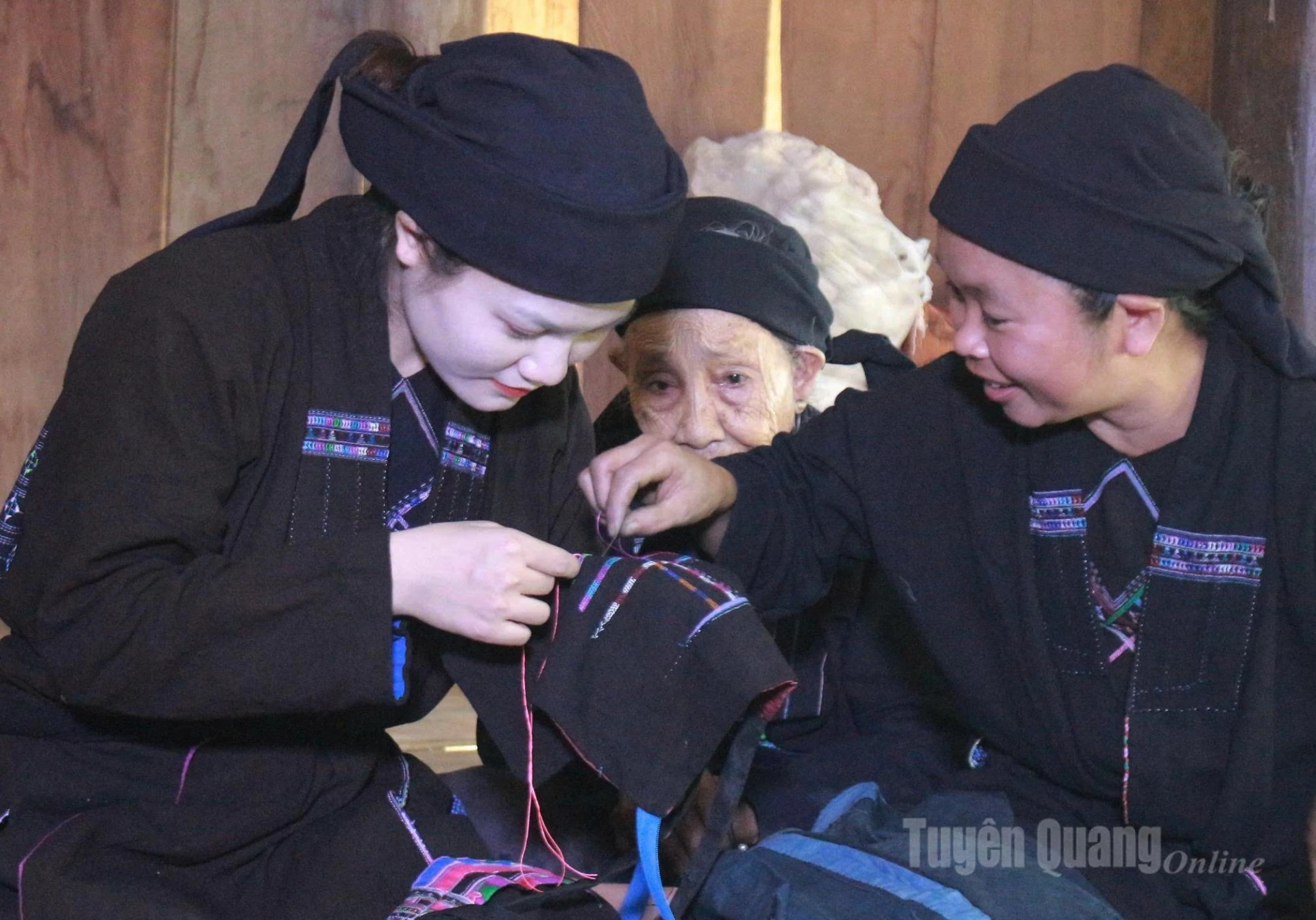 |
| An artisan carefully instructs young La Chi women in embroidering patterns on traditional garments. |
The preparation of the national heritage dossier is an important milestone. However, for the La Chi people, the greatest value lies in ensuring that the craft remains a living part of everyday life. The rhythmic sound of looms at dusk, indigo cloth drying in front of wooden houses, and grandmothers teaching grandchildren to spin yarn stand as vivid evidence of the enduring vitality of this cultural heritage - one that continues to shape and sustain the cultural identity of Tuyen Quang’s highland communities.
Duc Quy


READER COMMENTS