
Dong Yen develops concentrated fruit-growing areas
In recent years, Dong Yen Commune has promoted crop restructuring toward higher value and sustainable development. By changing farming mindsets, selecting crops suited to local soil and climate conditions, and strengthening market linkages, the locality has gradually formed large-scale concentrated fruit-growing areas, contributing to improved incomes and living standards for local people.
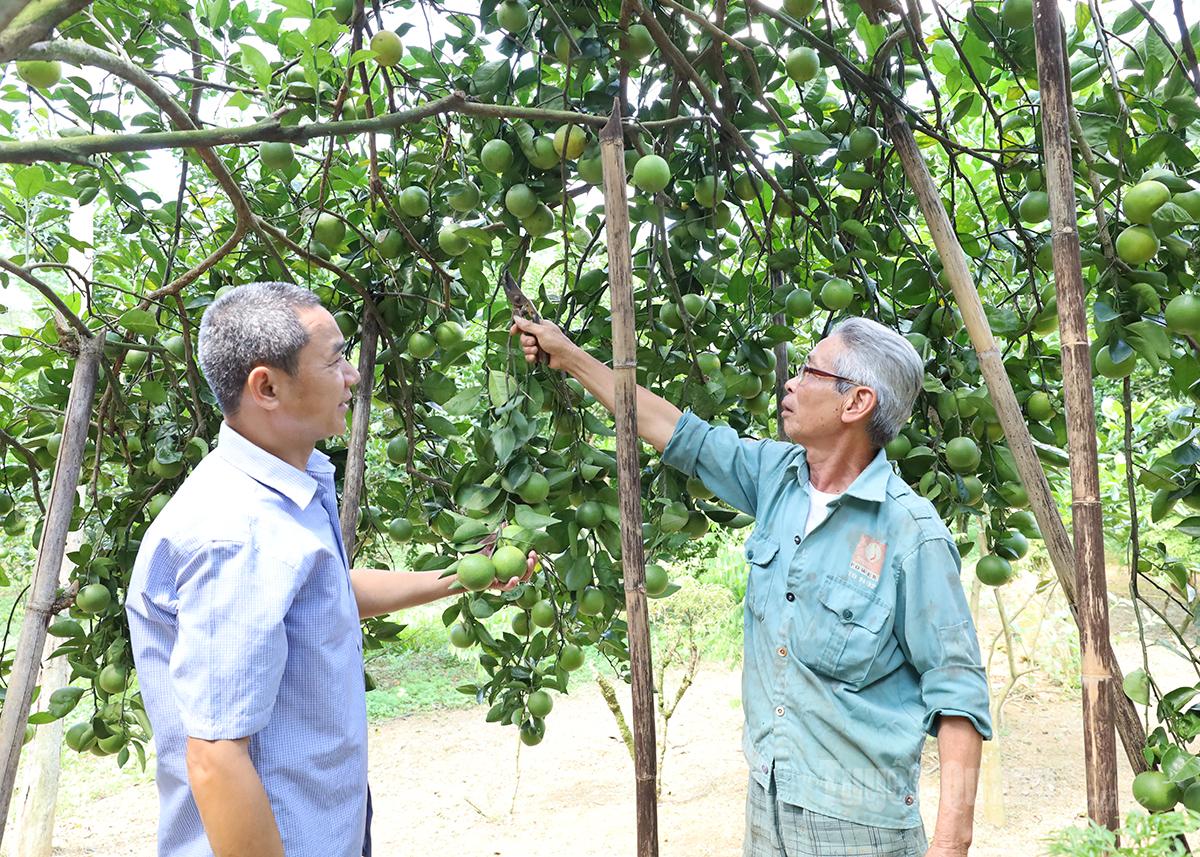 |
| Hoang Cong Khanh (right) discusses production efficiency with commune officials at his orange orchard during the harvest season. |
To enhance production efficiency, Dong Yen has actively encouraged farmers to shift from low-value, short-term food crops to fruit trees with higher economic returns. At the same time, the commune has coordinated with specialized agencies to organize training courses and provide technical guidance, gradually moving from fragmented, small-scale production toward concentrated commodity-oriented farming.
Currently, Dong Yen has more than 800 hectares of fruit trees. Of this area, oranges account for approximately 550 hectares, with an estimated output of over 8,000 tons per year. Red-fleshed dragon fruit has also expanded rapidly, reaching more than 130 hectares, an increase of nearly 100 hectares compared to 2020, with an estimated output of over 2,000 tons annually. Notably, the red-fleshed dragon fruit product of the Dong Yen Red-Fleshed Dragon Fruit Cooperative has been certified as a provincial three-star OCOP product, helping to affirm product quality, build brand recognition, and expand consumption markets.
Alongside oranges and dragon fruit, Cavendish bananas have been identified as a new production model with strong potential to become a key crop. Banana cultivation is being developed in line with organic and VietGAP standards, associated with OCOP product development and stable consumption through contractual linkages. In practice, this crop has demonstrated clear economic efficiency, with expected profits 1.5–2 times higher than many traditional crops, enabling farmers to reduce risks and produce with greater confidence, no longer dependent on traders.
The restructuring of crop production in association with consumption linkages has helped Dong Yen shape concentrated fruit-growing zones, enhance agricultural product value, and create sustainable livelihoods for local people. This approach is seen as a sound direction, contributing to the development of commodity-oriented agriculture, improved living standards, and opening up opportunities for sustainable poverty reduction in the locality.
Nhu Quynh


READER COMMENTS