
EU’s efforts to address migration and asylum: A thorny journey
The European Union (EU)’s Pact on Migration and Asylum - Brussels’ most comprehensive reform in migration management in recent years - is set to officially take effect in June. However, this marks only the beginning of a long and difficult journey.
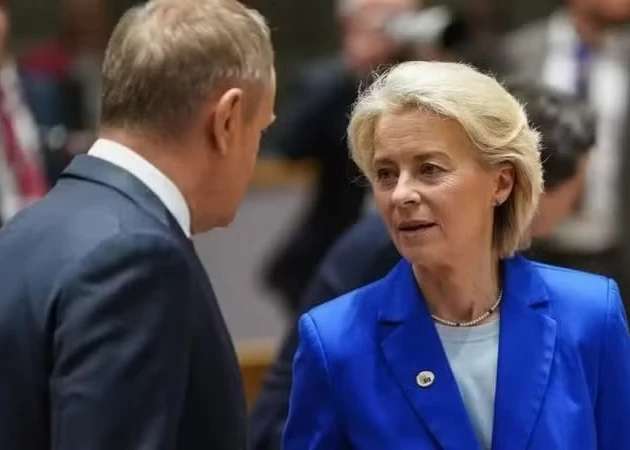 |
| President of the European Commission Ursula von der Leyen ahead of the EU Summit in Brussels, Belgium, on March 19, 2026. (Photo: XINHUA) |
Whether the new pact can fundamentally resolve longstanding challenges remains a matter of public scepticism.
The EU’s new Pact on Migration and Asylum consists of 10 instruments designed to achieve balance between border control and maintaining solidarity in receiving migrants across Europe. The adoption of the pact, following complex negotiations and divisions, has been hailed as a “major achievement” and a “turning point” for Europe.
However, as the countdown to implementation continues, increasing doubts are emerging over whether this new “policy machine” will be capable of addressing the old challenges surrounding migration. Migration has long been a sensitive issue, frequently sparking controversy across Europe’s political landscape and playing an important role in election campaigns.
The achievements and shortcomings in preparations for implementing the pact were clearly reflected in a recent report by the European Commission (EC). According to the report, EU member states have made significant progress in putting the new legal framework into operation.
Many countries have begun adjusting national legislation to align with the new framework, while also establishing mandatory screening mechanisms in border regions. The EU’s approval of its first annual solidarity pool is an important step toward making support and sharing mechanisms among member states operational in practice.
Nevertheless, many challenges still lie ahead for the bloc. So far, the pact has continued to face considerable controversy. Human rights organisations argue that accelerating screening, deportation, and repatriation procedures could undermine access to asylum for people fleeing poverty and conflict who are entitled to protection under international law. These organisations contend that the reform measures are inconsistent with European values of compassion and human dignity.
Although the new pact emphasises burden-sharing in migration, it will be difficult to operate smoothly without the consensus of all member states. The EC’s report noted that preparedness levels among countries remain uneven. Rules concerning responsibility for receiving and transferring asylum seekers between countries are still in urgent need of finalisation. This issue had already been one of the most contentious aspects during negotiations over the pact.
Greece, Spain, and Italy - long regarded as familiar gateways for migrants - will need to make thorough preparations in terms of infrastructure to support screening and procedure processing in border region. Due to their special geographical positions, these frontline countries are certain to face considerable pressure in this regard.
Plans to respond to new waves of illegal migration may only address the “symptoms” of the issue, while the “root causes” remain tied to conflict and poverty in the countries of origin. Escalating conflict in the Middle East is leaving European countries with a deep concern about the prospect of another migration surge that could place additional strain on security and social welfare systems.
Leaders of Denmark and Italy have stressed that Europe cannot risk repeating the situation of 2015-2016, when hundreds of thousands of migrants, including many fleeing the conflict in Syria, entered Europe.
The Pact on Migration and Asylum shows that Europe is shifting from a reactive to a more proactive approach, marking an important beginning to a new phase in migration management. In the long term, however, whether this collective plan can prove effective and genuinely replace the unilateral responses previously adopted by member countries remains an open question, particularly as global geopolitical situation is expected to remain highly volatile.
NDO


READER COMMENTS