A political turning point for Hungary and Europe
Hungary’s Prime Minister-elect Peter Magyar is moving swiftly to implement sweeping reforms, seeking to deliver on his pledge to usher in “a new era” for the Central European nation.
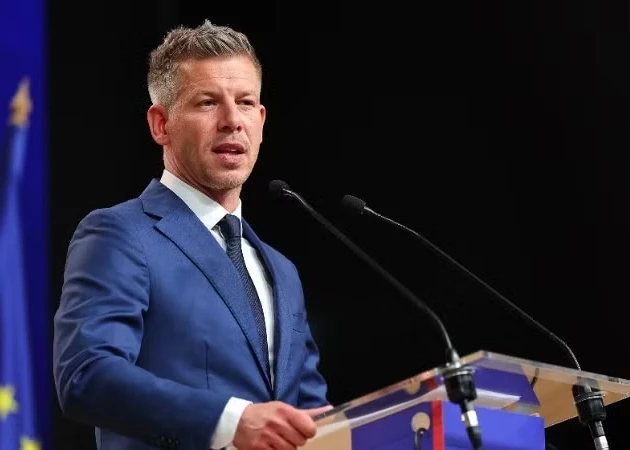 |
| Prime Minister-elect Peter Magyar at a press conference in Budapest, April 13, 2026. (Photo: Xinhua/VNA) |
The transfer of power in Hungary marks not only a major turning point for the country itself, but is also seen as a new variable in Europe’s political landscape, with implications for Hungary’s relations with the European Union (EU) and Russia.
Just days after the parliamentary election, Peter Magyar has accelerated efforts to advance comprehensive reforms. As leader of the centre-right Tisza Party, he has called on Hungary’s President to convene Parliament as soon as possible to form a new government, expressing his intention to assume office as early as May 2026.
Peter Magyar is widely expected to bring a “fresh wind” to Hungarian politics, with commitments to overhaul the state apparatus, build transparent governance that serves the people, and address a range of economic challenges.
Hungary’s foreign policy is also anticipated to shift significantly, towards a more balanced and constructive approach in relations with the EU. His first overseas visit in office is expected to be to Poland, where he will meet Prime Minister Donald Tusk to discuss unlocking frozen EU funds.
The landslide victory of the Tisza Party in the recent parliamentary election -securing 141 out of 199 seats - demonstrates the effectiveness of Magyar’s approach to voters. He has cultivated an image as a close-to-the-people politician, maintaining strong engagement through local visits and the strategic use of social media to convey his message.
One of the key challenges facing Hungary’s new government will be addressing economic difficulties. It inherits an economy marked by sluggish growth, low investment, and a projected budget deficit of around 5% of GDP in 2026.
A pressing priority is to unlock EU funding for Hungary, which has been frozen due to rule-of-law concerns under former Prime Minister Viktor Orbán. These funds are vital for the country’s struggling economy, but securing their release will require the new government to undertake significant reforms under EU pressure. Repairing Hungary–EU relations after years of tension will not be an easy task.
Notably, this political shift reflects not only a change in voter preferences but also signals a new chapter in Hungary’s relationship with the EU. The country has long been viewed as an “outlier” within the bloc on key issues. While previous administrations sometimes took positions at odds with EU consensus, Peter Magyar advocates a more balanced approach, aiming to improve ties with the EU while safeguarding national interests.
The new government’s stance towards Russia and Ukraine is also drawing attention. Magyar supports maintaining relations with Russia, particularly in the energy sector, while adopting a cautious approach to Ukraine-related issues - evidenced by his recent opposition to fast-tracking Ukraine’s EU membership.
Some analysts suggest that while the new administration may not turn Hungary into an ardent EU supporter, it could help remove a longstanding bottleneck within the bloc, enabling smoother implementation of EU initiatives through a more moderate and balanced Budapest. This may also present an opportunity to strengthen internal cohesion within the EU.
At a recent press conference, Prime Minister-elect Peter Magyar stressed that Hungary “has no time to waste” and must immediately embark on reforms. The change of power in Hungary is therefore not merely a domestic matter, but one that could reshape the dynamics of political relations across Europe in the period ahead.
NDO


READER COMMENTS