08:53, 28/02/2026
In the early days of the Lunar New Year of Binh Ngo 2026, alongside festivals imbued with the rich cultural traditions of ethnic communities, many spiritual tourism sites across Tuyen Quang Province have attracted large numbers of visitors for sightseeing and worship right from the first days of the new year.
This is an encouraging signal for Tuyen Quang’s tourism sector at the start of the year. According to statistics from the provincial Department of Culture, Sports and Tourism, during the Binh Ngo 2026 Lunar New Year holiday (from February 14 to February 22, corresponding to the 27th day of the twelfth lunar month to the sixth day of the first lunar month), the total number of visitors to the locality was estimated at 208,990.
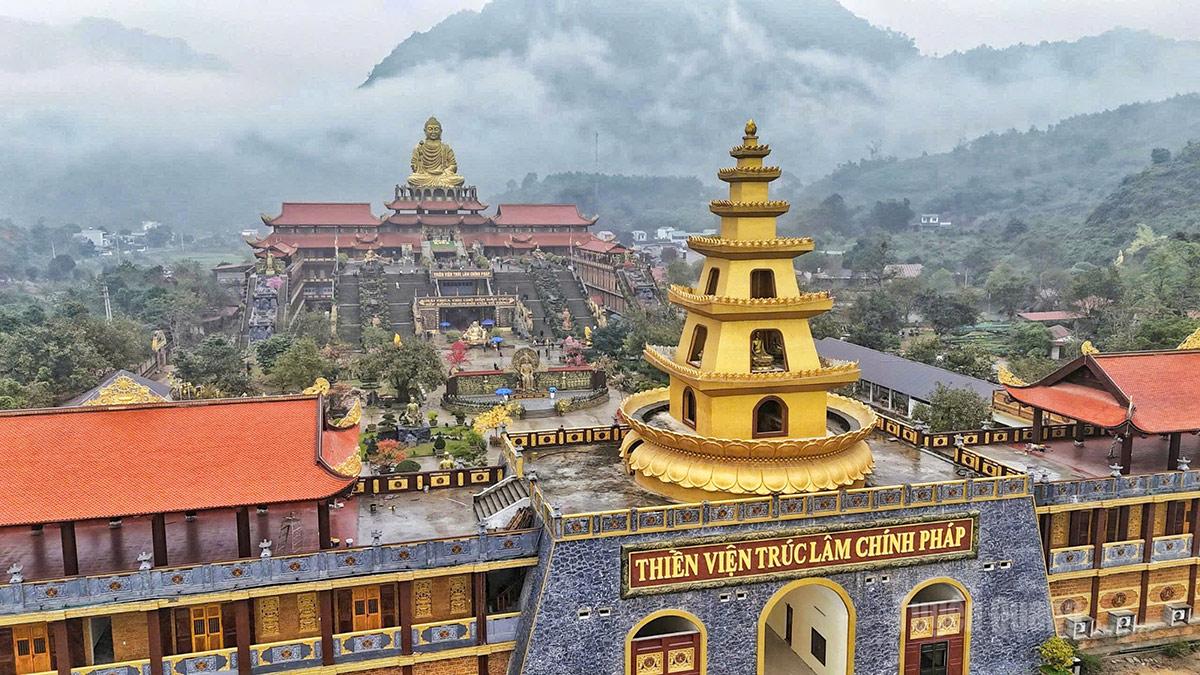 |
| Truc Lam Chinh Phap Zen Monastery in Nong Tien Ward, Tuyen Quang Province attracts visitors from across the country for sightseeing and worship at the beginning of the year. |
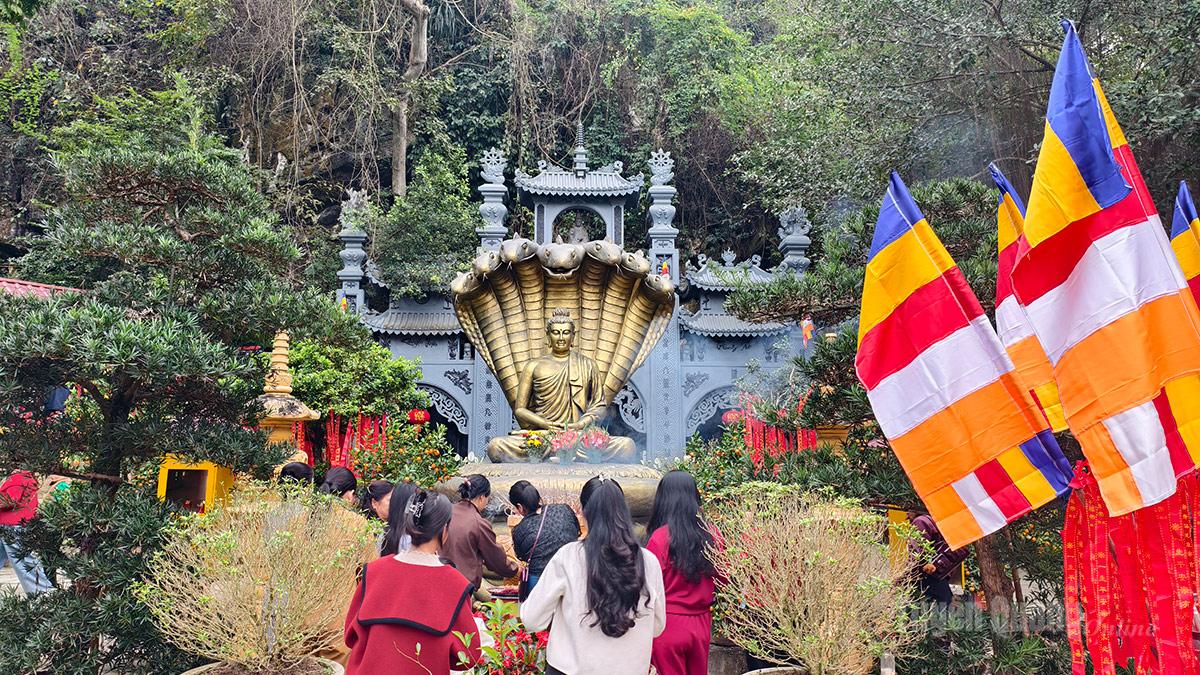 |
| Visitors pay homage at Hang Pagoda in An Tuong Ward, Tuyen Quang Province. |
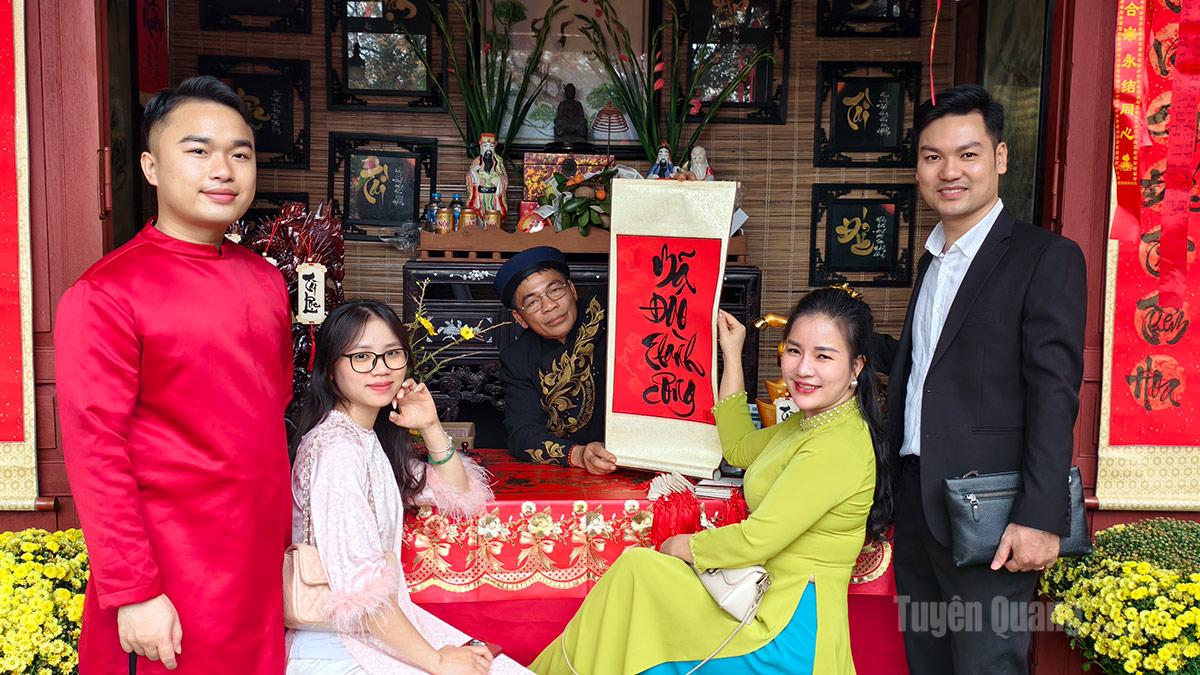 |
| Visitors request calligraphy at the start of Spring, entrusting their wishes for success, career advancement and peace in the new year. |
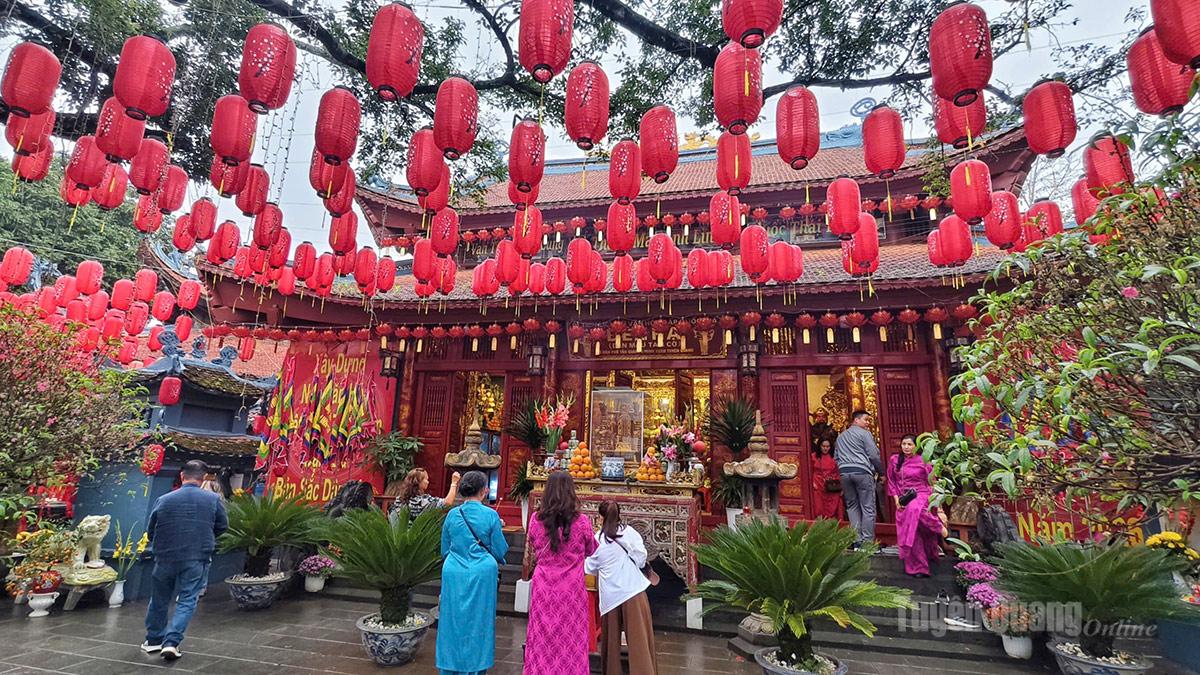 |
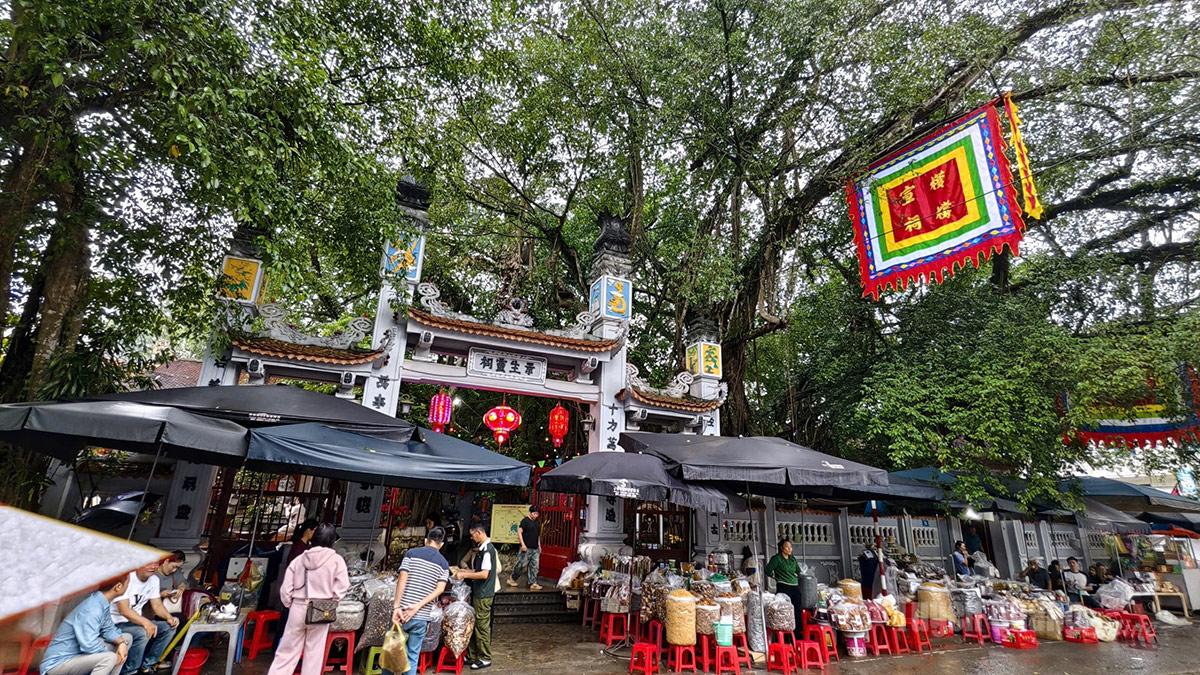
| Tuyen Quang is home to numerous large and small temples and pagodas, many of which are hundreds of years old. Several temples have been recognized as National Relics and are well known nationwide, such as Ha Temple – the place of origin of Mau Thoai, also known as the Third Mother Goddess of the Water Palace. Ha Temple in Tuyen Quang is the origin of Dum Temple (Upper Temple) and Y La Temple. These form a cluster of temples worshipping Mau Thoai with a shared origin. (In the photo: Ha Temple, Minh Xuan Ward, Tuyen Quang Province). |
 |
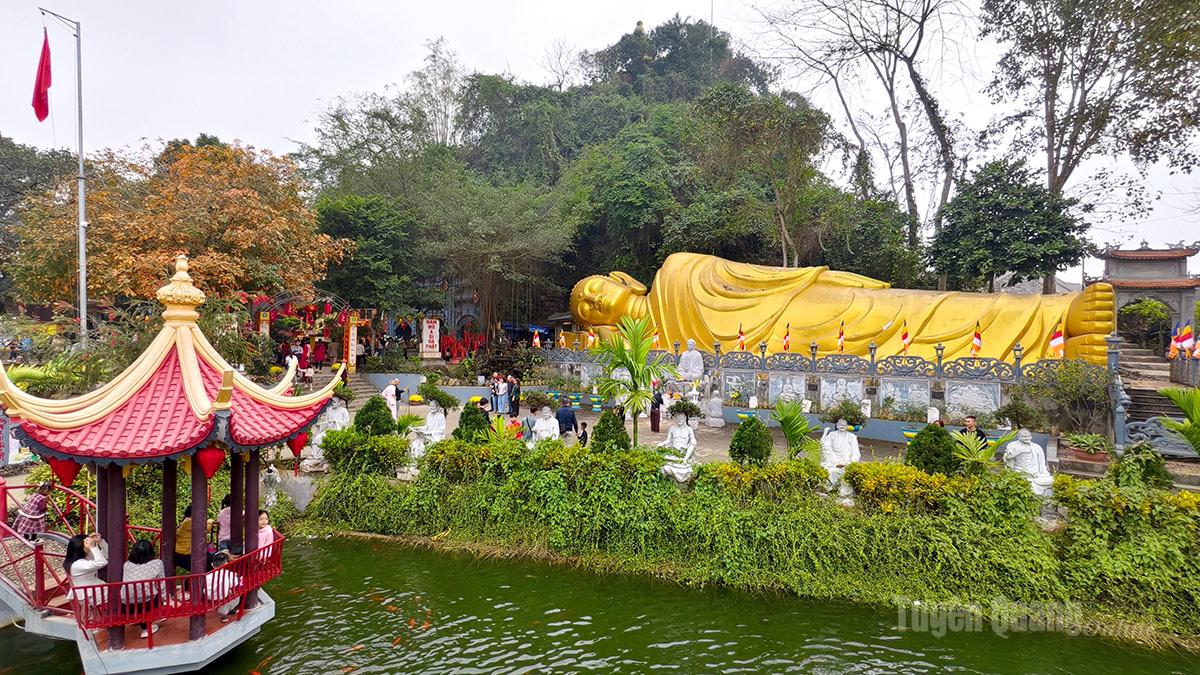
| Canh Xanh Temple in Minh Xuan Ward worships the Mother Goddess of the Forest (Lam Cung Thanh Mau), commonly referred to as Ba Chua Thuong Ngan, who governs the mountains and forests. It is a place where people express their reverence to the Mother Goddess of the Forest and convey their aspirations for a peaceful life and abundant harvests in mountainous areas. |
 |
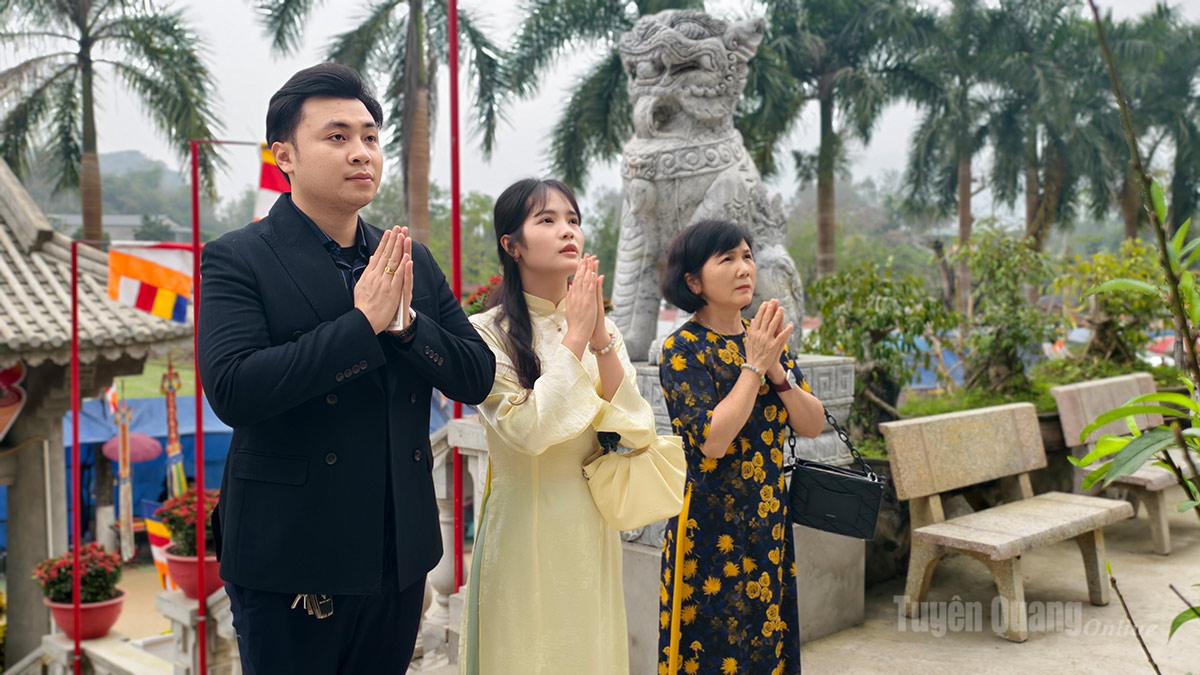
| Venerable Thich Thanh Phuc, Deputy Head and Chief Secretary of the Executive Board of the Vietnam Buddhist Sangha of Tuyen Quang Province, said that there are currently nearly 40 active pagodas in the province. To ensure safety for visitors attending early-year ceremonies, the Executive Board has instructed Buddhist establishments to coordinate with local authorities in implementing plans to ensure security and order, environmental sanitation, and fire prevention. Residents are advised to limit the burning of votive paper offerings. Buddhists and visitors are also encouraged to remain vigilant and safeguard their personal belongings. (In the photo: A corner of Hang Pagoda, An Tuong Ward, Tuyen Quang Province). |
 |
| Spiritual tourism is a distinctive cultural tourism product of Tuyen Quang Province with significant potential for further development. |
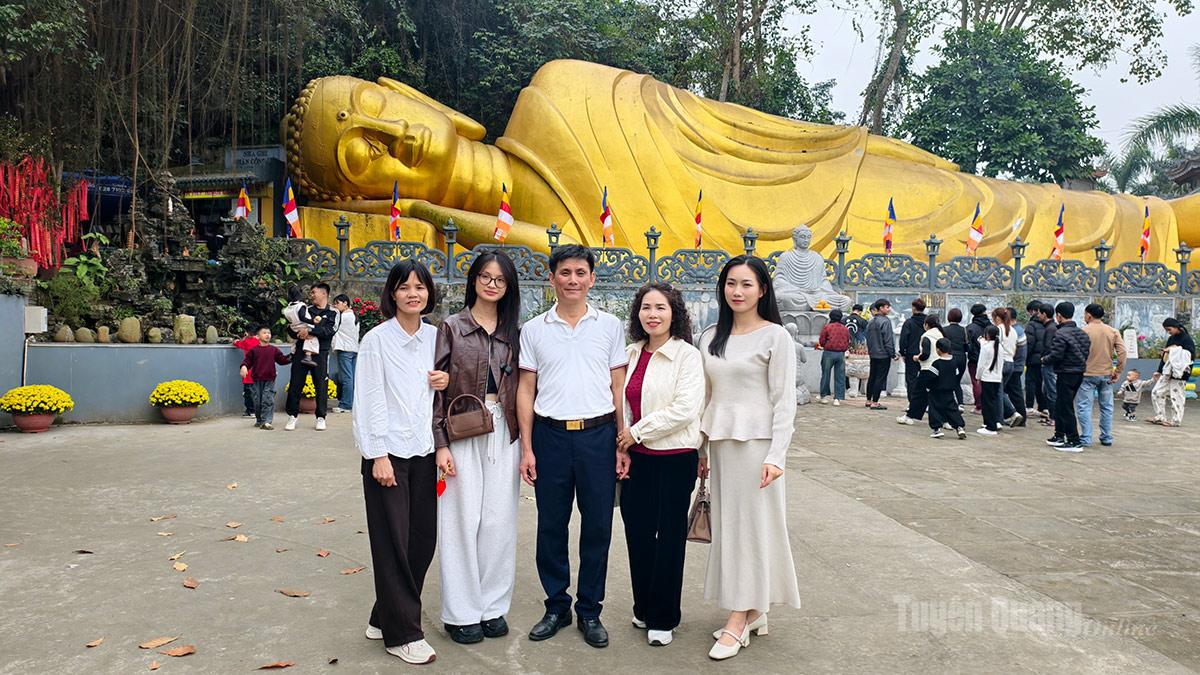 |
| Spring outings and visits to pagodas not only help people find inner peace and cultivate virtue, but also provide opportunities to explore historical relics and scenic landscapes. |
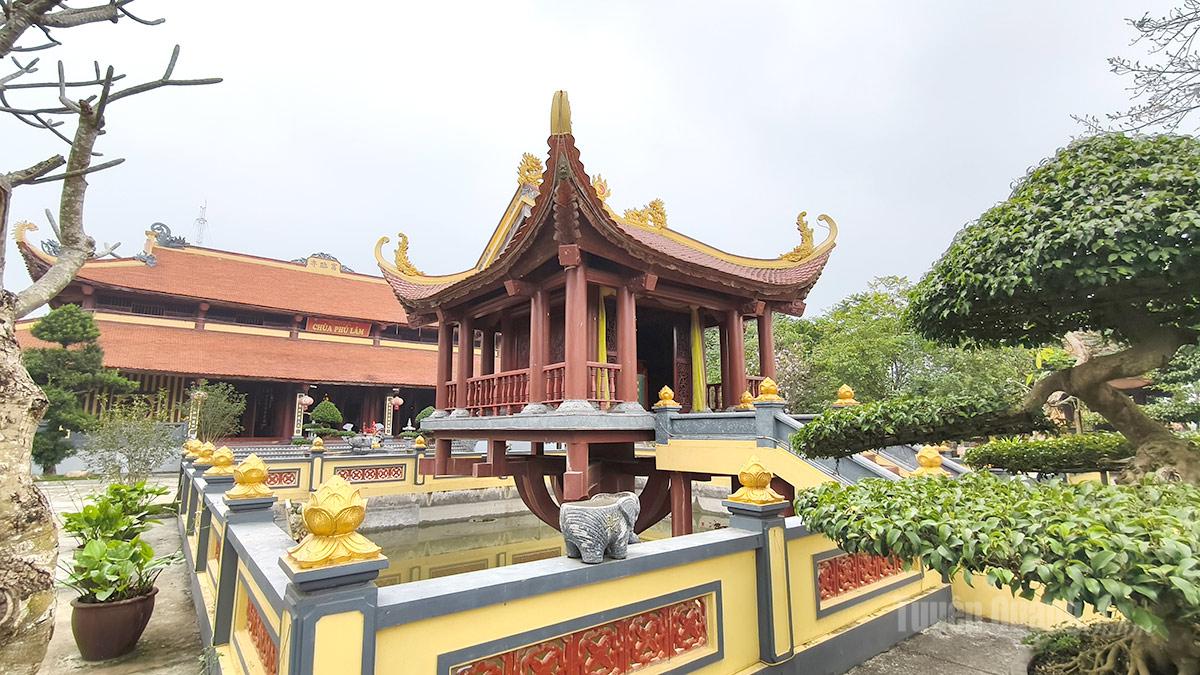 |
| Tuyen Quang is renowned for its sacred temples and pagodas as well as its picturesque scenery. (In the photo: Phu Lam Pagoda, My Lam Ward, Tuyen Quang Province). |
Tuyen Quang possesses substantial potential and advantages to develop diverse tourism products, including historical, resort and eco-tourism, and especially spiritual tourism. The overall goal is to gradually develop spiritual tourism into a key hub of the Northern Midlands and Mountainous Region, while linking it with the province’s distinctive strengths in historical, cultural, festival, ecological and community-based tourism.
Luu Khiem



READER COMMENTS