
Tham Ma Pass – a majestic symbol on the journey to the Stone Plateau
Located on National Highway 4C along the route to the Dong Van Karst Plateau, Tham Ma Pass is one of the most striking and memorable mountain passes for travelers. With sheer gray rock faces, a series of sharp hairpin bends, and a vast mountain skyline, Tham Ma is not only an important traffic route but also a symbol of the rugged, majestic beauty of the rocky highlands.
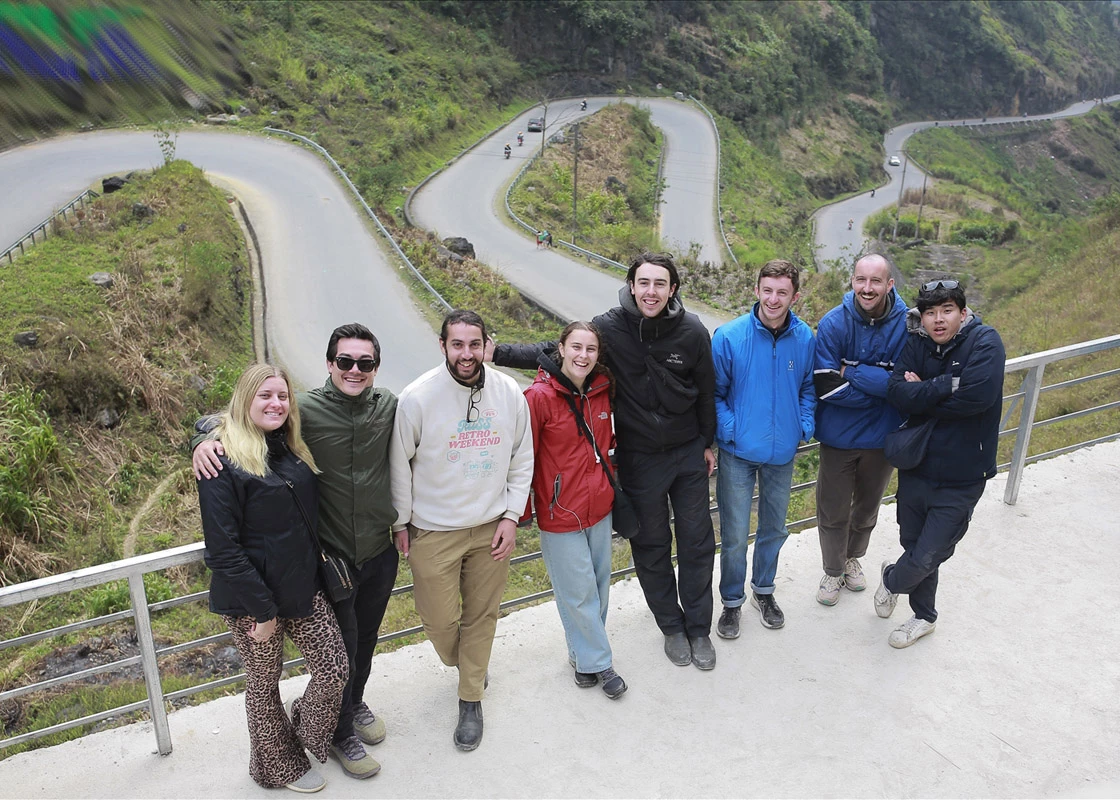 |
| Tham Ma Pass attracts many tourists. |
The pass winds like a rope draped across the mountainside and is renowned for its steep gradients and continuous tight curves. Each season lends Tham Ma a distinct character: in winter, thick fog blankets the road, creating a cold and ethereal landscape; in spring, peach and plum blossoms line the roadside, softening the harshness of the rocky terrain. The name “Tham Ma” is linked to a Mong folk tale passed down through generations. In the past, packhorses carrying goods were led across the pass; only those strong enough to make it over Tham Ma were kept, while weaker ones were sold. The pass thus became a measure not only of the mountain’s height but also of the endurance of both humans and animals. The story remains part of local memory, recalling the hardships of making a living in this rocky land.
Nowadays, Tham Ma Pass has become a familiar stop for visitors traveling through Ha Giang. From the stone railing along the pass, travelers can look out over lush green corn valleys and earthen houses nestled at the foot of the mountains. Amid the lively rhythm brought by tourism, Tham Ma still retains its inherent sense of quiet solemnity.
For local people, Tham Ma is a road of livelihood, tied to daily life, market days, and journeys carrying goods across the highlands. For visitors, it is a destination of experience and emotion. More than a scenic site, Tham Ma Pass stands as a vivid representation of human resilience amid the harsh yet captivating landscape of the Dong Van Karst Plateau.
Kim Tien


READER COMMENTS