Awakening spring from Tuyen Quang’s flower villages
As the first rays of spring sunshine touch the land of Tuyen Quang, traditional flower villages enter the most vibrant season of the year. Beyond bringing the colors of spring to urban areas, these flower-growing regions are gradually shaping a sustainable agricultural economic ecosystem, linking production with cultural preservation and tourism development.
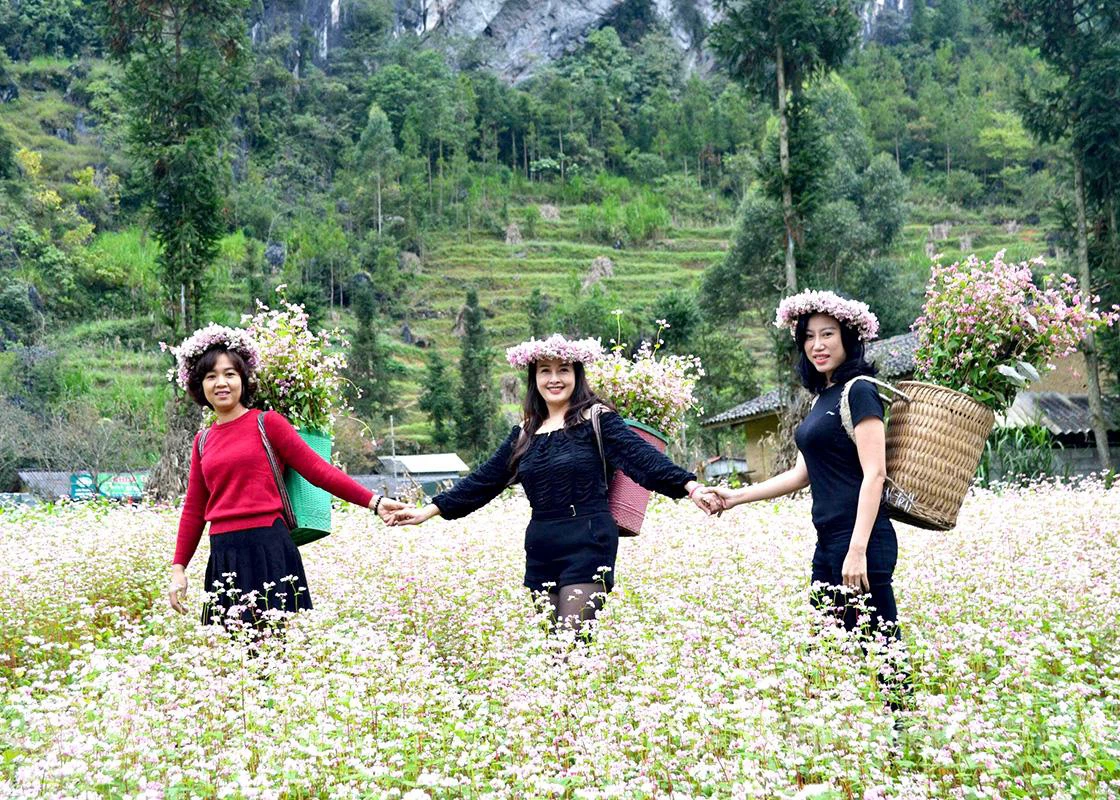 |
| Buckwheat flowers on the Dong Van Karst Plateau attract a large number of tourists. |
Nong Tien Ward is regarded as the province’s “capital” of peach blossoms, with around 160 households cultivating nearly 13 hectares. Ornamental and bonsai peach gardens are meticulously tended to ensure blooms coincide with the Lunar New Year, becoming a key source of livelihood for local people. In highland areas such as Bo Lach (Quan Ba Commune), roses are grown under harsh climatic conditions; however, thanks to the application of proper techniques, output remains stable, meeting peak Tet market demand.
Alongside Nong Tien, flower villages such as Ly Nhan (Minh Xuan Ward), My Tan (Tan Quang Commune), and Ban Cuom (Ngoc Duong Commune) are also simultaneously entering the Tet flower season. The cool highland climate combined with fertile alluvial soil along the Lo and Gam rivers has created flowers with distinctive quality and character, closely associated with traditional Tet cultural values.
Once a purely agricultural village, My Tan has undergone a strong transformation toward flower and ornamental plant cultivation and was officially recognized as a craft village in 2022. The village now maintains more than 20 hectares of specialized production with over 70,000 flower and ornamental plants, generating nearly VND 5 billion annually and providing stable employment for dozens of local workers. In many other flower villages, households have recorded incomes several times higher than those from traditional crops.
Beyond production, many localities are “tourismizing” native flower seasons through festivals, experiential activities, and check-in services, helping extend the value chain and boost incomes. The province currently has nearly 170 hectares of specialized flower cultivation, with total production value exceeding VND 100 billion in 2025. Several models combining flower growing with tourism have generated economic returns many times higher than staple crop cultivation.
However, flower villages also face challenges from climate change, rising input costs, and competition from industrial and imported flowers. In response, the province is restructuring cultivation zones based on ecological conditions, promoting high-tech applications, building flower brands, and strengthening linkages between production, consumption, and tourism to achieve sustainable development.
From blooming petals, Tuyen Quang’s flower villages are not only awakening spring but also sowing the seeds of prosperity for rural areas amid a new development trajectory.
Thu Phuong


READER COMMENTS