Sports initiative promotes healthy lifestyle to more than 1.2 million people
The Sports Partnership Initiative for Community Health in Viet Nam achieved significant results, including reaching more than 1.2 million people through communications activities, supporting over 229,000 students and residents in maintaining physical activity, and increasing the proportion of students meeting physical activity standards by 22.6% at 10 schools.
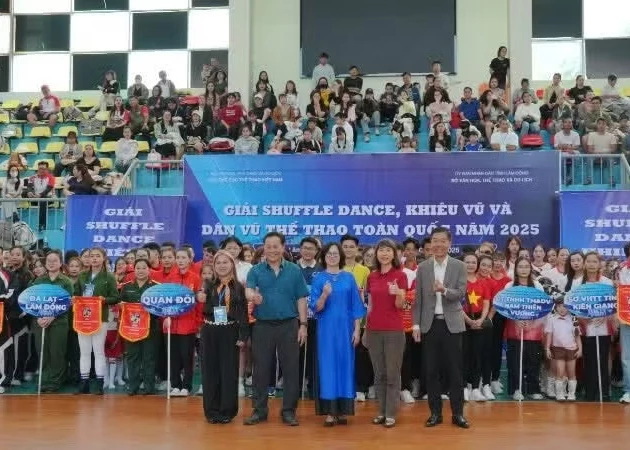 |
| The initiative helps promote an active lifestyle and the spirit of physical exercise throughout the community. |
The figures were announced during a workshop reviewing the results of the initiative, which was organised by PATH in coordination with the Nghe An Department of Education and Training, the Viet Nam Olympic Committee, the Sports Authority of Viet Nam, and many domestic and international partners.
It forms part of the International Olympic Committee’s (IOC) Olympism365 strategy and is also within the framework of cooperation between the World Health Organization (WHO) and the IOC to promote the role of community sports and physical activity in building healthier and more active communities.
The initiative implemented a wide range of coordinated activities focusing on four key areas: raising awareness of sports and health, promoting physical activity in schools and communities, strengthening inter-sectoral cooperation and policy advocacy, and building an evidence base to sustain and expand the model.
Under the initiative, communication materials and practical training programmes on sports for health were developed with technical support from WHO and partners in the sports, healthcare, and education sectors. As a result, teachers and schools gained access to reliable resources to promote physical activity in educational settings.
Numerous communication campaigns were also widely launched across digital platforms and mass media channels. Competitions such as shuffle dance, folk dance, online fitness challenges, and the contest “How sports changed me” attracted large numbers of students and residents nationwide.
At pilot schools in Nghe An Province, the “School Sports Ambassador” model was introduced to empower students to take the lead in organising and maintaining physical activities at schools and within communities.
An inter-sectoral technical advisory group comprising representatives from the sports, healthcare, and education sectors was also established to support implementation, strengthen coordination, advocate policies, and mobilise resources. Through this cooperation, many global recommendations on physical activity were translated into practical activities suited to schools and communities in Viet Nam.
Speaking at the workshop, Dr Le Thi Thu Hien, Director of PATH’s Primary Healthcare Programme, said the initiative had helped lay the foundation for a more sustainable physical activity ecosystem in schools and communities.
Tran Van Manh, Secretary-General of the Viet Nam Olympic Committee, said the project’s success stemmed from its innovative student- and community-centred approach, as well as the effective coordination among the sports, healthcare, and education sectors.
Meanwhile, Dr Angela Pratt, WHO Representative in Viet Nam, expressed particular appreciation for the project’s efforts in empowering students to become pioneers in promoting physical activity movements at schools and in communities.
Vo Van Mai, Deputy Director of the Nghe An Department of Education and Training, said the project’s activities have established a model linking sports promotion with improvements in student health, creating favourable conditions for expansion and long-term sustainability across the province’s school system.
Representing the IOC, Susanne Gaerte, Senior Manager of Olympism365, affirmed that the initiative in Viet Nam clearly demonstrates the role of sports in building healthier, more active, and more inclusive communities.
NDO


READER COMMENTS