
Cracking down on unsafe food in Tuyen Quang
In early 2026, food safety management in Tuyen Quang Province revealed several shortcomings, ranging from slaughtering and quarantine to collective kitchens in schools. The situation calls for comprehensive, long-term solutions rather than reactive responses to individual incidents.
The province currently has 1,410 livestock and poultry slaughtering facilities, more than 99% of which are small-scale household operations. The continued use of manual, scattered slaughtering within residential areas poses significant challenges for veterinary control and environmental sanitation, increasing the risk of disease transmission and food contamination.
Since July 2025, the suspension of animal quarantine stations at key transport hubs has further limited the ability to control food sources entering the province. At the same time, a shortage of commune-level veterinary staff due to organizational and personnel changes has weakened disease surveillance at its source, making early detection and prevention more difficult.
Inspections of school canteens in early April 2026 found that violations remain common. Typical issues include expired health certificates for food handlers, inadequate food delivery and receipt procedures, and the use of ingredients lacking proper documentation of origin. In some cases, food quality and record-keeping practices failed to meet regulatory standards.
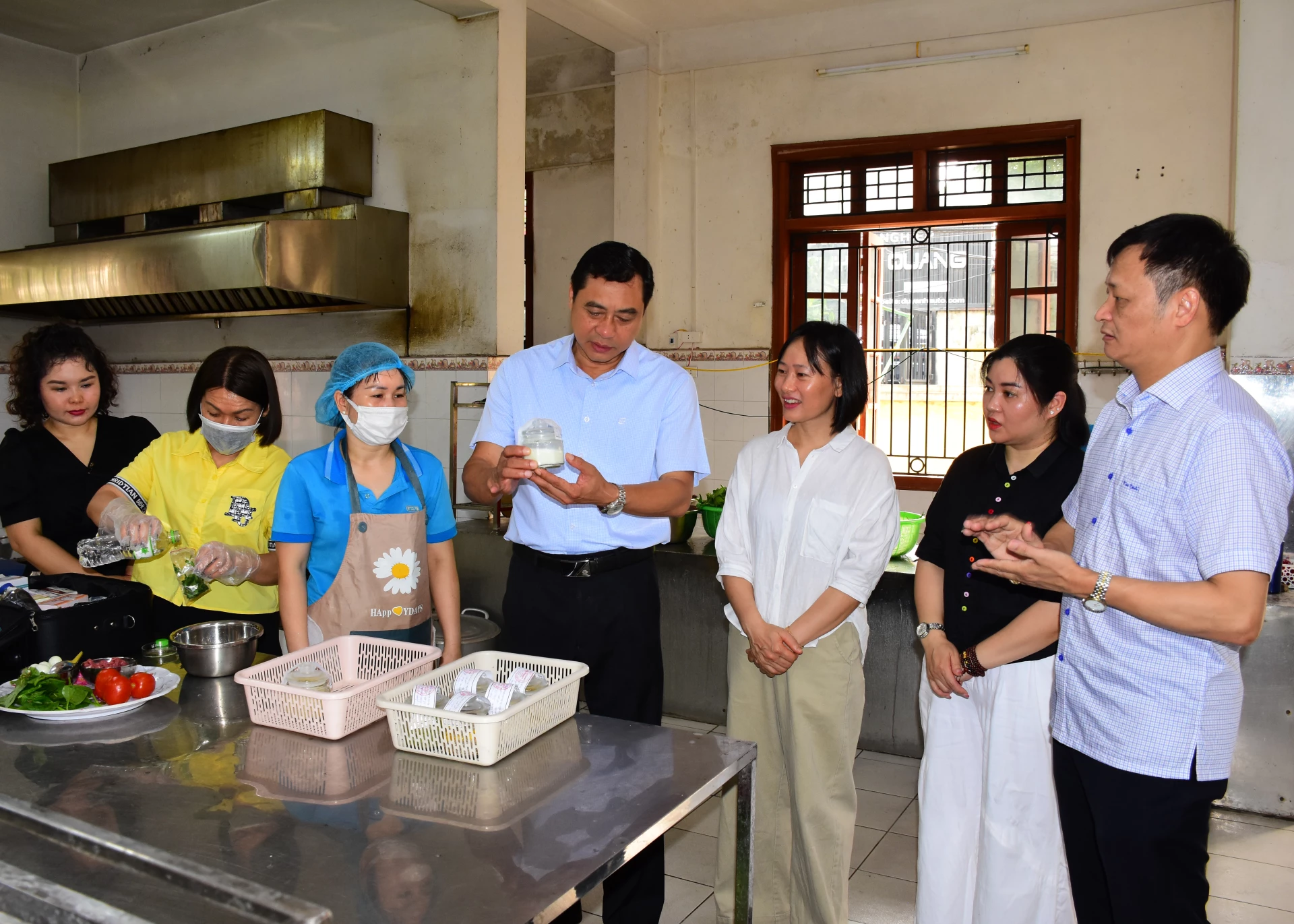 |
| A food safety inspection team from the Department of Health checks food sample storage at Phan Thiet Kindergarten, Minh Xuan Ward. |
Notably, a food poisoning incident at a school site in Thang Mo Commune in March 2026 left 12 people hospitalized, highlighting ongoing risks. The cause was traced to poor food preparation conditions and the use of untreated water sources. Another case at a kindergarten in Binh Thuan Commune also raised concerns after spoiled food and insufficient legal documentation were discovered.
In response, provincial authorities plan to strengthen control across the entire supply chain, from farming and transport to distribution, while strictly handling violations and gradually shifting small-scale slaughtering into centralized facilities. School kitchens are also required to strictly comply with food safety regulations and ensure tighter control over input ingredients.
In the long term, raising awareness among producers and consumers is considered a key solution to reducing unsafe food and protecting public health.
Minh Hoa


READER COMMENTS