
Stepping up efforts to prevent counterfeit and substandard goods ahead of Tet
As the Lunar New Year of Binh Ngo 2026 approaches, the provincial commodity market is entering its busiest season of the year. With demand surging, the risk of counterfeit and substandard goods infiltrating the market has also increased. In response, provincial authorities have simultaneously launched inspection and control campaigns to safeguard consumers and ensure a safe and stable Tet holiday.
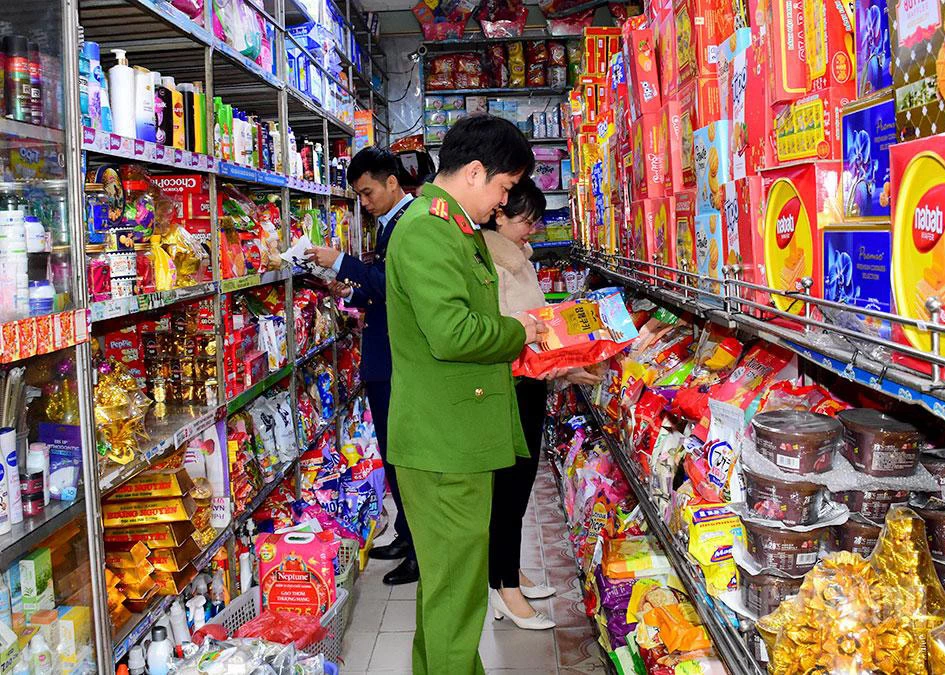 |
| Inter-sectoral inspection team checks goods being traded in Minh Xuan Ward. |
In recent days, bustling shopping activity has been observed at shopping centers, supermarkets, and traditional markets from urban areas to highland localities. Essential goods such as fresh food, confectionery, alcoholic beverages, and soft drinks are widely available with diverse designs and categories. Many retailers report that customer traffic has risen three to four times compared to normal days, prompting them to prioritize legally sourced products with clear labeling, traceable origins, and valid expiration dates to maintain consumer trust.
However, higher purchasing power also brings greater risks of trade fraud, especially in remote and mountainous areas where distribution networks remain limited. Consumers are increasingly cautious, favoring reputable brands and products with clear origins, while carefully checking packaging, barcodes, and labeling before making purchases.
Following directives from the Provincial People’s Committee on strengthening food safety management and stabilizing the Tet market, inter-sectoral inspection teams have been established with close coordination among Market Surveillance, Public Security, Health, and Agriculture authorities. Inspections are being conducted comprehensively across the supply chain, from production and importation to circulation and retail.
According to market surveillance forces, the focus during this peak period is on warehouses, distribution hubs, and businesses showing signs of violations. Authorities have reiterated a zero-tolerance approach, with strict enforcement and no “no-go zones” for acts of smuggling, counterfeiting, or trading in substandard goods - particularly those posing direct risks to public health.
At the same time, the health sector has intensified post-inspections at major production facilities, slaughterhouses, and food importers. High-risk items such as homemade alcohol, processed foods, and food additives are placed under special supervision. Inspection teams are equipped with rapid testing tools to detect prohibited substances, including borax, unauthorized colorants, and pesticide residues in vegetables and fruits.
Brand counterfeiting, which often spikes during the Tet season, is also being closely monitored. Violators frequently use packaging that closely resembles genuine products to deceive consumers. As a result, label verification and electronic traceability through QR codes are being strengthened at supermarkets and wholesale markets to enhance transparency.
In addition to product quality, price listing and price stabilization are key priorities. Any acts of unreasonable price hikes, hoarding, or creating artificial shortages will be strictly penalized in accordance with the law to maintain market stability and prevent public concern.
Alongside the strong involvement of functional agencies, authorities call on producers and traders to heighten their sense of responsibility in ensuring food safety. Consumers are also encouraged to remain vigilant, choosing products with clear origins and quality assurance to protect their families’ health during the Lunar New Year of Binh Ngo 2026.
Minh Hoa


READER COMMENTS