
Reducing pollution through circular livestock farming
In recent years, alongside the growth of livestock production, rural environmental pollution, particularly pollution caused by livestock waste, has drawn increasing attention. In response, many localities have introduced circular livestock farming models, which have proven effective in reducing pollution and promoting sustainable agricultural development.
The family of Do Van Kien in Phu Thinh hamlet, Yen Son Commune raises around 300 chickens each year. In 2023, after gaining access to techniques for raising chickens on thick biological bedding, he made use of post-harvest rice straw combined with microbial preparations to create bedding for his chicken coop. With biological bedding, the coop is odor-free, chickens grow faster and remain healthier, and frequent cleaning is no longer required. After each production cycle, the bedding becomes a valuable source of organic fertilizer for crops.
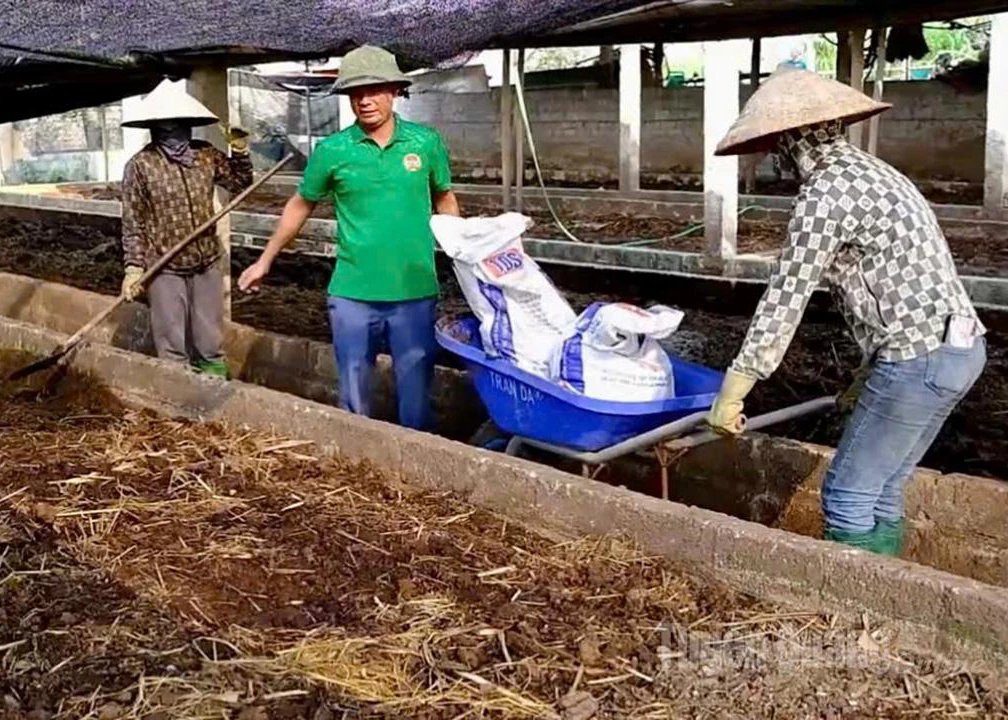 |
| The circular livestock farming model applied by Duong Van Thanh in My Lam Ward has proven effective and environmentally friendly. |
Kien said: “Previously, our family raised chickens using traditional methods, so odors from the coop greatly affected daily life for both our family and neighbors, and we had to spend a lot of labor cleaning the coop every week. Since adopting the thick biological bedding model, the coop has been clean and well-ventilated, with no unpleasant smells. The chickens grow faster and the meat quality is better. In addition, I compost organic fertilizer from crop by-products to fertilize plants such as guava, passion fruit and ornamental trees. This helps improve soil fertility, reduce environmental pollution and cut chemical fertilizer costs by about 50 percent.”
As one of five technical solutions under the project “Communication and Mobilization of Farmers in Waste Treatment in Vietnam, Contributing to the International Community’s Efforts to Reduce Greenhouse Gas Emissions,” implemented in My Lam Ward since 2023, vermiculture (earthworm farming) has delivered notable results. According to Pham Hong Hanh, Chairman of the My Lam Ward Farmers’ Association, “The earthworm farming model is well suited to households raising cattle and buffalo. It makes use of livestock waste as feed for earthworms, which in turn provide feed for chickens and fish. The grassroots Farmers’ Association has actively promoted, trained and guided farmers in applying this technique. As a result, the discharge of livestock waste into the environment has fallen by more than 60 percent compared to before implementation.”
Beyond bringing economic benefits to individual households, circular livestock farming models have also helped raise environmental awareness within communities. Over the past three years, Farmers’ Associations at all levels have developed 650 models and mobilized 8,104 households to implement the five technical solutions of the project. Two pilot models, rice stubble treatment using biological products and raising chickens on thick biological bedding, have been effectively deployed. The number of households applying project techniques has increased by 35 percent compared to before implementation, while the practice of burning rice straw in fields has declined by 50 percent.
Chu Thi Ngoc Diep, Chairwoman of the provincial Farmers’ Association, commented: “Through the implementation of these models and projects, public awareness has improved significantly. From routinely burning rice straw and discharging waste directly into the environment, many households have learned to make use of crop by-products and livestock waste as animal feed and organic fertilizer. In addition to project resources, the provincial Farmers’ Association has organized various waste treatment initiatives. Notably, 199 models of ‘sorting and treating agricultural and organic household waste into fertilizer at source’ have been established, involving 7,384 households; 56 training courses have been held for 3,810 farmer members; and waste treatment and environmental protection content has been incorporated into the curricula of 22 vocational training classes for 770 trainees. In the coming period, the associations will continue encouraging members to adopt circular economic models in agricultural production, helping to reduce pollution, increase incomes and build sustainable new rural areas.”
The development of circular livestock farming models is not only a short-term solution but also a long-term direction aligned with the province’s goals for green agriculture and a circular economy. Ultimately, it contributes to improving the quality of life for rural residents.
Thuy Nga


READER COMMENTS