
Overcoming challenges for substantive digital transformation
By bringing digital technology to villages and individual residents, and building a workforce of digital officials and digital citizens at the grassroots level in line with the two-tier local government model, Viet Lam Commune is gradually turning Resolution No. 57 of the Politburo on science, technology development, innovation, and national digital transformation into reality.
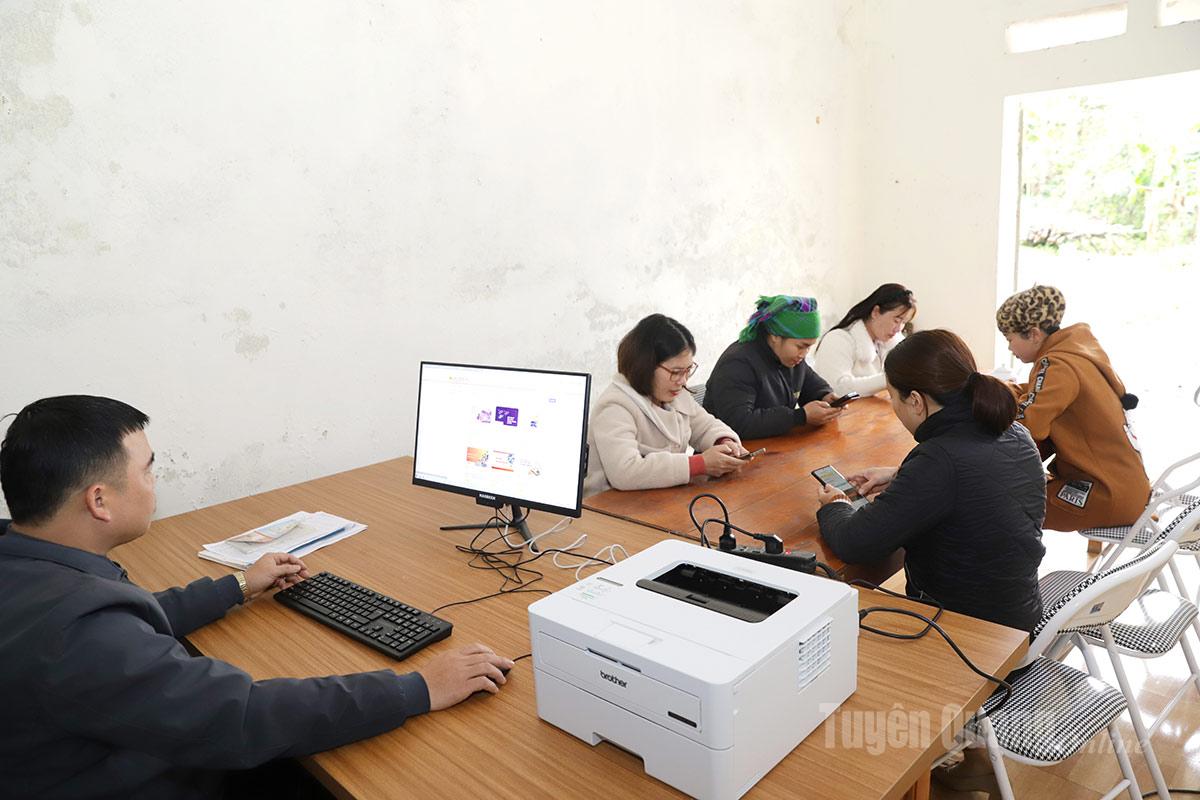 |
| Members of the commune’s community digital technology team guide village officials in using computers and printers. |
At Nam Quang Village, digital transformation has become visible in everyday administrative work. For the first time, village-level offices have been equipped with modern and synchronized facilities, including computers and printers, and village officials have been trained to use them in their daily tasks. After a short period, village staff are now able to draft documents, send and receive files on digital platforms, assist residents with administrative procedures, and participate in “Digital Literacy for All” training courses.
To date, Viet Lam Commune has invested in fully equipping its Public Administration Service Center; provided all 14 villages with computers and printers; organized digital skills training for commune and village officials; established and trained community digital technology teams; held online digital citizen contests; and assigned officials to support residents in learning and practicing digital transformation. The commune aims that by 2026, villages will largely eliminate the use of paper documents, with village officials handling work and documents entirely in the digital environment.
Despite significant challenges - five out of 14 villages still lack access to the national power grid, the terrain is fragmented, and mobile signal blind spots remain - the commune has persistently implemented foundational solutions. Communication and outreach have been diversified through multiple channels, while the commune’s website and fanpage have attracted thousands of followers, encouraging nearly 400 residents to complete the “Digital Literacy for All” course.
Existing digital infrastructure has been effectively utilized, with 4G coverage reaching more than 64 percent of villages and 5G available in central areas. Around 75–80 percent of residents now use smartphones, creating favorable conditions for expanding digital services, particularly in administrative procedures and cashless payments.
In the area of digital society, 90 percent of residents have obtained Level-2 electronic identification accounts. All local health stations use software for medical examination management and electronic health records, while schools have implemented electronic contact books, digital student records, and teaching management software. Cashless social welfare payments have reached 85 percent overall, and 90 percent for beneficiaries of preferential policies. Meanwhile, 70–75 percent of residents aged 15 and above have bank accounts or e-wallets, laying the groundwork for cashless payments and e-commerce in rural areas.
Looking ahead, Viet Lam Commune plans to work with telecommunications providers to eliminate mobile signal blind spots and pilot the issuance of I-office accounts for village leaders, ensuring synchronization between provided equipment and digital applications. The commune will also propose investment in the national power grid to meet electricity needs and support the application of modern technologies in daily life.
With synchronized and practical implementation, digital transformation in Viet Lam is gradually overcoming obstacles and delivering tangible results. The initial achievements in infrastructure, digital skills, and applications provide a solid foundation for building digital government, digital economy, and digital society, narrowing the digital divide and creating momentum for sustainable development in rural and mountainous areas.
Duy Tuan


READER COMMENTS