
Mobilizing resources to drive sustainable development in ethnic minority and mountainous areas
Socio-economic development in ethnic minority and mountainous areas has been identified as a central, long-term task in the Resolution of the 1st Provincial Party Congress of Tuyen Quang for the 2025–2030 term. Guided by the principle of “leave no one behind,” the province is concentrating resources to drive comprehensive and sustainable change in disadvantaged regions, laying the foundation for ethnic communities to enter a new era of development together.
Tuyen Quang is a northern mountainous border province, where ethnic minorities account for 72% of the population. As many as 123 out of 124 communes and wards are classified as ethnic minority and mountainous areas. Fully aware of this reality, the province has consistently regarded ethnic affairs as a “key” element in its sustainable development strategy.
 |
| Commune officials in Thang Mo assist residents in eliminating temporary and dilapidated housing. |
During the 2021–2025 period, nearly VND 3 trillion was allocated to ethnic minority areas for the construction of 1,583 infrastructure projects, along with almost VND 2 trillion to support the development of agriculture and forestry production. Policies on restructuring the agricultural sector in association with new rural development have been implemented in a coordinated manner, enabling many key agricultural products and local specialties to be produced according to standards and better linked to markets.
Numerous effective livelihood models have contributed to sustainable poverty reduction. In early 2026, a project linking households to breed brood mares in Hoa An Commune provided livestock and technical support to 22 households, opening up a new economic pathway for residents in disadvantaged areas.
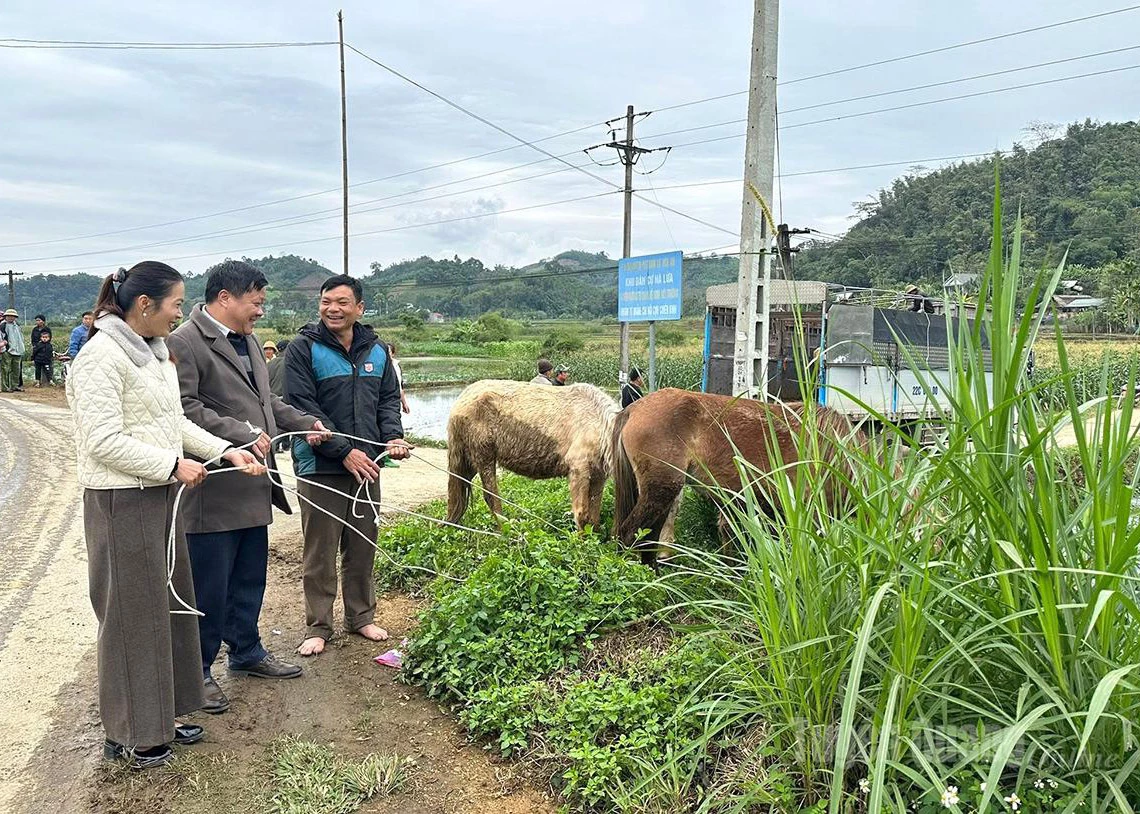 |
| Hoa An Commune presents breeding horses to poor households. |
Alongside economic investment, the province has focused on tapping into community strengths while preserving traditional cultural values. To date, 22 national intangible cultural heritages have been safeguarded and promoted, serving as a driving force for community-based tourism and creating additional livelihoods for local people.
These policies have yielded tangible results: 100% of communes now have roads accessible by automobile to their centers; 45 communes have been removed from the list of extremely disadvantaged areas; and the poverty rate among ethnic minority households has fallen by an average of over 4% per year. Ethnic minority cadres and Party members have played a core role, setting examples in economic development and grassroots emulation movements.
 |
| People of Tan Trao Commune preserve traditional culture while developing community-based tourism. |
Entering the 2025–2030 term, Tuyen Quang has defined three strategic pillars for remote and disadvantaged areas: prioritizing transport, electricity and telecommunications infrastructure; strongly transitioning toward sustainable forestry and eco-tourism; and promoting education, vocational training and healthcare. With the consensus of the entire political system and the determination of ethnic communities themselves, Tuyen Quang is steadily realizing its goal of comprehensive development, narrowing regional disparities and moving forward confidently in the process of integration.
Ly Thu


READER COMMENTS