
Ensuring facilities for boarding schools
Ensuring adequate facilities for boarding schools is a crucial task, especially for students in ethnic minority, remote and disadvantaged areas, helping them feel secure in their studies and stay connected to their schools.
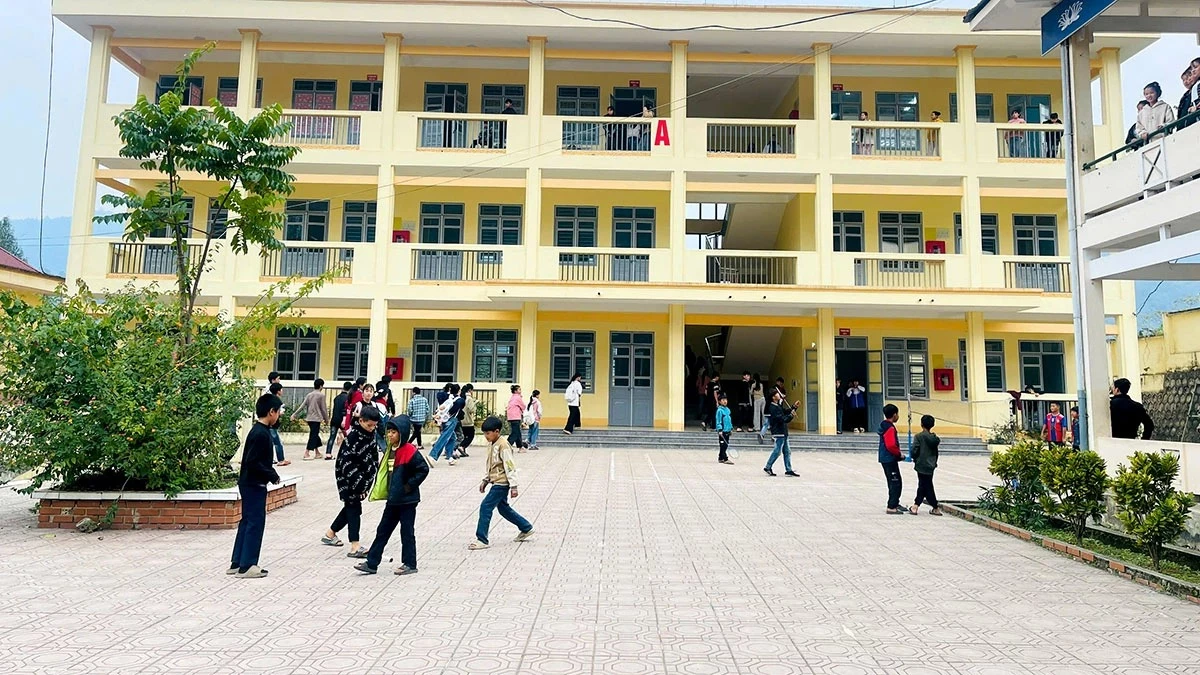 |
| The school facilities of Thuan Hoa Semi-Boarding Secondary School for Ethnic Minority Students have been invested comprehensively. |
Tuyen Quang is a mountainous province with complex terrain and challenging transportation conditions, where many students must walk dozens of kilometers to reach school. Boarding schools therefore serve as a “second home” for students, providing accommodation, meals and daily activities throughout the school year. According to the Department of Education and Training, the province currently has 231 boarding and semi-boarding schools with a total of 118,428 students.
In recent years, thanks to national target programs, local budget allocations and support from the central government, the system of boarding schools in the province has received significant investment. Many essential facilities such as solid classrooms, functional rooms, student dormitories, dining halls, semi-boarding kitchens, sanitation facilities and clean water systems have been newly built, upgraded or renovated. Teaching equipment, learning materials and daily necessities including beds, blankets, mosquito nets and personal lockers for boarding students have also been supplemented. As a result, the physical appearance of ethnic minority boarding schools has improved markedly, meeting the requirements for two-session-per-day teaching while ensuring safety, hygiene and food safety.
Alongside state investment, education socialization has been actively promoted. Many organizations, individuals and businesses inside and outside the province have joined hands to support boarding students with practical gifts such as warm blankets, clothing, books and school supplies, helping improve living and learning conditions for students in highland areas.
According to leaders of the Department of Education and Training, prioritizing investment in boarding school facilities has contributed to reducing dropout rates and improving students’ health care and nutrition. At the same time, the education sector has strengthened inspection and supervision of the use and maintenance of facilities to ensure effective utilization of invested projects.
However, some boarding schools still face difficulties, including shortages of solid classrooms, deteriorating dormitories and insufficient or unsynchronized teaching equipment. In response to the requirements of comprehensive education reform, Tuyen Quang Province has identified continued prioritization of resources, effective integration of programs and projects, and stronger mobilization of social resources as key solutions to gradually complete the boarding school system and improve education quality in disadvantaged areas.
Hoang Ngoc


READER COMMENTS