
Acting for the environment
In recent years, environmental awareness among local communities across the province has steadily improved, reflected in the widespread practice of household-level waste collection, sorting, and treatment. From simple actions such as sweeping village roads to joining community-based self-management groups, residents are actively contributing to creating cleaner, greener, and safer living spaces.
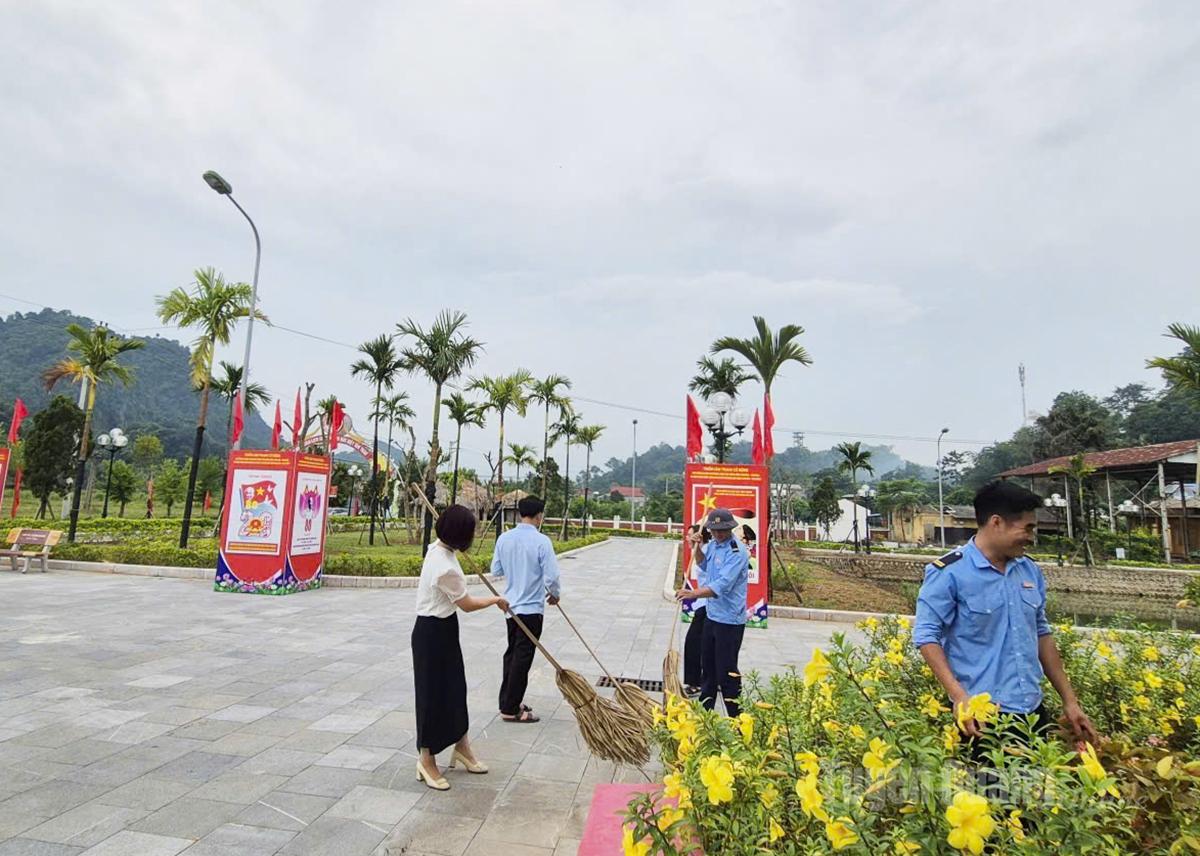 |
| Staff members of the ATK Tan Trao Museum clean the museum’s surrounding landscape. |
In Lung Cu Commune, which welcomes nearly 20,000 visitors each week, environmental pressure remains high. According to Chairman of the Commune People's Committee Tran Duc Chung, preserving the local landscape is considered a core task to safeguard its tourism brand. The commune maintains a daily waste-collection team, installs additional bins, enhances communication efforts, and organizes weekend cleanups to keep the environment tidy, especially during festivals.
Under the National Target Program on New Rural Development for 2021–2025, the province has established more than 3,800 environmental self-management groups. Strong community movements, such as “Green Sunday,” “Trash for Trees,” self-managed roads, planting flowers along village paths, donating waste bins and sorting panels, and household-level waste-treatment models, have helped shape greener living habits and visibly improved local landscapes.
Nguyen Thi Phuong Anh in Chiem Hoa Commune noted that roads have become cleaner since households began sorting waste. In Nhu Khe Commune, residents have proactively formed self-management groups, planted flowers along roads, and proposed organized waste-collection points, contributing to a more sustainable environmental movement.
However, littering by some tourists remains an issue at certain destinations. Trieu Thi Lam Hanh from Tan Lap Hamlet, Tan Trao Commune said community members have placed extra bins and regularly reminded visitors, hoping they will treat the village as their own home.
Thanks to these coordinated efforts, the quality of the living environment has markedly improved. Localities are increasingly recognized for their clean, green, and welcoming image, while household waste management has become more orderly - demonstrating that protecting the environment through small, consistent actions is the most practical path toward building civilized and sustainable communities.
Le Hao


READER COMMENTS