Awakening the potential of a border trade gateway
With a 272-km border with China, Tuyen Quang has significant advantages in developing border trade, import-export activities and logistics services. Trade through Thanh Thuy International Border Gate is becoming increasingly vibrant, creating opportunities to expand markets, attract investment and drive economic growth. However, unlocking these advantages requires further investment in infrastructure, logistics services and higher export value.
In recent years, trade activities at Thanh Thuy International Border Gate have grown steadily, with agricultural products, food, raw materials and production inputs among the key commodities transported across the border.
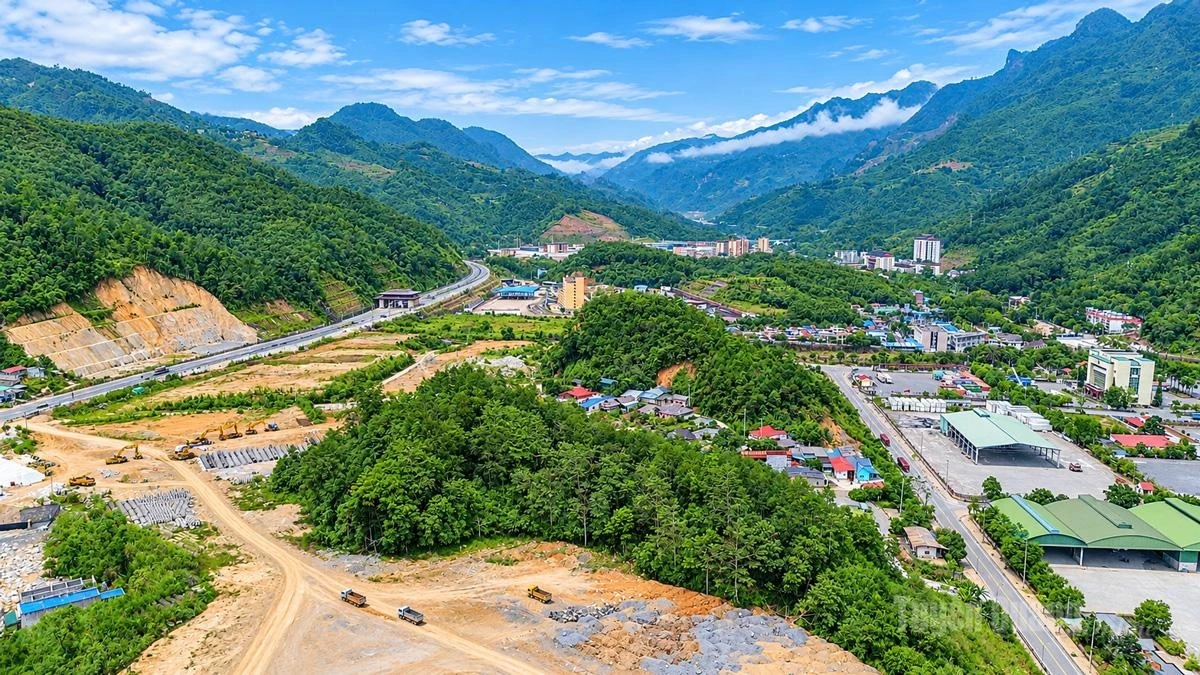 |
| Panoramic view of Thanh Thuy International Border Gate. |
According to data from Thanh Thuy International Border Gate Customs, as of the end of October 2026, total import-export turnover exceeded US$794.4 million, up 17% year on year. Of this, exports reached US$640.3 million, imports US$110.3 million, while goods in transit and transferred through the border gate accounted for US$43.8 million. A total of 216 businesses and individual traders engaged in import-export activities, with 36,696 vehicle movements recorded, up 93% year on year. Major export products included durian, coffee, fresh fruits and vegetables, cassava starch and industrial plywood.
In the first nine months of 2026 alone, durian exports exceeded US$534.4 million, up 51% year on year, highlighting the considerable potential of the Chinese market. However, the concentration of exports in a limited number of products underscores the need to diversify commodities and markets.
The Thanh Thuy International Border Gate Economic Zone currently attracts 41 trade and service investment projects with registered capital exceeding VND752 billion. Nevertheless, infrastructure and logistics services remain inadequate. Limited warehouse capacity, storage facilities and transport infrastructure have constrained the area's ability to attract further investment and increase local value addition.
To address these challenges, Tuyen Quang is prioritising transport connectivity, logistics infrastructure and investment promotion. The second phase of the Tuyen Quang – Ha Giang Expressway, stretching approximately 57.87 km from Tan Quang to Thanh Thuy International Border Gate, is expected to feature four lanes and require an estimated investment of VND14.802 trillion. Once completed, the route will shorten transport times, reduce logistics costs and improve connections with production centres and regional economic hubs.
The province is also focusing on developing logistics centres, bonded warehouses, cold storage facilities and cargo processing and packaging services, while encouraging businesses and cooperatives to improve product quality, traceability and processing capacity.
At a working session with Tuyen Quang in August 2025, Deputy Minister of Industry and Trade Phan Thi Thang recommended that the province develop a long-term border trade strategy, prioritising official exports, deep processing, higher product value and links between trade, tourism and OCOP products.
By shifting from simply facilitating cross-border goods flows to building an integrated border-gate economic ecosystem, Tuyen Quang aims to turn its geographical advantage into a sustainable competitive edge and make border trade a key growth driver in the 2026–2030 period.
Trang Tam
READER COMMENTS