
A green transformation along the Lo River
Once known for low-yield maize fields along the banks of the Lo River, Phu Luong Village in Binh Ca Commune is now emerging as a thriving cultivation area for seedless limes, opening up promising economic opportunities for local farmers.
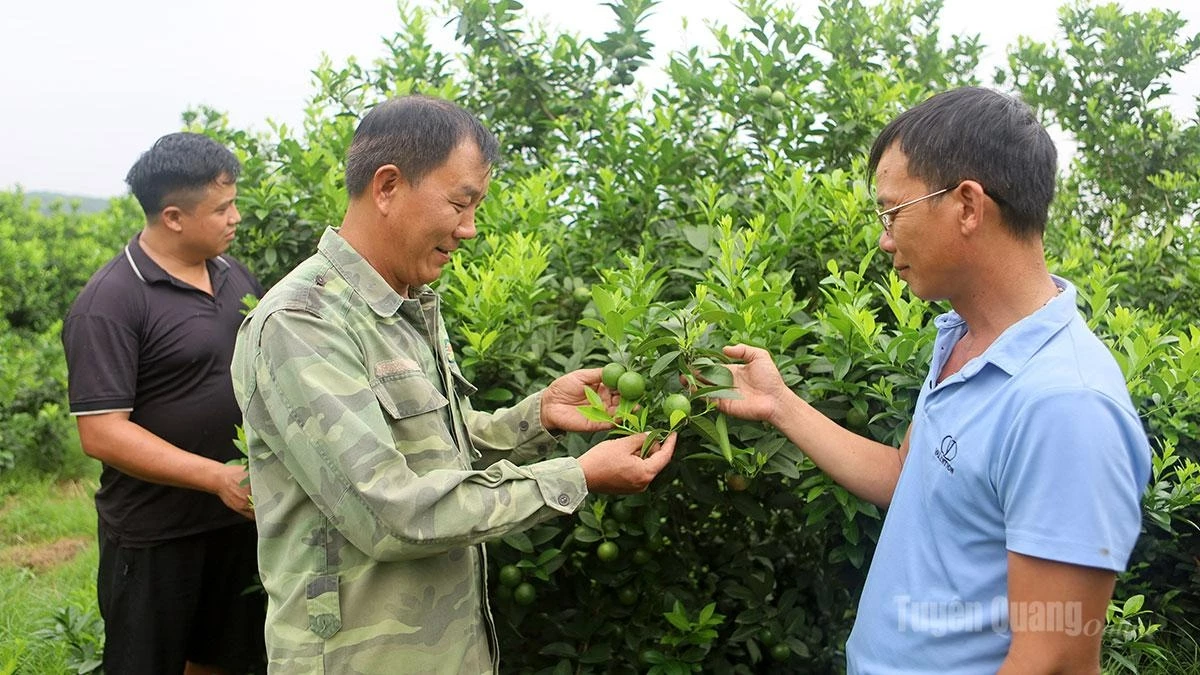 |
| Long Van Hanh (left) introduces the seedless lime crop. |
In early 2023, farmer Long Van Hanh and two relatives leased more than eight hectares of alluvial land to cultivate seedless limes after seeing the crop’s success in other localities. With support from local authorities and the cooperation of local people, the first lime trees were planted in October 2023. Thanks to favorable soil conditions and proper cultivation techniques, the plantation produced more than 20 tonnes of fruit after its first year, generating revenue of over VND 200 million.
According to Hanh, seedless limes are valued for their thin peel, high juice content and strong productivity, although they require intensive care and close monitoring throughout the growing season. The orchard currently provides stable employment for around 10 local workers, each earning more than VND 7 million per month. By 2026, yields are expected to exceed 20 tonnes per hectare. With farm-gate prices remaining above VND 20,000 per kilogram, each hectare is projected to generate profits of more than VND 200 million annually.
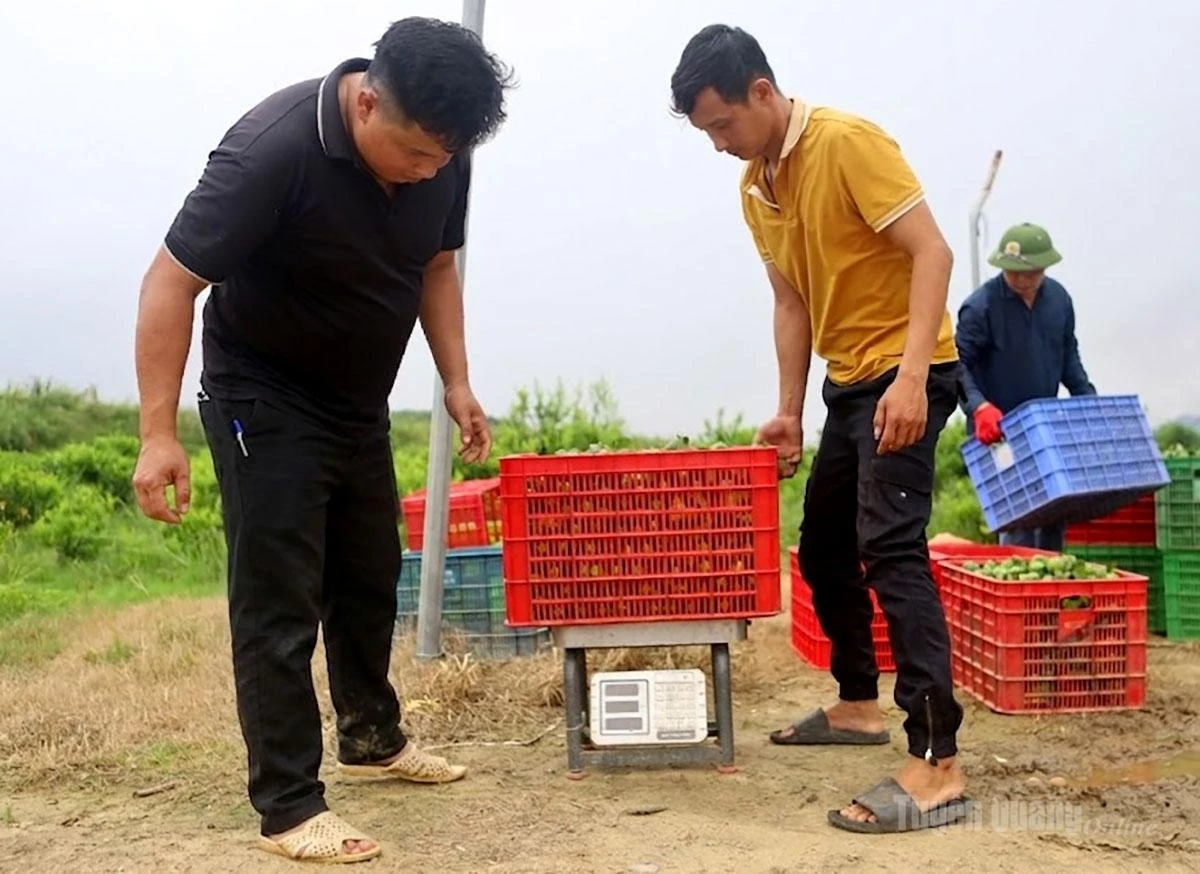 |
| Traders purchase limes directly at the orchard for more than VND 20,000 per kilogram. |
According to the People's Committee of Binh Ca Commune, the seedless lime model has expanded rapidly, with nearly 20 hectares now under cultivation in Phu Luong Village. The crop has delivered significantly higher economic returns than many traditional crops grown on the same land. In addition to younger farmers, many elderly residents have also invested in lime production, while numerous households cultivating from several hundred trees to more than one hectare have secured stable incomes thanks to reliable market demand.
Following a recent field visit to the lime-growing area, provincial leaders described the model as having strong development potential and encouraged local authorities and farmers to further improve productivity through advanced farming techniques. The success of seedless lime cultivation is gradually transforming the once underutilized alluvial land along the Lo River into a productive agricultural zone, creating sustainable livelihoods and improving living standards for local communities.
Le Duy


READER COMMENTS