
Yen Son develops Buddha’s hand citron cultivation model for higher economic returns
Yen Son commune is gradually developing a Buddha’s hand citron cultivation model, creating a new direction in agricultural restructuring and improving local incomes.
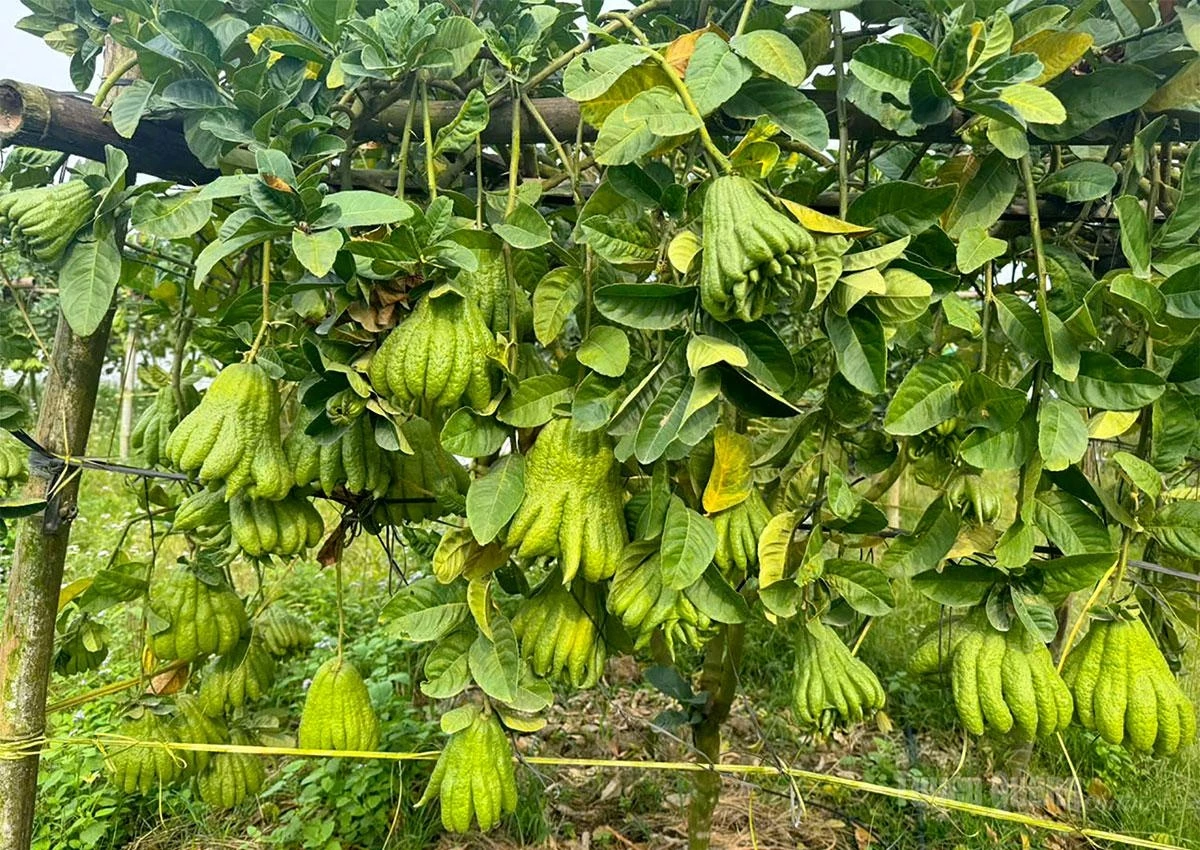 |
| Buddha’s hand citron is emerging as a new economic development direction in Yen Son commune. |
A notable example is Hoang Van Son, a farmer in Hamlet 7, who pioneered the introduction of this crop on former rice fields. Previously a trader of Buddha’s hand citron since 2017, Son recognized the fruit’s stable market value and higher profitability compared to traditional rice cultivation. In late 2019, he invested in converting part of his farmland to begin growing the crop.
The initial phase proved challenging due to limited experience, resulting in low yields. However, through continuous learning and the application of appropriate cultivation techniques, he gradually mastered the process. Buddha’s hand citron is considered a demanding plant, highly sensitive to weather conditions and requiring careful attention, including fertilization, pest control, and pruning.
By 2025, the model began delivering clear results, with Son’s family harvesting more than two tons of fruit and generating over VND 70 million in revenue. Many fruits met high-quality standards, featuring large sizes and attractive shapes that appeal to premium markets.
In addition to production, Son has actively adopted digital tools, including social media platforms, to promote and sell his products, helping expand market reach and enhance product value.
According to local authorities, Buddha’s hand citron is proving to be a suitable crop for the area. Farmers’ willingness to shift production methods, apply modern techniques, and align with market demand has contributed to positive changes in agricultural development.
The model is currently being expanded to nearly 200 trees across approximately 3,000 square meters, alongside the cultivation of other high-value crops such as red pomelo. In the coming time, Yen Son aims to replicate this model to create sustainable livelihoods, retain local labor, and promote rural economic growth.
Le Duy


READER COMMENTS