
“Treasure of the Rocky Highlands”: Elevating H’Mong yellow cattle to a national brand
H’Mong yellow cattle, a rare indigenous breed, account for only about 2% of Vietnam’s total cattle population but hold outstanding value in terms of cultural significance, meat quality, and market price. As part of the national cattle branding strategy, the Ministry of Agriculture and Environment has selected H’Mong cattle in Tuyen Quang as a key focus for development, aiming to position the breed as a premium specialty product.
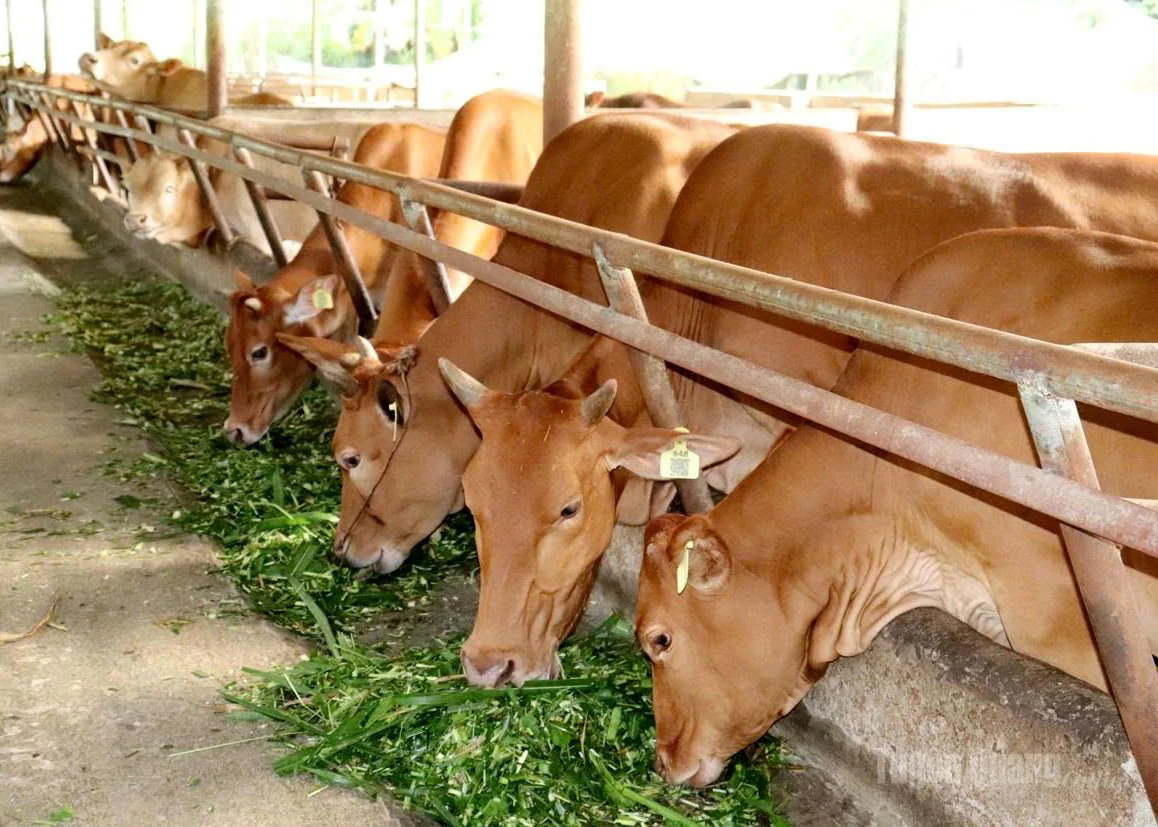 |
| H’Mong cattle are raised under strict technical standards at Cat Ly Cooperative, Thuan Hoa Commune, to improve marbling. |
Adapted to the harsh conditions of rocky highlands, H’Mong cattle are known for their cold resistance, strong immunity, and ability to utilize low-nutrient feed. Adult males typically weigh 450–500 kg, with some reaching up to 700–800 kg. Beyond their economic value, these cattle are considered a “foundation asset” and a vital livelihood for ethnic communities.
The province currently has more than 105,000 H’Mong cattle, producing nearly 4,000 tons of beef annually. In recent years, artificial insemination has improved herd quality, with nearly 7,000 calves born, generating higher economic returns. Notably, H’Mong beef has been granted geographical indication status, providing a solid foundation for brand development.
Research findings show that H’Mong beef contains 15% more protein and significantly lower cholesterol than conventional crossbred cattle. Its marbling meets standards comparable to Korea’s Hanwoo beef, resulting in tender, flavorful meat suitable for high-end restaurants. Premium-grade beef can sell for VND 1–2 million per kilogram, several times higher than regular beef.
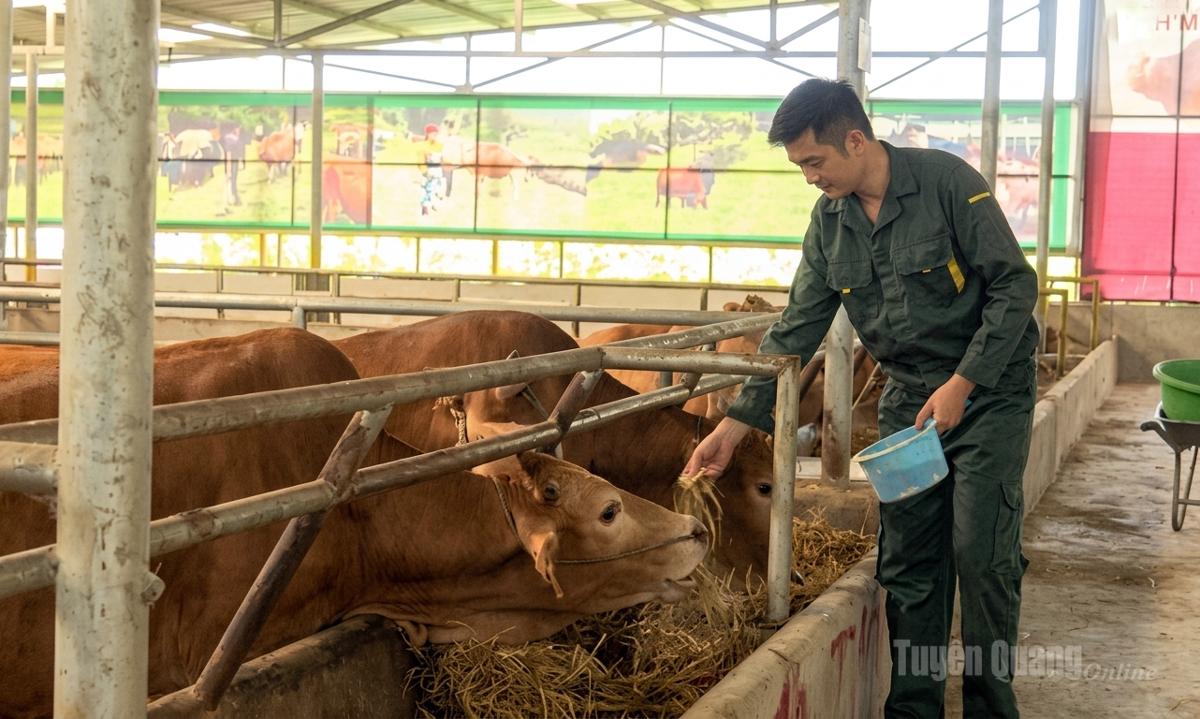 |
| The cattle herd is managed under strict technical procedures at Cat Ly Cooperative. |
“Four-party” linkages among the government, scientists, businesses, and farmers are being implemented, with Cat Ly Cooperative as a leading model. The cooperative works with over 1,300 households, managing nearly 4,000 cattle and supplying tens of tons of beef annually, helping to improve farmers’ incomes.
However, challenges remain, including the decline in purebred cattle, small-scale production, and the risk of counterfeit products. In response, the province is promoting genetic research, developing core breeding herds, standardizing farming processes, and strengthening value chains.
By 2030, around 30% of H’Mong cattle are expected to be raised in closed farming systems. With coordinated efforts from all stakeholders, H’Mong yellow cattle are poised to become a national brand, contributing to sustainable economic development in mountainous regions.
Bien Luan


READER COMMENTS