Building a modern, transparent traceability ecosystem
Amid rapid digital transformation, Tuyen Quang Province is stepping up efforts to build a modern product traceability ecosystem for its agricultural and forestry sectors, aiming to enhance product value and strengthen its market reputation. The rollout of planting area codes, management software and QR code labeling has marked a significant shift toward greater transparency, improved production oversight and higher consumer confidence.
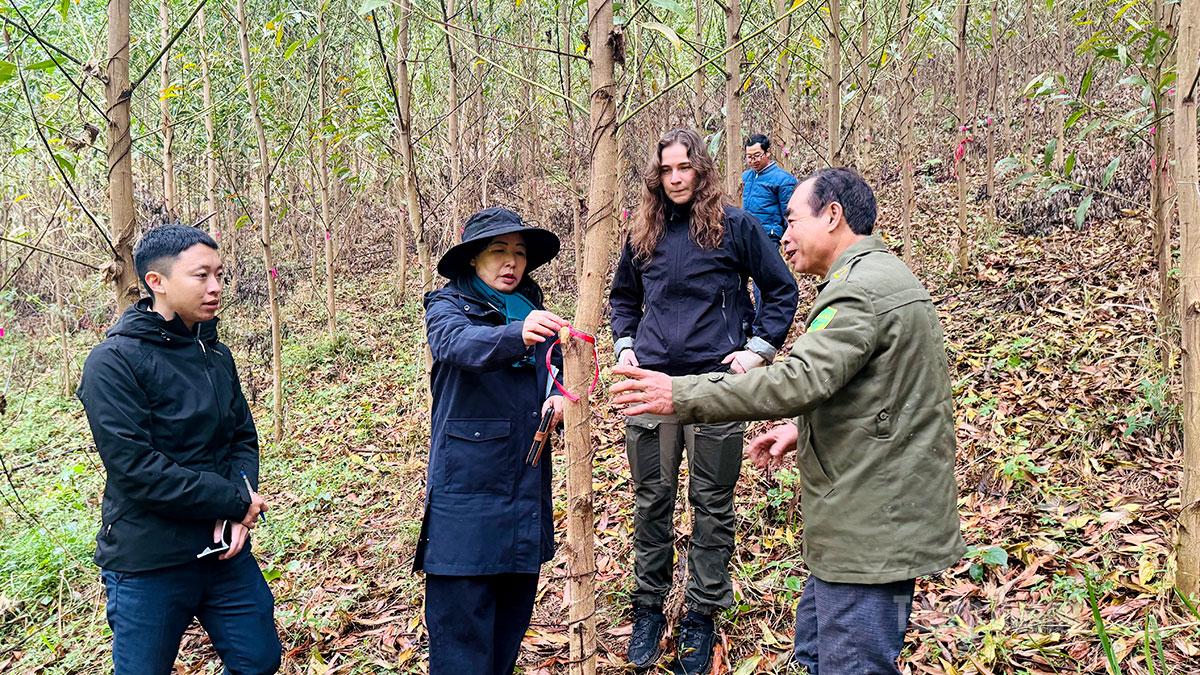 |
| Experts and scientists from IREKA Group and the Forestry Institute inspect the traceability code for a plantation forest area in Trung Son Commune. |
In plantation forests, the issuance of area codes has streamlined management. With a smartphone, technical staff can scan QR codes to access comprehensive data on forest status, cultivation processes and harvesting activities. The digital system not only improves internal monitoring but also enables domestic and international partners to quickly and accurately verify product origins.
Beyond forestry, farmers in specialized growing areas for pomelo, tea and other fruit crops have increasingly adopted digital production logs in place of traditional handwritten notebooks. From soil preparation and fertilization to harvesting, all stages are recorded and updated on a centralized software platform. According to official data, by the end of 2025 the province had issued 149 production area codes, including 25 serving export markets such as the EU and China, and 124 designated for domestic distribution.
Products with clear traceability can command 15–20 percent higher prices than unverified goods, reflecting growing consumer demand for transparency and safety. However, challenges remain. Investment costs for sensors, management software and labeling systems continue to weigh heavily on small-scale producers. In addition, data connectivity among agricultural, trade and science agencies has at times lacked synchronization. A recent incident at a provincial OCOP fair revealed that several products displayed QR codes that had not yet been activated, resulting in missing traceability information when scanned.
To address these shortcomings, on January 15, 2026, the provincial People’s Committee issued a plan to implement a product traceability system for the 2026–2030 period. The roadmap outlines six key tasks, including reviewing legal frameworks, upgrading and expanding the provincial traceability platform, supporting businesses in adoption, linking with the national traceability portal, and strengthening inspections to strictly handle violations related to fraudulent codes and barcodes.
With strong political commitment and broad participation from businesses and farmers, Tuyen Quang is steadily transforming transparency into a competitive advantage, positioning its agricultural products more firmly on both domestic and international markets.
Doan Thu


READER COMMENTS