Protecting the brand of mint honey
Mint honey from the Dong Van Karst Plateau, bearing the Meo Vac geographical indication, is a distinctive agricultural product of Tuyen Quang Province with high economic value.
 |
| Local people harvest mint honey. |
However, as its reputation and market value continue to grow, the product is increasingly at risk of counterfeiting and adulteration, threatening consumer trust and the province’s agricultural brand. Protecting the integrity of mint honey has therefore become a long-term task, closely linked to state management, transparency in production, and strict market oversight.
The Dong Van Karst Plateau offers unique natural conditions that are well-suited to beekeeping for mint honey. Mint flowers grow wild on rocky slopes at elevations of 1,000–1,600 meters, free from chemical interference. Blooming from October to December each year, the flowers provide a precious nectar source that produces honey with distinctive characteristics, including a lemon-yellow color, high viscosity, a mild sweetness, and rich mineral and bioactive compounds beneficial to health.
Due to complete dependence on the short flowering season and weather conditions, mint beekeeping is highly seasonal, with annual output fluctuating significantly. Within the UNESCO Global Geopark of the Dong Van Karst Plateau, there are currently more than 40,000 bee colonies, producing an estimated 240 tons of honey each year. With an average market price ranging from VND 500,000 to VND700,000 per liter, mint honey generates hundreds of billions of dong annually, providing stable livelihoods for highland communities while promoting the protection of the plateau’s fragile ecosystem.
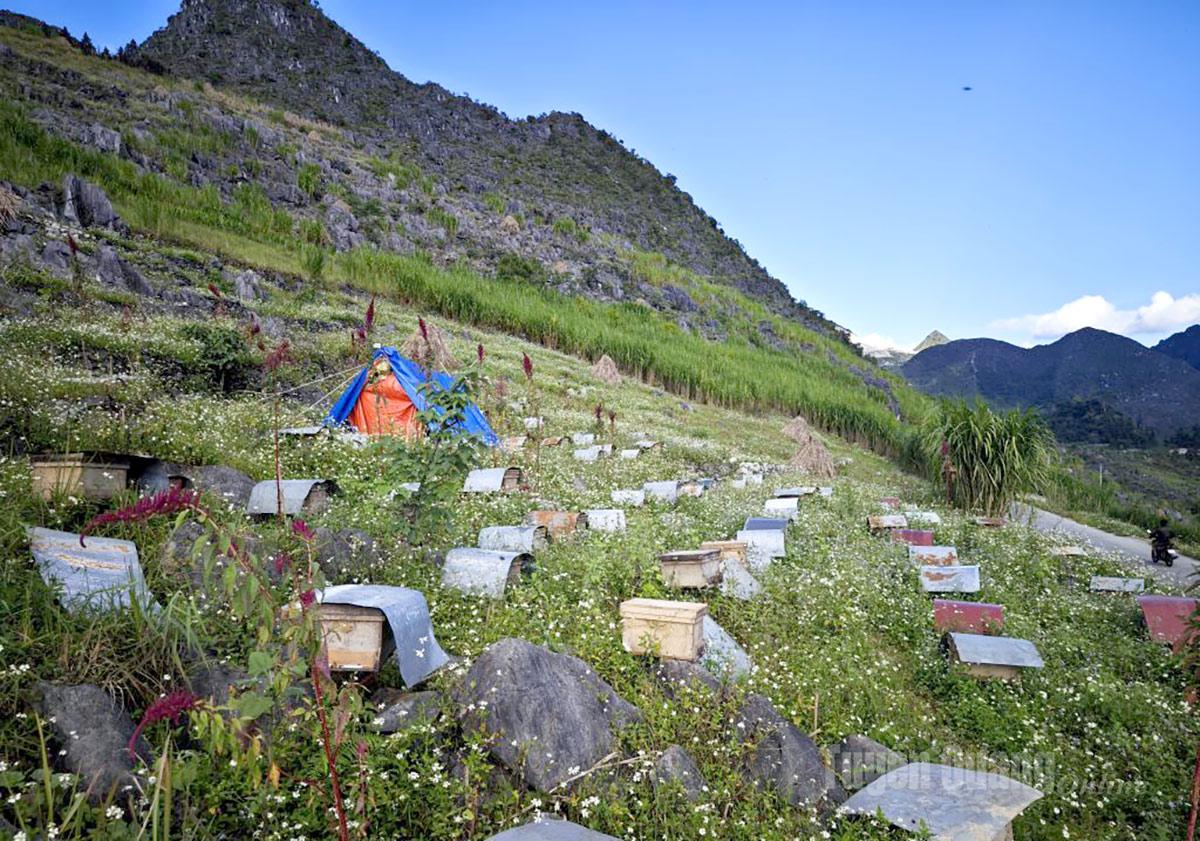 |
| Beekeeping areas are arranged along rocky mountain slopes, where conditions are favorable for bees to forage on endemic mint flowers. |
Granted geographical indication certification in 2013, Dong Van mint honey has steadily expanded in both scale and brand value. Functional agencies have strengthened the management of bee colonies and raw material areas, provided technical guidance on native beekeeping practices, tightly controlled the movement of bee colonies, and prohibited the introduction of non-native bees. During the 2020–2025 period, the province invested in expanding more than 1,700 hectares of mint-growing areas, attracting 12 cooperatives to participate in value-chain-based production, applying technology, and implementing standardized packaging and traceability labels.
In response to the growing presence of counterfeit and adulterated products on the market, relevant departments and agencies are implementing comprehensive measures, including the introduction of unified labels and stamps, intensified market inspections, and product sampling for quality testing. These efforts aim to safeguard the Dong Van Karst Plateau mint honey brand, protect consumers’ rights, and support beekeepers who remain committed to preserving both their traditional livelihood and the unique rocky plateau ecosystem.
Pham Hoan


READER COMMENTS