
Green vegetables in Sa Phin
Amid the harsh rocky terrain of the Dong Van Karst Plateau, where stones outnumber soil and generations of Mong people have long relied on a single maize crop for survival, Sa Phin Commune is now taking on a striking new shade of green. No longer the pale green of young maize clinging to rock crevices, the landscape is increasingly defined by lush cabbage fields and specialized vegetable plots thriving across the grey stone highlands.
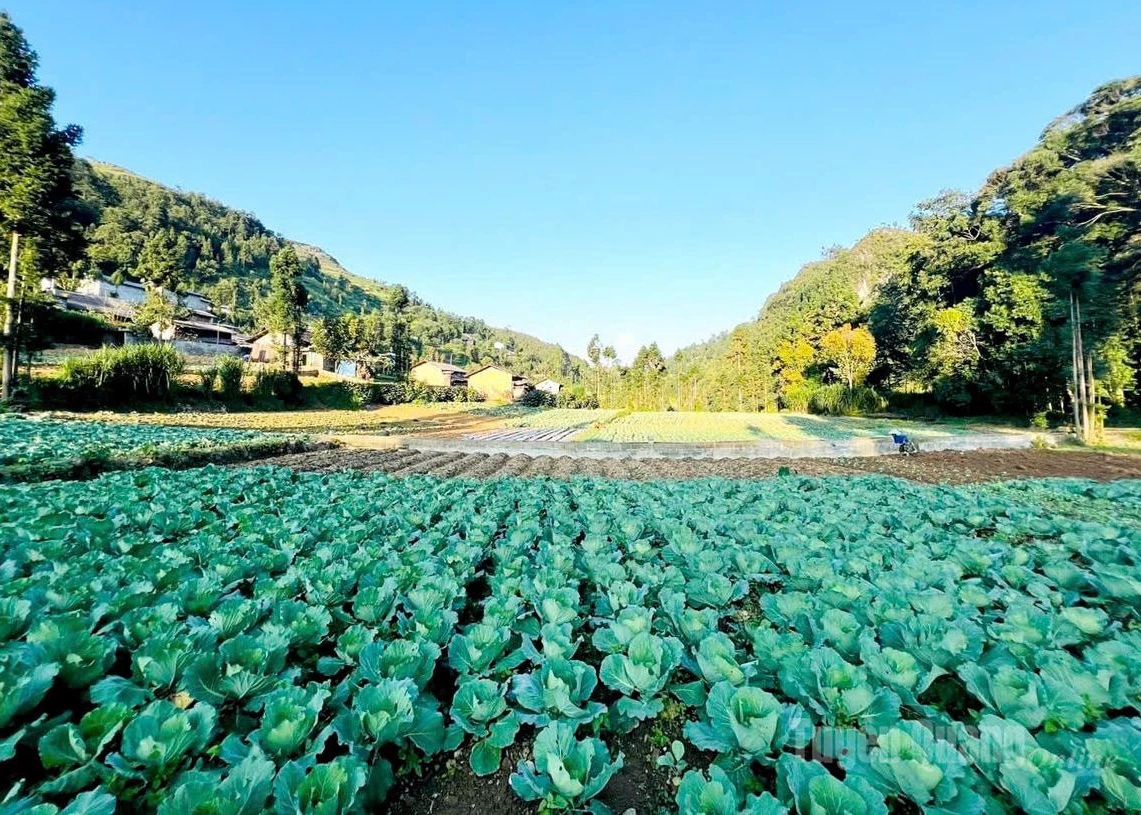 |
| A lush specialized vegetable-growing area amid the rocky landscape of Sa Phin. |
Sa Phin is a highland border commune formed through the merger of four former communes, with a population of more than 16,000 people from 11 ethnic groups, of whom the Mong account for nearly 87 percent. For many years, local livelihoods depended largely on subsistence farming on rocky slopes, where limited arable land, scarce water resources and outdated cultivation practices allowed only one maize crop per year. Low yields and unstable incomes once pushed the commune’s poverty rate as high as 86 percent in 2015.
Against this backdrop, and in line with the province’s agricultural restructuring policies, Sa Phin began piloting specialized vegetable cultivation on land previously used for low-yield maize. Starting with just 0.9 hectares of cabbage and nine participating households, the model initially faced skepticism due to limited experience and technical know-how among farmers.
With strong guidance from local authorities, hands-on support from agricultural extension officers, and assistance in seeds and cultivation techniques, the pilot soon exceeded expectations. After just over three months, cabbage yields reached 20–25 tonnes per hectare, generating incomes of VND 120–150 million per hectare - more than ten times higher than maize cultivation. The success helped build confidence among local farmers and sparked wider participation.
From selling produce at local markets, Sa Phin vegetables have gradually reached other highland communes, urban wards within the province, and even supermarkets in Hanoi. To date, the commune has converted 52.6 hectares of single-crop maize land into specialized vegetable production areas. Farmers have mastered cultivation techniques, adopted crop rotation, selected suitable varieties for each season, and now grow at least two crops per year, ensuring more stable incomes.
Alongside area expansion, Sa Phin is focusing on improving product quality through safe production practices, moving toward VietGAP standards and organic farming. The commune aims to build the “Sa Phin Vegetables” brand with geographical indication, promote cooperative-based production, and invest in infrastructure through national target programs to support transport and market access.
As a result, Sa Phin’s poverty rate has fallen sharply, from over 70 percent in 2022 to just above 40 percent by the end of 2024. The thriving green fields now stand as a vivid symbol of a fundamental shift in production mindset, demonstrating that with the right policies, strong government support and community consensus, even the most barren rocky landscapes can yield sustainable livelihoods and lasting pathways out of poverty.
Kim Tien


READER COMMENTS