
A “Key” to sustainable development
Following the administrative merger, Tuyen Quang Province is now home to more than 20 ethnic groups, with 122 communes located in ethnic minority and mountainous areas. Thanks to the decisive and coordinated implementation of tailored policies, the socio-economic landscape in these areas has continued to improve, living standards have gradually risen, and ethnic minority communities’ trust in the Party and the State has been further strengthened.
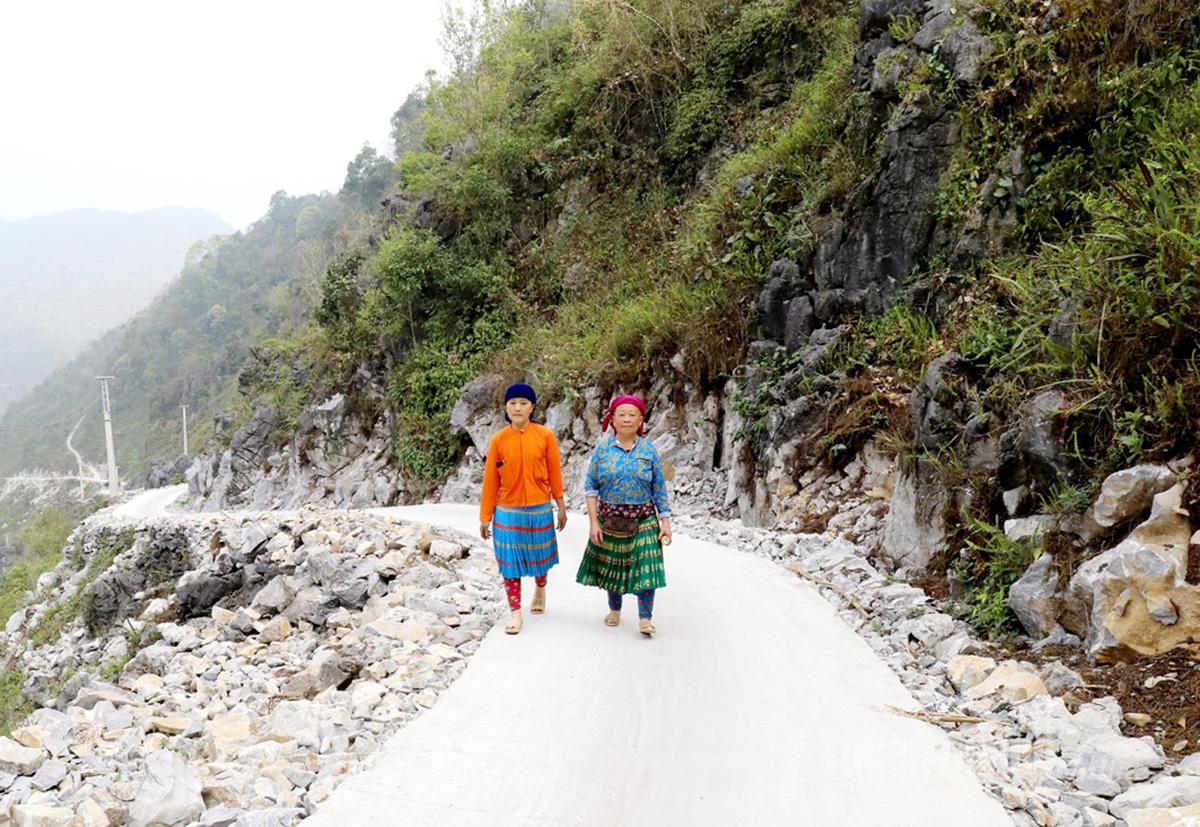 |
| The Ta Phin B – Sua Lung inter-village road in Sa Phin Commune has been newly built, facilitating travel and boosting local economic development. |
In recent years, the Provincial People’s Council has issued numerous resolutions and decisions to concretize policies for ethnic minority areas, focusing on production development, sustainable poverty reduction, education support, provision of crop varieties and livestock, crop restructuring, and investment in essential infrastructure such as electricity, roads, schools and health stations. Notably, Resolution No. 11/2025/NQ-HĐND prioritizes capital allocation for key tasks, particularly infrastructure development in disadvantaged communes and villages with high poverty rates. These resolutions provide an important foundation for implementing development programs and projects in ethnic minority areas, especially those far from provincial centers.
As a result of these appropriate and effective policies, by the end of 2025 the poverty rate among ethnic minority households in Tuyen Quang had fallen to 31.42 percent. Basic infrastructure in ethnic minority areas has continued to be upgraded, with 100 percent of communes and 97.97 percent of households connected to the national power grid, and 44 communes having exited the list of disadvantaged areas. In terms of social welfare, projects addressing shortages of residential land, housing, production land and domestic water have been implemented in a targeted manner. In 2025 alone, 711 houses were newly built for poor households, exceeding the annual plan by 21 percent. During the 2021–2025 period, more than 4,200 poor households received housing support, while tens of thousands benefited from decentralized clean water systems and newly built centralized water supply works, significantly improving living conditions in remote and highland areas.
Tailored policies have also been effectively implemented in border communes, bringing tangible benefits to local people and contributing to sustainable poverty reduction and socio-economic development. A typical example is Lung Cu Commune, where over 90 percent of the population are ethnic minorities. The commune has rolled out various policies on social welfare, economic and agricultural development, OCOP product development, as well as education support for students and disadvantaged ethnic minority university students.
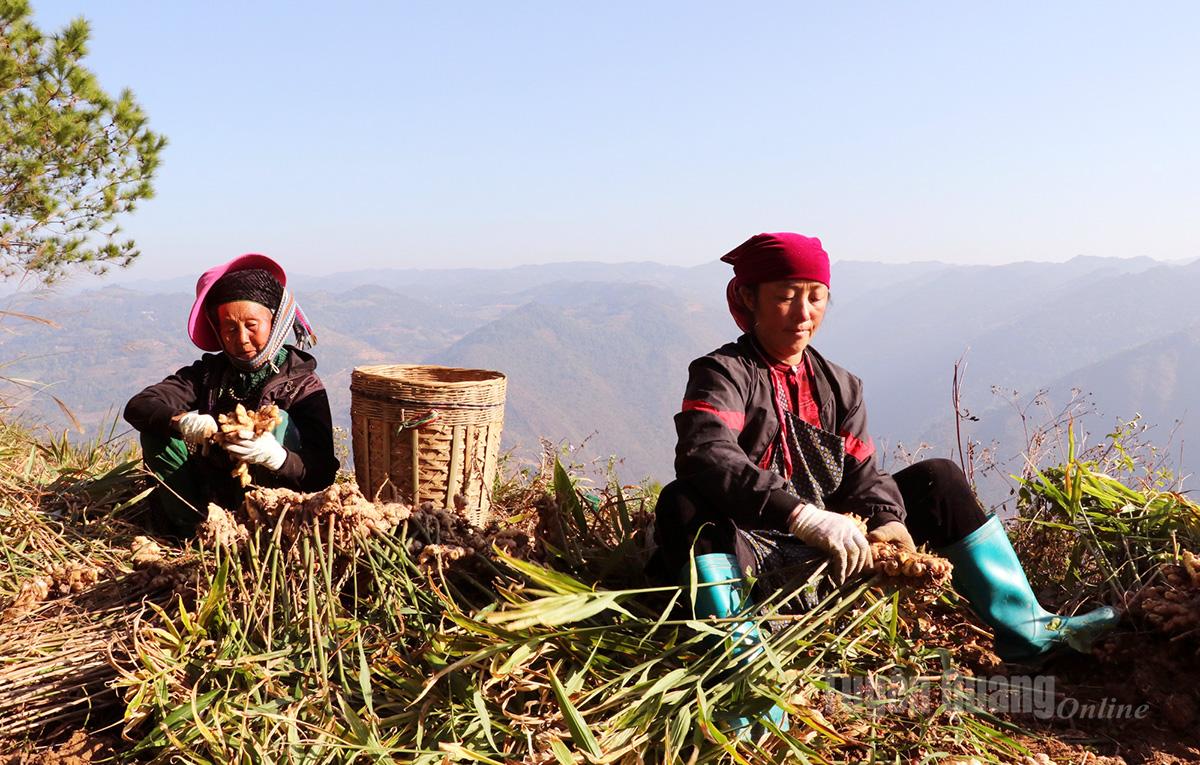 |
| People of Lung Cu Commune joyfully harvest ginger. |
In practice, for a mountainous border province with a large ethnic minority population, the effective implementation of socio-economic development policies has helped improve livelihoods, gradually reduce poverty rates and bring visible changes to rural mountainous areas. More importantly, these policies have helped narrow development gaps between ethnic minority regions and other areas, strengthen people’s confidence in the Party and the State, and move toward the goal of sustainable development and social equity.Top of Form
My Ly


READER COMMENTS