
Indigo craft meets modern life
Amid the rush of modern life, artist Dong Thanh Phong has chosen a different path - reviving traditional indigo dyeing and bringing it into contemporary living. Since 2010, through field trips to remote ethnic villages in Ha Giang, he discovered that many “indigo” textiles sold on the market were actually chemically dyed and quickly faded, losing the authenticity of the traditional craft. The reality inspired him to seek out the original indigo-dyeing methods preserved by local ethnic communities.
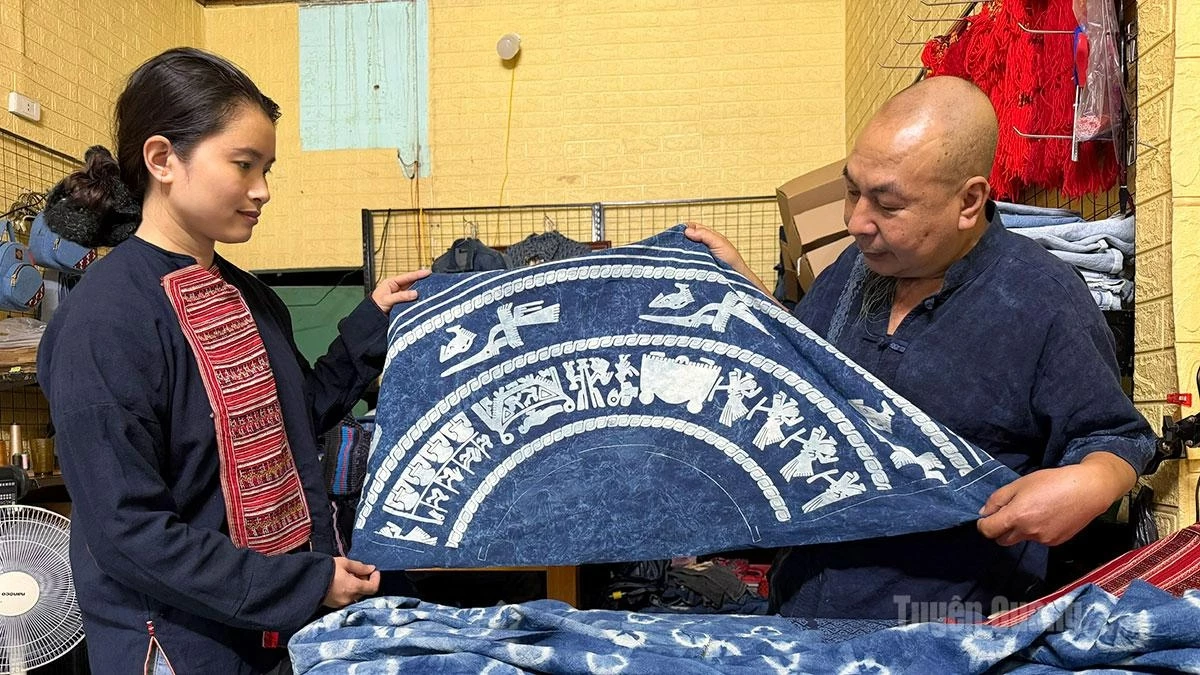 |
| Indigo fabric products created by Dong Thanh Phong using printing technology have attracted many visitors to his workshop. |
To master the craft, Phong spent time living with villagers in Hoang Su Phi, learning how artisans produce indigo paste from native indigo plants. Through a meticulous process of soaking, fermenting and mixing with lime, the indigo paste can be preserved for years, becoming a valuable material for artistic creation.
Beyond traditional dyeing techniques, the artist also experimented with applying silk-screen printing technology to indigo fabric production in order to increase practicality and reduce costs. After years of trial and error, he successfully developed a natural resist paste made from tapioca starch, beeswax, arrowroot powder and kaolin clay to create sharp patterns on indigo cloth. In 2022, he successfully applied silk-screen printing to indigo textiles, opening a new direction for traditional brocade production.
From hand-dyed fabrics, a range of products including curtains, bed sheets and decorative artworks has entered the market. In the first month after launching in 2023, sales reached nearly VND 40 million. His indigo products have since been ordered by tourism businesses in Hanoi, Bac Ninh, Bac Giang and Kien Giang provinces. International visitors, in particular, are impressed by the combination of traditional materials and modern patterns.
Looking ahead, Dong Thanh Phong plans to establish a sustainable indigo-growing area, hoping to ensure that the “soul of ethnic culture” continues to thrive in contemporary life.
Giang Lam


READER COMMENTS