
Hmong ethnic people cultivate on rocks: A unique agricultural practice
Amid the harsh natural conditions of the Dong Van Karst Plateau, where limestone mountains dominate, arable land is scarce, and soil erosion is severe, ethnic communities have developed a distinctive farming method known as “cultivate on rocks.” This practice stands as a vivid testament to indigenous knowledge and human resilience in adapting to an extreme environment.
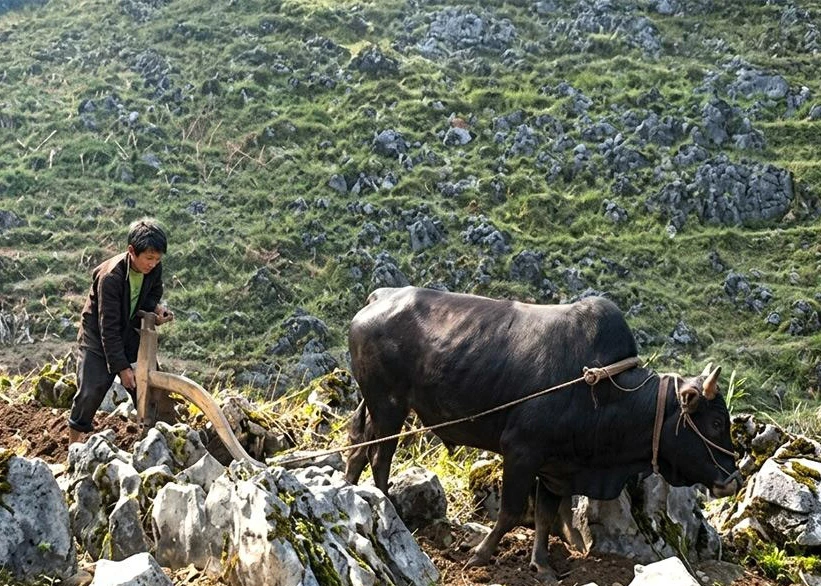 |
| Hmong people in Dong Van commune cultivate crops on rocky fields. |
Under this method, farmers make use of small crevices among rocks, turning them into individual “cultivate on rocks.” Soil is manually transported and filled into these holes, while stone arrangements help retain soil and prevent erosion. Rather than obstacles, rocks function as natural regulators, conserving moisture, reducing wind impact, and stabilizing temperature for crops. The entire farming process remains largely manual, from plowing with specially adapted tools to cooperative planting practices.
Maize, particularly hardy local varieties capable of withstanding drought and cold, is the primary crop, often intercropped with vegetables to maximize limited soil resources and minimize erosion. Through persistence and meticulous care, barren rocky landscapes have been transformed into productive green fields that sustain generations of highland communities.
Beyond its economic value, rock pocket cultivation is deeply intertwined with local culture and spiritual life. Agricultural activities are closely linked to traditional calendars and festivals such as Long Tong Festival and Gau Tao Festival, contributing to a distinctive “stone culture” that defines the region.
In 2014, this indigenous farming knowledge was officially recognized as a National Intangible Cultural Heritage, underscoring its cultural and scientific significance. However, increasing pressures from climate change and globalization pose new challenges to its preservation.
To safeguard this heritage, local authorities have introduced initiatives that integrate traditional farming with community-based tourism, promote the digitization of indigenous knowledge, and preserve related crafts. These efforts not only help improve local livelihoods but also ensure the continued vitality of a unique agricultural and cultural legacy.
Bien Luan


READER COMMENTS