
Dong Van Old Quarter – The “heart” of the Stone Plateau
Located in the heart of the majestic Dong Van Karst Plateau, Dong Van Old Quarter (Dong Van Commune) is regarded as the cultural and historical “heart” of Vietnam’s northernmost region.
Formed in the late 19th and early 20th centuries, the old quarter was closely associated with vibrant trading activities among the H’mong, Tay, Hoa ethnic groups and merchants from Yunnan (China), once serving as a key commercial hub of the stone plateau.
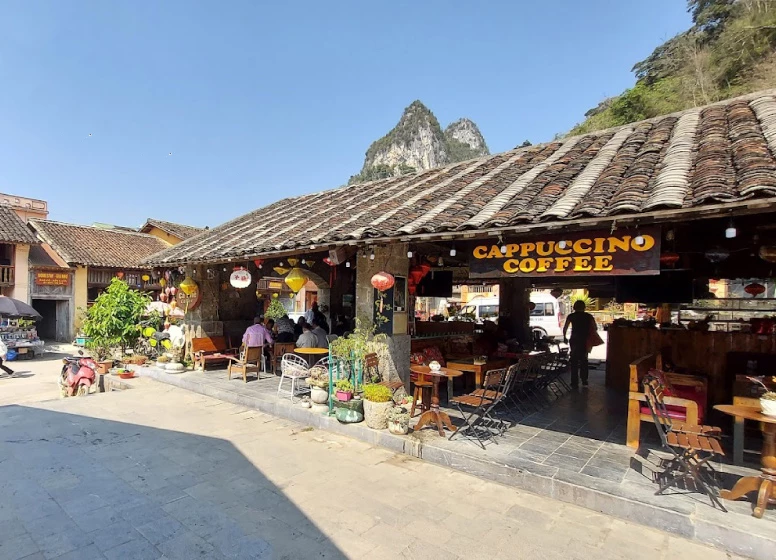 |
| Dong Van Old Quarter market in the past, now transformed into a space for service and tourism development. |
One of the most distinctive features of Dong Van Old Quarter is its cluster of more than 40 ancient houses, primarily two-story rammed-earth structures with yin-yang tiled roofs, thick walls, wooden doors and enclosed layouts. This architectural style reflects the cultural convergence of ethnic communities and their adaptation to the harsh highland climate. Many houses have existed for over a century, passed down through multiple generations, standing as “living witnesses” to the history of the border region.
Despite wars, social changes and urbanization, Dong Van Old Quarter has retained much of its original architectural character. Since 2006, the local authority has implemented conservation and restoration projects to preserve its cultural and architectural values. In 2009, Dong Van Old Quarter was officially recognized by the Ministry of Culture, Sports and Tourism as a National Architectural and Artistic Relic.
Today, the old quarter is an unmissable destination for visitors exploring the Dong Van Karst Plateau. The former weekly market space has been reorganized into areas for tourism services and community activities while maintaining its traditional identity. Amid modern life, Dong Van Old Quarter continues to quietly tell stories of stone, people and layered time, creating a lasting attraction for both domestic and international visitors.
Tue Anh


READER COMMENTS