
Distinctive cultural values of the Dao ethnic community in Cao Banh
Cao Banh is a highland village in Ha Giang 1 Ward, which has been drawing growing attention from visitors as a land of great potential on the province’s tourism map.
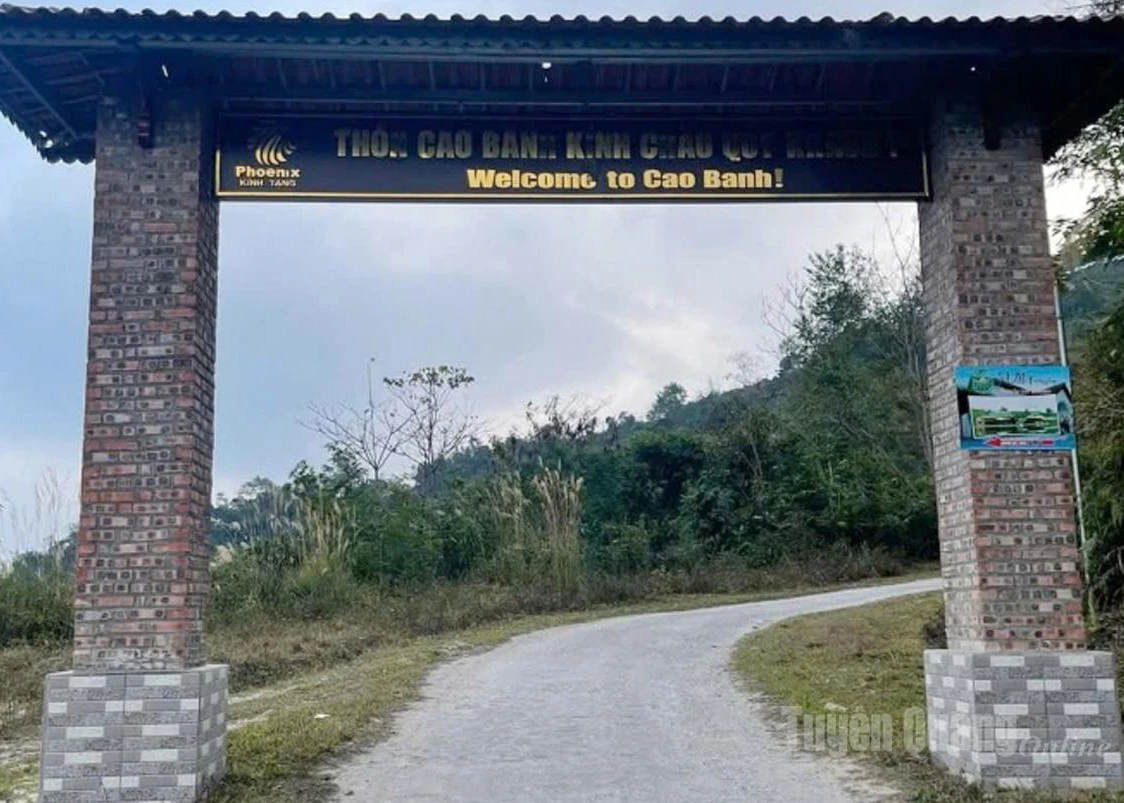 |
| The gateway to Cao Banh Village. |
Located at an average altitude of approximately 1,800 meters above sea level, the area not only enjoys a cool climate year-round but also preserves the distinctive cultural values of the Dao ethnic community intact.
Cao Banh resembles a picturesque landscape painting, harmoniously combining mountains, waterfalls, and primeval forests. The village is home to many untouched natural attractions such as Ga Waterfall, Vit Waterfall, and Nuoc Bang Stream, surrounded by natural forests rich in rare timber species. Terraced rice fields winding along the mountain slopes create a beauty that changes with the seasons - lush green like a carpet in summer and glowing golden in late autumn when the rice ripens.
From the high peaks of Cao Banh, visitors can take in panoramic views of Ha Giang 1 Ward and Ha Giang 2 Ward from above. Unlike other northern highland villages, Cao Banh offers the experience of buckwheat flower viewing every November and December. The village has invested in planting dozens of hectares of buckwheat flowers on hillsides and terraced fields. Beyond the main flowering season in late autumn, thanks to the cold climate and high altitude, buckwheat flowers are also grown off-season and bloom brilliantly during the Lunar New Year.
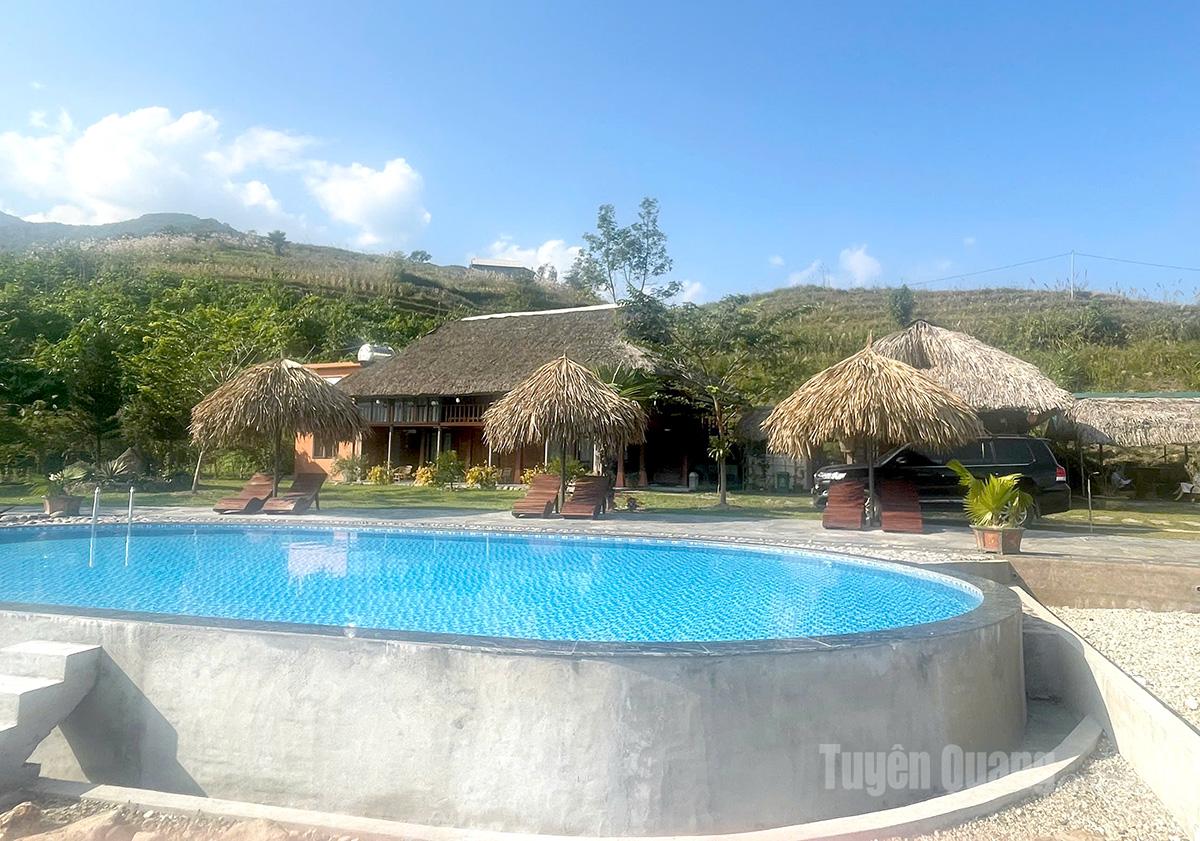 |
| Several standard accommodation facilities catering to visitors’ needs. |
With 100 percent of its population being Dao people, Cao Banh is an ideal destination for cultural experiential tourism. Traditional stilt houses, roofed with yin-yang tiles, nestle quietly along the mountain slopes. The village preserves important rituals, such as the ‘Cap sac’ ritual, the New House Ceremony, the Ban Vuong Festival, and, especially, the captivating fire-jumping performances. Visitors can also take part in embroidering traditional costumes, picking Shan Tuyet tea with local people, or joining folk games such as tug-of-war and catching carp in rice fields during culinary festivals.
The local agro-forestry economy is closely associated with distinctive products that can be developed into tourism souvenirs. The village has 87 hectares of ancient Shan Tuyet tea trees known for their rich flavor, while cardamom is a key crop with an area of 59 hectares.
Local specialties such as free-range hill chicken, native pork, sticky rice, five-colored glutinous rice, dried buffalo meat, and smoked dried beef offer flavors deeply imbued with the essence of the mountains and forests.
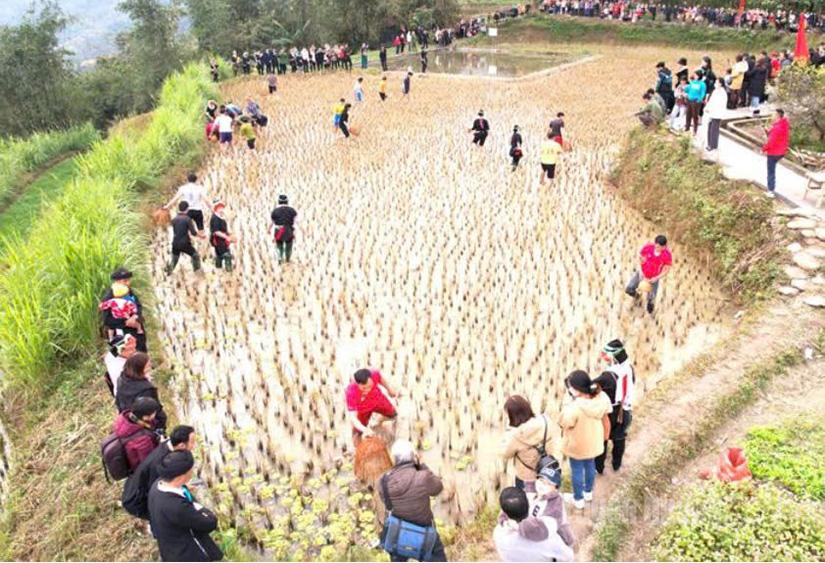 |
| Tourists experiencing carp catching in rice fields. |
Currently, Cao Banh is receiving investment in infrastructure from local authorities, along with encouragement for residents to develop community-based tourism. The goal is to preserve its pristine beauty, tranquil atmosphere, and clean environment, creating a distinctive appeal compared to overcrowded tourist destinations.
H.Anh


READER COMMENTS