
Tuyen Quang’s upland cuisine: A cultural identity shaping the region’s tourism brand
Tuyen Quang’s highland cuisine has emerged as a unique form of cultural identity, helping position the province on the tourism map. More than a means of survival, each dish created by the 22 ethnic groups living here embodies indigenous knowledge, natural conditions, lifestyle, and the community’s ability to adapt to a harsh mountain environment.
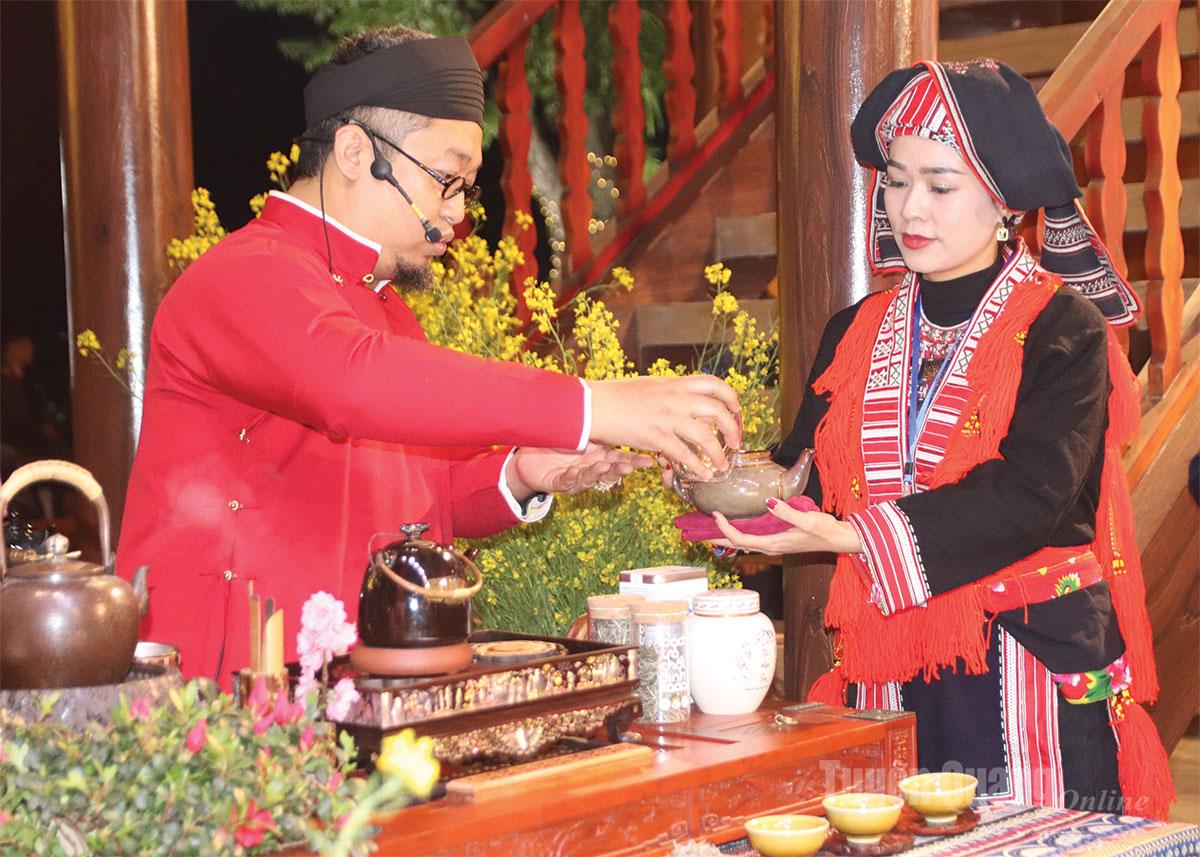 |
| Demonstration of Shan Tuyet tea brewing in a community-based tourism space, offering a unique experience of Tuyen Quang’s high-mountain tea culture. |
From corn, rice, forest vegetables to stream fish, the Mong, Dao, Tay, and Lo Lo peoples have crafted distinctive specialties that carry the soul of the mountains. Dishes such as the Mong’s men men and corn pho; the Dao’s herbal chicken and leaf-fermented liquor; the Tay’s banh khao, hump sticky rice cake, and five-color sticky rice; or the Lo Lo’s smoked pork, kitchen-hung sausages, and buckwheat cakes-all serve as vivid “cultural ID cards.”
Shan Tuyet ancient tea-known as the “green gold” of the mountains-along with herbal drinks made from forest leaves, has become a cultural symbol cherished by visitors. Many local products, such as hump sticky rice cake, yellow beef, Ham Yen oranges, and Shan Tuyet tea, have been listed among Vietnam’s Top 100 specialties.
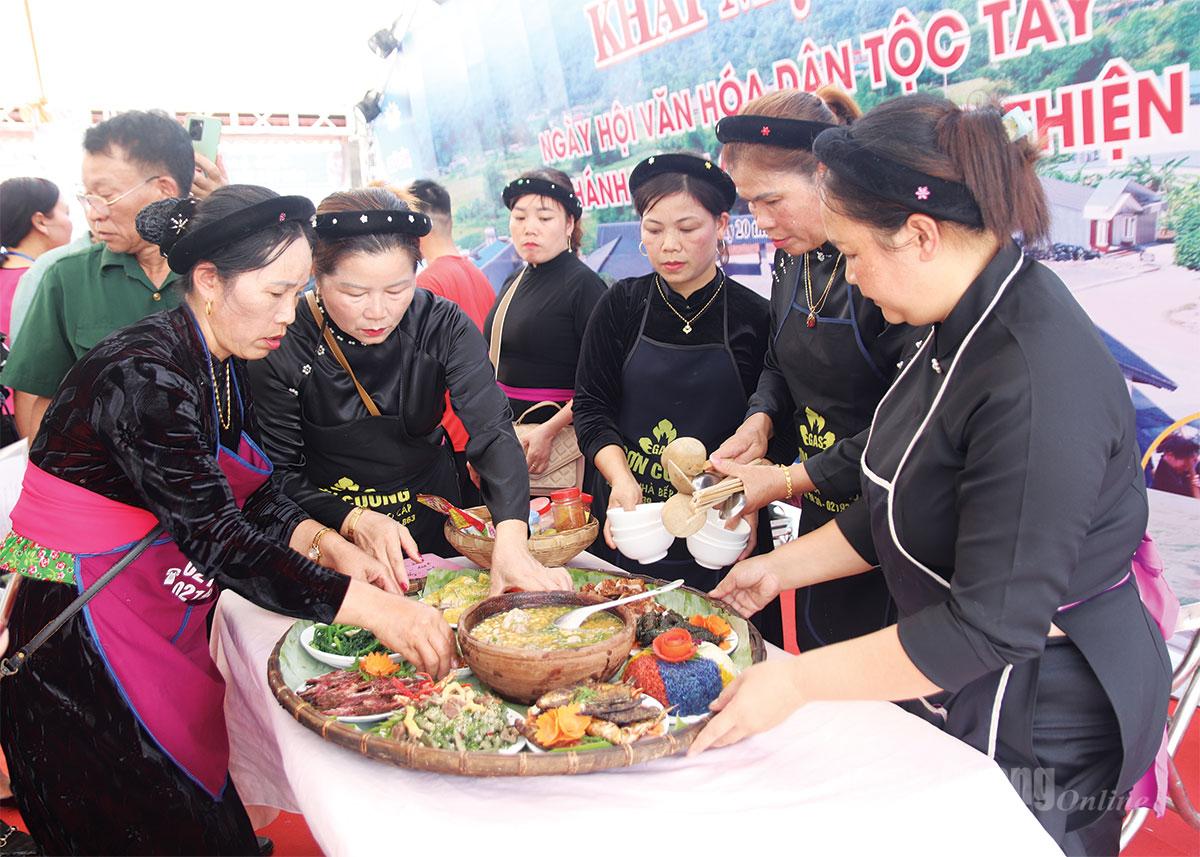 |
| Homestay owners in Ha Giang Ward 1 showcase their cooking skills at the Tay Ethnic Cultural Festival. |
Highland kitchens are not only cooking spaces but also places where knowledge, customs, and communal bonds are passed down. In tourism villages like Pa Vi Ha, Thuong Lam, and Lung Cu, hands-on experiences-making men men, preparing kitchen-hung meat, or wrapping hump sticky rice cakes-have become major attractions.
Localities are offering cooking classes led by artisans who teach techniques as well as cultural stories behind each dish. The tourism sector aims to shift from serving food to offering cultural experiences, developing clean ingredient supply chains, expanding OCOP products, and organizing culinary festivals.
Tuyen Quang’s mountain cuisine is thus not just about flavors-it is a living cultural map, preserving the identity, knowledge, and spirit of the highland communities.
Thu Phuong


READER COMMENTS